EHR: Is your scope wrong? I bet it is.

The hand-written note, scrawled in the best penmanship of my nine-year-old daughter, lay next to the plate of sugar cookies and the warm glass of milk.  It was eleven PM.  Three kids lay in their sleeping bags, asleep on the floor of the play room—cameras ready to capture images of the annual intruder.

Illuminated by the glimmering lights from the tree, I scanned her note.  Two pages.  Itemized.  Fifty-three lines, fifty-three items.  Requests.  The letter begins, “Dear Santa.  I wrote this list today.  I know you already got my letter.  These are other things you could give me.  Please leave them under the tree with the rest of my presents.”

There are a number of ways to view her letter.  It certainly is cute—it’s probably cuter if you’re not her parents.  You know what occurred to me at 11 PM as I stood there in my slippers eating the cookies and drinking the warm milk to reinforce the message to my children that Santa exists?  Two words.  Scope Change.  Plain and simple.

Weeks of thoughtful planning, buying, and wrapping possibly shattered by the scratchings of a number 2 pencil.

Make no mistake; this will happen to you on your EHR project.  Scope change.  Where will it come from?  Users, vendors, the CFO, reform.  Most projects fear change.  Change is feared because the project team never quite got their arms around the original scope.  Most change means more dollars and more time.

Scope change can be healthy.  Why?  I bet most EHR projects are under-scoped.  Did you read that correctly?  Yes.  I bet if an independent party assessed your scope document and work-plan you will find you are under scope in these three areas:

  • Change management
  • Work flow improvement
  • Training

If that’s the case, you will have spent tens of millions of dollars building something slightly more functional than a rather intricate Xerox machine.

EHR: Is your plan aiming far enough out?

Can being an early adopter save your hospital millions of dollars?  We both know the answer depends on what one happens to adopt.  Suppose we are discussing the adoption of an idea?  Can that be analogous to not adopting another idea?  I think it can.  Allow me to explain.

Many providers are in the process of making a very expensive, highly complex, and wide-ranging decision regarding their healthcare information technology strategy (HIT) for their electronic healthcare records system (EHR).

A non-trivial moment.  Careers will be made and lost as a result—I’m betting more will be lost.  Why?  By making a bad choice on the EHR, on how to implement it, and on how to modify your organization.

I think the choices will be bad not from lack of effort but from lack of understanding of the complete issue.  What is the part of the issue that is lacking?  It’s the part which requires clairvoyance.  Whew, that was easy.

Defining your requirements does not pass the test of necessity and sufficiency.   It’s like playing darts while blindfolded.  The plan to select, implement, and deploy an EHR must account for a number of risky unknowns, including:

  • How will healthcare reform impact my organization
    • What constraints will it produce
    • What demand will it create for new HIT systems
    • What new major operating processes will result
    • When will reform really be implemented
    • How will reform be reformed
    • How will payors, suppliers, and people react to reform
    • How will you offset a resource shortage of fifty percent
    • What will change as a result of
      • Interoperability
      • Certification
      • Meaningful Use
      • Mergers and acquisitions

We don’t know what we don’t know.  That is not a throw-away line.  By definition, we never know what we don’t know.   However, the downstream success of your EHR will be highly dependent on these unknowns.

So, where does your need to be clairvoyant come into play?  One word—flexibility.  Every part of the plan must be built with that requirement in mind.  What will the system need to do in three years?  How will the landscape have changed?

If you aren’t convinced your EHR is either flexible or disposable, you’d benefit by rethinking your plan.  The idea for which I think we need early adopters is to spend time building to what will be, not what is.

Patients Relationship Management-why not think like one?

I met last week with a number of 1st Year MBA students who have a consulting club to help them figure out if they are suited for this noblest of all professions–supposedly the second oldest profession. “How can you tell if you’ll be any good at it?” They asked.

As far as I can tell, there are two basic requirements. One, you have to be a bit out of kilter, a tad of ADHD doesn’t hurt either. You have to hate repetition.   Second, it helps if you have a belief that there is almost nothing you couldn’t figure out how to improve. While thinking it doesn’t make it true, the attitude is a critical success factor.

For example, I just returned from the post office.  Noon on the Wednesday before the holiday–lunch time rush hour.  I’m standing in a long line underneath a banner with a message emphasizing quality.

There are two clerks, postmen, postpersons, postladies–I’m not sure which one is most appropriate, but as we both know, I’m not going to lose any sleep over it either. The line is out the door. Clerk ‘A’ tells clerk ‘B’, “I’m going on break.” At which point I turned to the person next to me and uttered, “And I’m going to UPS.”   It’s not that difficult to improve.  Not letting half of your customer-facing employees go on break during your busiest time would be a good way to start to improve things.

It’s not rocket surgery. Patient Experience Management, Patient Equity Management. Whatever you call it, big inroads can be made.  Quit thinking like an executive and start thinking like a patient and you’ll have plenty of ideas.

“We need to talk about your TSP reports”


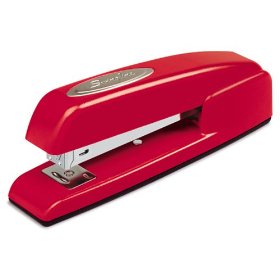
If you recognize the stapler, you know the movie.  “Office Space”—Possibly the best movie ever made. Ever worked for a boss like Lumbergh? Here’s a smart bit of dialog for your Friday.

Peter Gibbons: I work in a small cubicle. I uh, I don’t like my job, and, uh, I don’t think I’m gonna go anymore.

Joanna: You’re just not gonna go?

Peter Gibbons: Yeah.

Joanna: Won’t you get fired?

Peter Gibbons: I don’t know, but I really don’t like it, and, uh, I’m not gonna go.

Joanna: So you’re gonna quit?

Peter Gibbons: Nuh-uh. Not really. Uh… I’m just gonna stop going.

Joanna: When did you decide all that?

Peter Gibbons: About an hour ago.

Joanna: Oh, really? About an hour ago… so you’re gonna get another job?

Peter Gibbons: I don’t think I’d like another job.

Joanna: Well, what are you going to do about money and bills and…

Peter Gibbons: You know, I’ve never really liked paying bills. I don’t think I’m gonna do that, either.

One more tidbit:

Peter Gibbons: Well, I generally come in at least fifteen minutes late, ah, I use the side door – that way

Lumbergh can’t see me, heh heh – and, uh, after that I just sorta space out for about an hour.

Bob Porter: Da-uh? Space out?

Peter Gibbons: Yeah, I just stare at my desk; but it looks like I’m working. I do that for probably another hour after lunch, too. I’d say in a given week I probably only do about fifteen minutes of real, actual, work.

I like to think of Peter as my alter-ego.

When I’m playing me in a parallel universe, I’m reading about a surfer dude cum freelance physicist, Garrett Lisi. Even the title of his theory, “An exceptionally simple theory of everything,” seems oxymoronic. He surfs Hawaii and does physics things—physicates—in Tahoe. (I just invented that word; it’s the verb form of doing physics, physicates.)

Ignoring that I can’t surf, and know very little physics, I like to think that Garrett and I have a lot in common. I already know Peter Gibbons and I do. So, where does this take us?

It may be apparent that I look at healthcare IT and reform from a different perspective than most; I’m the guy who doesn’t mind yelling ‘fire’ in a crowded theater. The guy who will never be invited to speak at the AMA convention unless they need a heretic to burn for the evening entertainment. I can live with that.

Like Garrett, I too see an exceptionally simple theory in everything, especially when it comes to improving the business of healthcare. It’s not rocket surgery, but then, it was never meant to be–before someone writes, I know it should be scientists.  It’s process, change management, leadership and foresight.

Sometimes I like to look at the problem from a different dementia—Word didn’t have a problem with my usage of that word.  I look at healthcare and ask myself three questions:

1. How did they ever get so siloed?

2. How did they ever get so so big without a cohesive IT strategy?

3. Is it possible to reverse both of those AND improve the business.

I am convinced the answer is yes.

Why we don’t allow horses do medical procedures or EHRs

ffetPOTTER103


There are three or four basic rules those of us who write should use, unfortunately I do not know them. For those of my ramblings that seem long, it’s only because I have not had the time that is required to make them shorter. This I fear is one of those. I write to find out what I am thinking; if and why you read remains uncertain. All of us learned to write in elementary school—most then moved on to greater things—I remained trapped with the notion that being able to spell words more than one way may one day be regarded as a talent.

I found it is not a bad idea to get in the habit of writing down my thoughts–it saves me from having to verbally rake others with them. Some of my thoughts require little or no thought from those who read them, for the very simple reason, they made no such equivalent demand upon me when I wrote them. My goal in writing, other than to entertain myself is to create a somewhat humorous context to facilitate thinking. As one who enjoys the written word I understand that no urge is equal to the urge to edit someone else’s thoughts, as several of you have done with mine. It sometimes feels as though the best I can hope for in formulating a series of ideas about a topic is to borrow well from experts, those people whose have already made all the mistakes that can be made in a very narrow field. The need to write and share my opinions requires constantly trying to prove my opinion to an audience who may not be friendly, which is why silence may be better–silence is often the most difficult opinion to refute. Unfortunately, trapped inside every consultant is the urge to write; sometimes that urge is best left trapped inside.

Much of the project management office consulting I do comes from having listened respectfully to very good advice, and then going away and doing the exact opposite. In general there appears to be a lack of strategy concerning EHR, making it like trying to jump a chasm in two leaps—it can’t be done. Without knowing what outcome you want to achieve, any path will take you there. This isn’t because the people in charge don’t see the solution—it is because most people have no familiarity with the scope and magnitude of the problem.

Large information technology projects like EHR are often dominated by two types of people: those who understand what they do not manage, and those who manage what they do not understand. If we are being honest, the end product of project management is making it more and more difficult for people to work effectively. It’s sort of like why we don’t allow horses do medical procedures—it would probably take way too much training. I think that many EHR projects are ineffective because those leading the charge attempt to rely upon reason for answers, thinking, “If we know one then we know two since one and one are two”.

To make the EHR efforts more effective, I humbly suggest we need to learn much more about what constitutes the “and”.

EHR technology makes it easier to do a lot of things, but some of the things it makes easier ought not to be done. The only reason to have an EHR system is to to solve specific business problems within the organization. Getting EHR to do want you want it to is ninety percent mental–the other fifty percent involves voodoo. If you don’t make mistakes during the process, you’re not working hard enough on the problem—and that’s a big mistake. Need I say more? Any complex system that works almost always comes from a simple system that works. The corollary is also true, if the current paper and manual records system didn’t deliver best practices, how can the more evolved ones be expected yield best practices?  EHR alone won’t make you better, it will just make you automated.

Success is a much more likely outcome when one builds upon success. Most EHRs have enough technology to handle anything that comes up, unless a provider forgets that the EHR is just a tool.  It took human error to create the problems we have with our health records processing.  Why then are we so quick to think that technology will fix them?

Misery not only loves company, it insists on it. That is why having a competent project management office (PMO) plays such a dominant role in the success or failure of the EHR. When the circumstances turn extraordinary, as they are in today’s economy, extraordinary measures are required. Plan, take time to deliberate, and when the time for action has arrived, stop thinking and get after it. The important thing to remember in deciding what action to take is not to search for new data points but to discover new ways to think about the ones you have. The direction of am EHR strategy may have limits, but perhaps it says more about the limits of imagination and common sense instead of the limits of what is possible. And remember this basic rule, when assessing common sense and imagination, always round up.

I’m not always disgruntled about that which I write, but I’m often far from gruntled. As graduate student I aspired to a stable job, I craved factual certainty and the respect of my peers—so I became a consultant. I soon learned that this is like wanting to be a vegetarian so you can work with animals. The only job I was fit for was consulting. This notion rested on my belief that I was not suited to work nine to five, and that consulting wasn’t quite like working. One of the nice things about consulting is that putting forth absurd ideas is not always a handicap. The good news is that consultants, when addressing things outside of their expertise are just as dumb as the next guy. I’ve always believed that being honest with my clients is the best policy—does that mean that if I chose to be dishonest I would be using second best policy? Oscar Wilde said, “If you want to tell people the truth, make them laugh, otherwise they’ll kill you.” That’s my hope with these little musings. Remember, we’re all in this alone.

The preceding was a pilfering of quotations.

saint

Patient Relationship Management, start at the top

The customer in this news article wrote a letter to Sir Richard Branson, Chairman of Virgin Atlantic. His letter is a must read for anyone who is in need of a smile. The text below is from Fox News. Paste the link-the photos are critical to the story.

A passenger who wrote a letter of complaint to Virgin Atlantic expressing his dissatisfaction with the in-flight food is now being offered the chance to be a food tester for the airline, the Daily Telegraph reported.

The passenger’s complaint to Virgin chief executive Sir Richard Branson was written after a flight from Mumbai to Heathrow on Dec. 7 last year and has been widely praised for its humor.

http://www.telegraph.co.uk/travel/travelnews/4344890/Virgin-the-worlds-best-passenger-complaint-letter.html

saint


Patient Equity Management; Rome wasn’t burnt in a day

marty_brain5_76


There’s the scene in Young Frankenstein when the character states, Could be worse, could be raining. The line is followed immediately the by sound of thunder and pouring rain. Lately, I’m reminded of that each time I ready the industry news and blogs. The message is that it is raining. Forty days and forty nights worth. Wet. Getting wetter. No towels in sight.

How’d we get there? We worked hard at it. What surprises me is how many providers are surprised by the situations in which they find themselves. During times like this patients discard marginal providers, the providers who never got around to valuing them. This is when it comes down to patient equity management (PEM)–providers who continue to manage by reacting to social media are going to continue to get wet.

It took years of mismanagement and lip service to make patients feel like they weren’t valued. Without a concentrated program of PEM it may take just as long to get them back. Rome wasn’t burnt in a day.

saint

Patient Relationship Management (PRM) – where to start

francis_gary_powers


I was watching something on the Smithsonian channel and caught a clip of an interview by Gary Powers, Jr. He was discussing his father, and the interviewer asked him about his dad’s ill-fated U2 flight—Gary Powers’ spy plane was shot down over the Soviet Union in 1960 by a surface-to-air missile.

“I asked him how high he was flying when the missile hit his plane,” the son replied. “His answer was, ‘obviously not high enough’.”

Not high enough. A bit of an understatement. When you’re piloting the spy plane and you can see the SAM’s contrail you’re about to have a bad day. By the time you see the smoke streaking towards you it’s already too late. Would’a, should’a could’a don’t matter. At this point all you can do is make the best of a bad situation. The time to prevent the problem has passed; the only option left is to minimize the consequences.

I look at Patient Relationship Management (PRM) pretty much the same way. For the most part, by the time the phone rings, it’s already too late to have done what was required to have prevented the need for the call.  Would’a, should’a could’a don’t matter. At this point all your organization can do is make the best of the situation. The time to prevent the call has passed; the only option left is to respond to the caller’s request.

If your hospital or office is like most others, almost all of the attention and technology are focused at responding to the caller once the call’s been received, kind of like trying to put the toothpaste back into the tube.  There are very cost-effective ways to evaluate providing excellent PRM prior to having to do it via a call center.  Social media can play an important role.

saint

Stilleto Change Management

shoe


I just returned from the Prada show in Milan. Not really—that was the opening line from a piece on NPR. Apparently this year’s runaway hit on the runways has to do with high heels, with the emphasis on the notion of high.

The following comes from the UK Telegraph: The girls looked like rabbits trapped in the headlights; their faces taut and unsmiling, their eyes wide with fear and apprehension. Were they about to undertake a parachute jump? Abseil down a 1,000ft mountain? None of the above. All they were doing was trying to negotiate the catwalk at Prada during this week’s Milan fashion shows in shoes that were virtually impossible to walk in. At least two models tripped and fell on to the concrete floor; others wobbled and stumbled, teetering and tottering, clearly in agony, and all the while their minds were fixated on just one thing: reaching the sanctuary and safety of the backstage area without suffering a similar fate.

According to the NPR reporter, the heels are so high that regular people—women people that is—can’t seem to walk in them without falling. This problem has led to the creation of an entirely new micro-industry. In L.A. and New York, there are classes to teach ladies how to walk in very high heels without hurting themselves. These classes are being offered through dance schools that couldn’t fill their dance classes—they are now booked solid.

Tell me this isn’t the same as trying to walk and chew gum at the same time. Multitasking. Now before I make fun of some thirty year-old that has to relearn how to walk, let us turn our attention back to those dancing—cum—walking schools. From a consultant’s perspective what makes this story interesting is that those businesses saw a need and re-engineered a part of their operation to meet that need, sort of like we’ve been discussing regarding the impact EHR and reform can have on your organization.  With the implementation of EHR, many things will change.  If they don’t require change, you probably wasted your money on the EHR.  What’s important is having a plan to define the change and manage it.  Rework work flows, remove duplicated processes and departments.

Now I’m going to go saw the heels off my wife’s shoes before she hurts herself.

saint

Patient Relationship Management–why patients and hospitals collide

Rod


When universes collide, or is universi the plural? Not that is matters. I was watching NOVA.  The show focused on the lead singer of the Indie group The Eels.  The show walked through the singer’s attempt to understand was his father had done for a living.  His father was a physicist, in fact he was the person who came up with the notion of colliding universes. Colliding universes has something to do with quantum mechanics and cosmology—did you also wonder what makeup had to do with particle physics? In its rawest meaning, parallel universes have something to do with the notion of identical worlds living side-by-side, with no notion of each other, with differing outcomes from similar events. Got it?  Me either.

I’ll try to illustrate if for nothing else than my own attempt to understand. Let’s say I’m concurrently teaching my two sons to play two different card games, Poker and War. Poker, albeit a game of chance, is heavily rules-based—when to bet, when to fold, when to raise. On the other hand, War is purely a game of chance. The poker player likes rules and order. The one playing war—he’s seven—likes to win, and will do what is required to bring about that outcome. Each one plays independent of the other, using the tools at their disposal to direct the outcome of the game in their favor. They are oblivious to the goals and tactics employed by the person sitting beside them. Parallel universes.

What if we allowed these two universes to collide, to come into conflict with one another? For example, let’s say I have them play each other and I re-deal the cards, giving one the cards he needs for a poker hand, and the other the cards to play war. I then instruct them to play one another. The poker player becomes focused on the rules, and the one playing war has a laser focus on one thing—winning. The poker player quickly caves, knowing that he is engaged in a futile endeavor. This does not bother the other one whose only focus was to win.

Imagine if you will—sort of Rod Serlingish—two other games going on simultaneously, one team whose sole focus is winning, the other whose focus is on the rules. For the rules-based team there is no winning. The best they can ever hope to do is to measure up to the rules by which they are judged. Millions have been spent on technology to help ensure that adherence. Adherence to the rules will be monitored, recorded, reported, and measured. The rules-based team’s ability to continue to play the game will be based solely on how well they follow the rules. Now imagine that the universes in which these two teams are playing collide and these two teams play their separate games but against each other. One team having never been told how to win, never been instructed to win, never even given permission to win. The other team’s only purpose is to win.

This is a nonsense game. One we play every day.  One team is the hospital’s patients the other team is the employees who are tasked with patient customer care, patient relationship management (PRM).  The patients are focused on winning, those tasked with customer care or PRM are not permitted or equipped to win.

It’s possible for these two groups to change the outcome, to take away the nonsense.  To make that happen, the rules must change.  PRM can be very effective provided that it is designed to help the patients “win”, designed to facilitate favorable outcomes for patients.  The trick to changing the outcome is that the hospital must understand that a win for the patients in most cases is also a win for the hospital.

saint