Social Media: Learn from Patients

mixer


Ever notice how the computer can shave about fifteen years off your looks? This is especially true when you post old photos of yourself. High School friends, which you know you will never see again, find you on Facebook and comment as to how good you look. That’ll show ‘em.

So, how’s your day going? Mine’s fine—thanks for asking. I’ve been meaning to write about a few customer care experiences I liked, and then see who we can apply the idea to healthcare and Patient Relationship Management (PRM), so here goes.

It recently occurred to me that very few of today’s children know how freshly baked bread smells, so I decided I would learn how to bake. For those who know me, I’m neither big on details nor on taking direction—not a big detail when it comes to mowing the lawn, but rather significant in baking since it’s almost all chemistry. I like sourdough, so I thought I’d start with that.  It turns out you can’t.  You can start to start, but you can’t actually bake any until you’ve created a ‘starter’.  The starter is somewhat akin to creating life where there was none.  From a concoction of flour, water, sugar, and salt (basically the recipe for Play-dough) wild yeasts will infest the mix and begin to grow.

With my science project growing in a Ball jar on my counter, and after several rather impressive attempts at white bread, I decided to whip up a rather large batch of pizza dough.  Since I was in a hurry I ignored the admonition to slowly add the remaining three cups of flour, and dumped it into the mixing bowl.  Thwump!  As the bright red mixer ground loudly to a halt I learned why they’d included that little warning. A faint smell of burnt ozone wafted through the kitchen as the cloud of flour settled slowly on the granite counter top.

The KitchenAid mixer was dead. The last thing I fixed was the bell on my tricycle when I was four, so I don’t know what made me thing I could fix this. I went to Kitchenaid’s web site, typed in the model number, and hit enter. Nothing. I searched their site. Nothing. Went to Google. Typed in, “repair Kitchenaid mixer.” Within two minutes I found a web site that matched exactly my problem. I clicked the link. There was a step-by-step set of instructions and photos instructing how to disassemble the mixer right down to the broken part, the worm gear. The author also provided a link to a parts supplier, the price of the part, and an estimate for how long it takes for it to arrive.

Painless. Within a week my mixer was working although I did have one screw left over. I didn’t have to box it, ship it, pay for it; nothing. Some kind soul had taken it upon himself to make my day by posting his success on the internet. Could KitchenAid have done the same thing? Yes, for almost no cost. Another example of a firm who hasn’t learned to color outside the lines. Thank goodness one of the customers had.

Chances are good that your patients have posted more information about how to help their fellow patients than your hospital has posted.  It’s worth a look.  Chances are that they’ve also posted information that is wrong, things you would like to correct, but if you don’t know about it, you can’t correct it.  Want to know a good place to start a social media strategy?  Learn from your patients.

saint

Patient Relationship Management, start at the top

The customer in this news article wrote a letter to Sir Richard Branson, Chairman of Virgin Atlantic. His letter is a must read for anyone who is in need of a smile. The text below is from Fox News. Paste the link-the photos are critical to the story.

A passenger who wrote a letter of complaint to Virgin Atlantic expressing his dissatisfaction with the in-flight food is now being offered the chance to be a food tester for the airline, the Daily Telegraph reported.

The passenger’s complaint to Virgin chief executive Sir Richard Branson was written after a flight from Mumbai to Heathrow on Dec. 7 last year and has been widely praised for its humor.

http://www.telegraph.co.uk/travel/travelnews/4344890/Virgin-the-worlds-best-passenger-complaint-letter.html

saint


Patient Equity Management; Rome wasn’t burnt in a day

marty_brain5_76


There’s the scene in Young Frankenstein when the character states, Could be worse, could be raining. The line is followed immediately the by sound of thunder and pouring rain. Lately, I’m reminded of that each time I ready the industry news and blogs. The message is that it is raining. Forty days and forty nights worth. Wet. Getting wetter. No towels in sight.

How’d we get there? We worked hard at it. What surprises me is how many providers are surprised by the situations in which they find themselves. During times like this patients discard marginal providers, the providers who never got around to valuing them. This is when it comes down to patient equity management (PEM)–providers who continue to manage by reacting to social media are going to continue to get wet.

It took years of mismanagement and lip service to make patients feel like they weren’t valued. Without a concentrated program of PEM it may take just as long to get them back. Rome wasn’t burnt in a day.

saint

Patient Relationship Management (PRM) – where to start

francis_gary_powers


I was watching something on the Smithsonian channel and caught a clip of an interview by Gary Powers, Jr. He was discussing his father, and the interviewer asked him about his dad’s ill-fated U2 flight—Gary Powers’ spy plane was shot down over the Soviet Union in 1960 by a surface-to-air missile.

“I asked him how high he was flying when the missile hit his plane,” the son replied. “His answer was, ‘obviously not high enough’.”

Not high enough. A bit of an understatement. When you’re piloting the spy plane and you can see the SAM’s contrail you’re about to have a bad day. By the time you see the smoke streaking towards you it’s already too late. Would’a, should’a could’a don’t matter. At this point all you can do is make the best of a bad situation. The time to prevent the problem has passed; the only option left is to minimize the consequences.

I look at Patient Relationship Management (PRM) pretty much the same way. For the most part, by the time the phone rings, it’s already too late to have done what was required to have prevented the need for the call.  Would’a, should’a could’a don’t matter. At this point all your organization can do is make the best of the situation. The time to prevent the call has passed; the only option left is to respond to the caller’s request.

If your hospital or office is like most others, almost all of the attention and technology are focused at responding to the caller once the call’s been received, kind of like trying to put the toothpaste back into the tube.  There are very cost-effective ways to evaluate providing excellent PRM prior to having to do it via a call center.  Social media can play an important role.

saint

Stilleto Change Management

shoe


I just returned from the Prada show in Milan. Not really—that was the opening line from a piece on NPR. Apparently this year’s runaway hit on the runways has to do with high heels, with the emphasis on the notion of high.

The following comes from the UK Telegraph: The girls looked like rabbits trapped in the headlights; their faces taut and unsmiling, their eyes wide with fear and apprehension. Were they about to undertake a parachute jump? Abseil down a 1,000ft mountain? None of the above. All they were doing was trying to negotiate the catwalk at Prada during this week’s Milan fashion shows in shoes that were virtually impossible to walk in. At least two models tripped and fell on to the concrete floor; others wobbled and stumbled, teetering and tottering, clearly in agony, and all the while their minds were fixated on just one thing: reaching the sanctuary and safety of the backstage area without suffering a similar fate.

According to the NPR reporter, the heels are so high that regular people—women people that is—can’t seem to walk in them without falling. This problem has led to the creation of an entirely new micro-industry. In L.A. and New York, there are classes to teach ladies how to walk in very high heels without hurting themselves. These classes are being offered through dance schools that couldn’t fill their dance classes—they are now booked solid.

Tell me this isn’t the same as trying to walk and chew gum at the same time. Multitasking. Now before I make fun of some thirty year-old that has to relearn how to walk, let us turn our attention back to those dancing—cum—walking schools. From a consultant’s perspective what makes this story interesting is that those businesses saw a need and re-engineered a part of their operation to meet that need, sort of like we’ve been discussing regarding the impact EHR and reform can have on your organization.  With the implementation of EHR, many things will change.  If they don’t require change, you probably wasted your money on the EHR.  What’s important is having a plan to define the change and manage it.  Rework work flows, remove duplicated processes and departments.

Now I’m going to go saw the heels off my wife’s shoes before she hurts herself.

saint

Patient Relationship Management–why patients and hospitals collide

Rod


When universes collide, or is universi the plural? Not that is matters. I was watching NOVA.  The show focused on the lead singer of the Indie group The Eels.  The show walked through the singer’s attempt to understand was his father had done for a living.  His father was a physicist, in fact he was the person who came up with the notion of colliding universes. Colliding universes has something to do with quantum mechanics and cosmology—did you also wonder what makeup had to do with particle physics? In its rawest meaning, parallel universes have something to do with the notion of identical worlds living side-by-side, with no notion of each other, with differing outcomes from similar events. Got it?  Me either.

I’ll try to illustrate if for nothing else than my own attempt to understand. Let’s say I’m concurrently teaching my two sons to play two different card games, Poker and War. Poker, albeit a game of chance, is heavily rules-based—when to bet, when to fold, when to raise. On the other hand, War is purely a game of chance. The poker player likes rules and order. The one playing war—he’s seven—likes to win, and will do what is required to bring about that outcome. Each one plays independent of the other, using the tools at their disposal to direct the outcome of the game in their favor. They are oblivious to the goals and tactics employed by the person sitting beside them. Parallel universes.

What if we allowed these two universes to collide, to come into conflict with one another? For example, let’s say I have them play each other and I re-deal the cards, giving one the cards he needs for a poker hand, and the other the cards to play war. I then instruct them to play one another. The poker player becomes focused on the rules, and the one playing war has a laser focus on one thing—winning. The poker player quickly caves, knowing that he is engaged in a futile endeavor. This does not bother the other one whose only focus was to win.

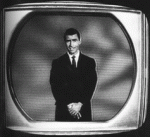
Imagine if you will—sort of Rod Serlingish—two other games going on simultaneously, one team whose sole focus is winning, the other whose focus is on the rules. For the rules-based team there is no winning. The best they can ever hope to do is to measure up to the rules by which they are judged. Millions have been spent on technology to help ensure that adherence. Adherence to the rules will be monitored, recorded, reported, and measured. The rules-based team’s ability to continue to play the game will be based solely on how well they follow the rules. Now imagine that the universes in which these two teams are playing collide and these two teams play their separate games but against each other. One team having never been told how to win, never been instructed to win, never even given permission to win. The other team’s only purpose is to win.

This is a nonsense game. One we play every day.  One team is the hospital’s patients the other team is the employees who are tasked with patient customer care, patient relationship management (PRM).  The patients are focused on winning, those tasked with customer care or PRM are not permitted or equipped to win.

It’s possible for these two groups to change the outcome, to take away the nonsense.  To make that happen, the rules must change.  PRM can be very effective provided that it is designed to help the patients “win”, designed to facilitate favorable outcomes for patients.  The trick to changing the outcome is that the hospital must understand that a win for the patients in most cases is also a win for the hospital.

saint

Patient Relationship Management (PRM)-why men can’t boil water

poker_head_pic

There was a meeting last week of the scions of the Philadelphia business community. The business leaders began to arrive at the suburban enclave at the appointed hour. The industries they represented included medical devices, automotive, retail, pharmaceutical, chemicals, and management consulting. No one at their respective organizations was aware of the clandestine meeting. These men were responsible for managing millions of dollars of assets, overseeing thousands of employees, and the fiduciary responsibility of international conglomerates. Within their ranks they had managed mergers and acquisitions and divestitures. They were group with which to be reckoned and their skills were the envy of many.

They arrived singularly, each bearing gifts. Keenly aware of the etiquette, they removed their shoes and placed them neatly by the door.

The pharmaceutical executive was escorted to the kitchen.

“Did your wife make you bring that?” I asked.

He glanced quickly at the cellophane wrapped cheese ball, and sheepishly nodded. “What are we supposed to do with those?” He asked as he eyeballed the brightly wrapped toothpicks that looked banderillas, the short barbed sticks a matador would use..

“My wife made me put them out,” I replied. “She said we should use these with the hors d’oeuvres.”

He nodded sympathetically; he too had seen it too many times. I went to the front door to admit the next guest. He stood there holding two boxes of wafer thin, whole wheat crackers. Our eyes met, knowingly, as if to say, “Et Tu Brutus”. The gentleman following him was a senior executive in the automotive industry. He carried a plate of freshly baked chocolate chip cookies. And so it went for the next 15 to 20 minutes, industry giants made to look small by the gifts they were forced to carry.

The granite countertop was lined with the accoutrements for the party. “It’s just poker,” I had tried to explain. My explanation had fallen on deaf ears. There is a right way and a wrong way to entertain, I had been informed. Plates, utensils, and napkins were lined up at one end of the counter, followed in quick succession by the crock pot of chili that had been brewing for some eight hours, the cheese tray, a nicely arrayed platter of crackers, assorted fruits, a selection of anti-pastas, cups, ice, and a selection of beverages. In their mind, independent of what we did for a living and the amount of power and responsibility we each wielded, we were incapable of making it through a four hour card game without their intervention.

I deftly stabbed a gherkin with my tooth pick. “Hey,” I hollered “put a coaster under that glass. Are you trying to get us all in trouble? And you,” I said to Pharmacy Boy, “Get a napkin and wipe up the chili you spilled. She’ll be back here in four hours, and we have to have this place looking just as good as when she left.”  I thought I was having the neighborhood guys over for poker; I was wrong. So was each of the other guys. We had been outwitted by our controllers, our spouses. Nothing is ever as simple as it first appears. We didn’t even recognize we were being managed until they made themselves known.
Who’s managing the show at your shop, you or the patients?  The answer to that question depends on who owns the relationship, who controls the dialog.  If most of the conversation about your organization originates with them, the best you are doing is reacting to them as they initiate the social media spin, or try to respond once the phone started ringing.  It’s a pretty ineffective way of managing.  It’s as though they dealt the cards, and they know ahead of time that your holding nothing.
There are times when my manager isn’t home, times when I wear my shoes inside the house—however, I wear little cloth booties over them to make certain I don’t mar the floor.  One time when I decided to push the envelope, I didn’t even separate the darks from the whites when I did the laundry.  We got in an hour of poker before I broke out the mop and vacuum.  One friend tried to light a cigar—he will be out of the cast in a few weeks.

Be afraid. Be very, very afraid.

saint

One component of H2.0, Social Media

fd24_1

With a torn Achilles tendon and two months in a cast, my running had hit a snag. What to do when you’d rather be running? Shop, and shop with the same zest and determination that I brought to running. After all, the two sports have a lot in common. One of the things I like most about running is that it can be done almost anywhere—just like shopping. I take my running shoes with me when I travel, just like I take my favorite store; EBay.

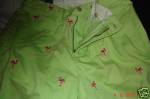
I just lost something on EBay I’d been tracking for six days. The chinos. Granted, not something everyone would wear. But I know of at least two people, me and the person who outbid me. Outbid me with four seconds left—my strategy. Over confidence killed me. I didn’t follow my own rules. I bid high with a few hours left, and since there wasn’t any activity, outsmarted myself. I usually rush in at the last second and dash someone else’s hopes. I don’t like losing, especially when there is no chance to regroup. After I lost I Googled, ‘lime green chinos with pink flamingos’. There aren’t any.

I was an earlier adapter, made more than 500 purchases ranging in price from a penny to more than $20,000. Only had a problem with one, a two-dollar knife sharpener. You can find anything you want on EBay, except for perhaps a second pair of lime green chinos with pink flamingos. I like EBay, a lot. What’s not to like? You have an almost infinite selection, everything is on sale, you don’t have to wait while a clerk takes a call from someone who interrupted the clerk from helping you, no need to pack the kids into the car, no gas to buy. You can think about a purchase for days before committing to it, so it eliminates the impulse buy. You can comparison shop, and you can rate the sellers. You can’t rate the sellers at the mall. It’s as close to a perfect social networking experience as you can get.

If you’re Venn-diagramming as you read, there’s EBay and there’s no-EBay.  There’s no intersection of the two groups.  The no-EBayers need additional tools just to keep up with their patients.  Those tools include patient relationship management (PRM) and social networking.  Without those tools, you’re forced to have a battle of wits with your patients, and you come to the battle unarmed.  These tools are part of what’s needed to navigate the gap between H0.2 and H2.0.

EBay knows they are on top of the social media discussion. How can you tell that they know it? There is no ‘contact us’ link that is readily visible. No way to reach out and call customer care. They don’t make things, they don’t inventory it, they don’t ship it, they simply collect the money, and they bought the firm that allows them to do that. They’ve reinvented the principle of the Maytag Man. Maybe somewhere there’s a person in a small office waiting to take a complaint call. If he is, he better not be wearing my lime green chinos with pink flamingos.

pastedGraphic.tiff.converted

Patient Relationship Management (PRM)

georgeIf you watch too much television your brain will fry. Sometimes I feel like mine is in a crepe pan that was left sitting on the stove too long. Two nights ago I’m watching Nova or some comparable show on PBS. The topic of the show was to outline all the events that took place that helped Einstein discover that the energy of an object is equal to its mass times the speed of light squared, better known as E=mc². It was presented to the audience at a level that might best be described as physics for librarians, which was exactly the level at which I needed to hear it. It’s physics at a level that is suitable for conversation at Starbucks or any blog such as this.

So here’s what I think I understood from the show. It tracked the developments of math and physics in 100 years prior to Einstein’s discovery. The dénouement appeared to occur when Einstein and his fiancée were riding in the bow of the small boat. Apparently, he was leaning over the side of the boat and noticed that the waves generated by the front of the boat moved at the same speed as the boat. He then noted that fact only held true for those persons in the boat, who were in fact, traveling at the same rate of speed. However for those persons watching from the shore, that same wave was not only moving slower than the boat it got further behind over time. Some other things occurred, yada, yada, yada, and there you have it. Clearly, the details are in the yada, yadas.

So here’s what happens when you watch too much television. As I’m running this morning somehow my mind takes pieces from that show and staples them together to yield the following. Let’s go back to the equation E=mc². For purposes of this discussion I’ll redefine the variables, so that:


E = the percentage of Patient Complaints/Inquiries.
m = Patient in-bound calls.
c = number of Patients


If this were true–this is an illustration, not an axiom–the percentage of complaints in the call centers of an healthcare provider is equal to the number of in-bound calls times the square of the number of patients. So as the number of calls increases the number of complaints/questions increases and as the number of patients increases the number of complaints increases exponentially. Of course this is made up, but there appears to be a grain of truth to it. As a number of calls increase the percentage of complaints is likely to increase, and as the number of patients increases there will probably be an even greater increase in the percentage of complaints incurred. I think we can agree that a reasonable goal for a healthcare provider is to decrease the percentage of complaints and perhaps to shift a hefty percentage of inquiries to some form of internet self-service vehicle. 

I think sometimes the way providers like to assess the issue of Patient Relationship Management  (PRM) is by looking at how much money providers throw at the problem. I think some people think that if one provider has 2 call centers, and another provider has 3 call centers, that the provider with 3 must be more interested in taking care of the their patients, and might even be better at PRM.  I don’t support that belief. I think it can be demonstrated that the provider with the most call centers, and most Patient Service Representatives, and the most toys deployed probably has the most problems with their patients. I don’t think it’s a chicken and egg argument. If expenditures increase year after year, and resources are deployed continuously to solve the same types of problems, I think it’s a sign that the provider and its patients are growing more and more dysfunctional.

How does this tie to Einstein and his boat? Perhaps the Einsteins are those who work with the provider; those who are moving at the same speed, those in lockstep. From their vantage point, the waves and the boat, like the provider and its patients, are all moving forward at the same speed. Perhaps only the people standing along the shore are able to see what is actually occurring; the waves distance themselves from the boat in much the same way that the patients distance themselves from the provider.

PRM is such an easy way to see large improvements accrue to the provider, especially using social media.

pastedGraphic.tiff.converted