Patient Relationship Management-Master of the Jedi Order

They don’t call me Yoda for nothing. This little rant is for those acolytes drinking the Kool Aid of disbelief, the recipe that says one day, if we stay the course, this will all get better.  These are those who believe the light at the end of the tunnel isn’t a train.
For the next few minutes try and disassociate yourself from your responsibilities at work and become a patient.  Recall a time when you’ve been a dissatisfied patient and afterward felt the need to interact with your provider. If you’re totally honest, the forthcoming interaction should quicken your pulse. Cold beads of sweat appear on your forehead, your palms feel a little clammy, and you feel an unexplained need to microwave your neighbor’s cat.

The transition is faster than Clark Kent in a phone booth. A mild mannered and pedestrian acolyte transformed into a right-winged, Myers-Briggs INTJ A-Type with a passion for metaphorically devouring the unfortunate person awaiting your phone call.

As you think about managing the equity of your patients think about it from the perspective of the patient, goodness knows they do. That relationship is black and white—there are no shades of gray. It’s good versus evil, Yoda versus Darth Vader.

Patients Experience Management versus Patient Experience Management.  See that little ‘s’ tacked on to the word patient?  One letter makes a world of difference.  Patients do experience the decisions of your hospital’s management, and oftentimes that experience is unpleasant.  That experience can involve a broad range of issues–billing, insurance, dispute management, scheduling, prescriptions.

I think with most patient interactions the patients believe that the person on the other end of the line (think hospital customer service person) is incented to make them go away as quickly as possible and at the lowest possible expense to the provider.

For most patients, patient loyalty is a thing of the past.

With whom do you do business? Why? For any product that is even close to being a commodity, I deal with the firm who I find to be the least offensive, the one that will irritate me the least. That’s why I buy cars on eBay so I never again have to hear the phrase, “What’s it going to take to get you into that car?” If you find yourself doing that, why is it such a stretch to believe so many patients feel the same way? That said, could it be rather naïve to believe your hospital’s current approach to patient relationship management will make any difference?
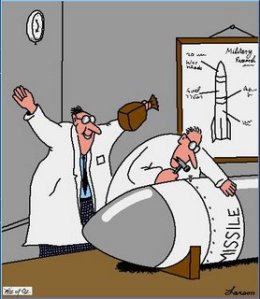
Patients Experience Management-why not think like one?

I met last week with a number of 1st Year MBA students who have a consulting club to help them figure out if they are suited for this noblest of all professions–supposedly the second oldest profession. “How can you tell if you’ll be any good at it?” They asked.

As far as I can tell, there are two basic requirements. One, you have to be a bit out of kilter, a strong dose of ADHD doesn’t hurt either. You have to hate repetition.   Second, it helps if you have a belief that there is almost nothing you couldn’t figure out how to improve. While thinking it doesn’t make it true, the attitude is a critical success factor.  It will also require being rather thick-skinned as some clients will require you to yell “unclean, unclean” as you walk their halls.

For example, last week I was at the post office.  Noon on the Wednesday before the holiday–lunch time rush hour.  I’m standing in a long line underneath a banner with a message emphasizing quality.

There are two clerks, postmen, postpersons, postladies–I’m not sure which one is most appropriate, but as we both know, I’m not going to lose any sleep over it either. The line is out the door. Clerk ‘A’ tells clerk ‘B’, “I’m going on break.” At which point I turned to the person next to me and uttered, “And I’m going to UPS.”   It’s not that difficult to improve.  Not letting half of your customer-facing employees go on break during your busiest time would be a good way to start to improve things.

It’s not rocket surgery. The title of the piece is not a typo.  Patients really do experience management, at least they experience many of their ill-conceived processes and rules.  Patient Experience Management, Patient Equity Management. Whatever you call it, big inroads can be made.  Quit thinking like an executive and start thinking like a patient and you’ll have plenty of ideas.


Patient Experience Management: Who is your Chief Patient Officer?

(This column is not outsourced to Mexico.)

How many chiefs can you name? C-Levels, not Indians. I found these–COO, CIO, CTO, CMO, CMIO, CEO, CAO, CFO, Chief Purchasing Officer, Chief Network Officer, Chief Engineering Officer, Chief Benefits Officer, Chief Development Officer, Chief Brand Officer, Chief Staff Officer, Chief Health Officer, Chief Legal Officer, Chief Quality Officer.

Besides who gets the corner office, these titles demonstrate a firm’s commitment to those areas of their business, and these positions provide that business sector visibility all the way to the top of the firm. There’s a certain cachet that comes from having your sector of the business headed by a C-Level. Those are the ‘in’ jobs, the jobs to which or to whit one is supposed to aspire. You never see anyone clambering for a B-Level position. B-Level is the repository for all non C-Level jobs.

Remember Thanksgiving dinner when you were a child—apologies to those of who aren’t from the colonies. Anyway, if yours was anything like mine, there were two tables, the nice dining room table for the adults, and the smaller card table for the children, the B-Level guests.

So what does this have to do with patient care? You tell me. Let’s go from the premise that the C-Level positions are an accurate reflection of you firm’s focus. Why are we in business? If you go from the premise it must be because of finance, marketing, IT, Purchasing, or any of a dozen other things. The only thing missing in this view of the firm is the patient. The only entity without a seat at the grownup’s table is the person in the firm responsible for the patient. It seems to me a firm’s very existence, it’s raison d’être, is the patient. If that’s true, when do they get to eat with the grownups?

McKinsey published a study conducted with 1,000 CEOs and COOs to rank their top 5 initiatives over the next five years.  Ninety percent of them ranked Patient Experience Management as either their first or second priority.  The punch line of the study was that they did not know who in their organization “owned” the patient.  How is that for leadership?

If they don’t own the patient, I am willing to bet the patient owns them. If that is the case, Social CRM, S-CRM, will not be doing these executives any favors.


Could social media be the answer?

The wheel’s still turning, but the hamster is dead. One Brady short of a bunch. I like the ocean one because it reminds me of a bit done by the comic Ron White. In the bit he talks about the time he met a woman who was wearing a bathing suit made of sea shells which he held to his ear to find out if he could hear the ocean. Maybe you had to be there.
All day I’ve been operating as though I was one Brady short of a bunch—I actually have cufflinks with Marcia Brady’s picture on them, but we’ll save that for another day. The day’s highlight revolved around my daughter’s doubleheader field hockey matches–third and fourth grade girls. Their opponents looked better, older. In fact, I thought I saw one or two of them drive themselves to the field. Forty-eight degrees, first game at 8 AM. Not enough time to grab breakfast and get to the game on time. I dropped my daughter at the field and headed to a nearby convenience store to buy her a donut. As I pulled into the parking lot I noticed that I needed gas, so I figured why not multi-task it. I inserted the nozzle in the tank, went into the store, purchased a donut, and proceeded to drive away.

For the metrics lovers, those who like order over chaos, those whose desk is always neat, have you discovered my Brady moment? My purpose in going to the store was to buy a donut, not gas. My mind was focused on the donut, not on the gas. Once the donut was resting safely on the passenger’s seat my mission was over, or so I thought. Something was gnawing at me as I pulled away from the pump, something that flared at me in my rearview mirror. I knew what it was a full second before my body got the message to react to it. “Hit the break,” my mind screamed. I could see what remained of the black gas pump hose as it pirouetted helplessly behind my car. I fully expected the entire gas station to be consumed by a giant fireball like the one at the conclusion of the movie Rambo. Once I was convinced that neither I nor–it turns out that neither nor does not violate the rule of using a double negative in a sentence–anyone else in the vicinity was in mortal danger, I exited my car and walked to the pump.

My first reaction, and I don’t know why, was to see if the pump was still charging my credit card. Selfish? That means that subconsciously I had already made the decision to flee, but that I didn’t want to flee if my charge card was still open. I retrieved the severed hose from the ground and inserted it in the pump, thereby closing out the sale on my credit card. I looked around. There wasn’t anyone who had witnessed my little AARP moment. Since they hadn’t, I figured why bother anyone. Kismet; my turn on the hamster wheel.

I’m convinced it’s the little things that determine whether your initiatives succeed or fail. It’s usually nothing tricky, nothing that requires two commas worth of new technology. It’s being focused and being committed to excellence in the menial tasks which comprise each patient interaction, especially those that occur outside of the office. What little things are being overlooked in your practice?  Could social media solve some of these?  In a heartbeat, and for a cost that would surprise you.

Oh, and don’t forget to hang up the hose when you’re done.


Patient Relationship Management–why patients and hospitals collide

When universes collide, or is universi the plural? Not that is matters. I was watching NOVA.  The show focused on the lead singer of the Indie group The Eels.  The show walked through the singer’s attempt to understand was his father had done for a living.  His father was a physicist, in fact he was the person who came up with the notion of colliding universes. Colliding universes has something to do with quantum mechanics and cosmology—did you also wonder what makeup had to do with particle physics? In its rawest meaning, parallel universes have something to do with the notion of identical worlds living side-by-side, with no notion of each other, with differing outcomes from similar events. Got it?  Me either.

I’ll try to illustrate if for nothing else than my own attempt to understand. Let’s say I’m concurrently teaching my two sons to play two different card games, Poker and War. Poker, albeit a game of chance, is heavily rules-based—when to bet, when to fold, when to raise. On the other hand, War is purely a game of chance. The poker player likes rules and order. The one playing war—he’s seven—likes to win, and will do what is required to bring about that outcome. Each one plays independent of the other, using the tools at their disposal to direct the outcome of the game in their favor. They are oblivious to the goals and tactics employed by the person sitting beside them. Parallel universes.

What if we allowed these two universes to collide, to come into conflict with one another? For example, let’s say I have them play each other and I re-deal the cards, giving one the cards he needs for a poker hand, and the other the cards to play war. I then instruct them to play one another. The poker player becomes focused on the rules, and the one playing war has a laser focus on one thing—winning. The poker player quickly caves, knowing that he is engaged in a futile endeavor. This does not bother the other one whose only focus was to win.

Imagine if you will—sort of Rod Serlingish—two other games going on simultaneously, one team whose sole focus is winning, the other whose focus is on the rules. For the rules-based team there is no winning. The best they can ever hope to do is to measure up to the rules by which they are judged. Millions have been spent on technology to help ensure that adherence. Adherence to the rules will be monitored, recorded, reported, and measured. The rules-based team’s ability to continue to play the game will be based solely on how well they follow the rules. Now imagine that the universes in which these two teams are playing collide and these two teams play their separate games but against each other. One team having never been told how to win, never been instructed to win, never even given permission to win. The other team’s only purpose is to win.

This is a nonsense game. One we play every day.  One team is the hospital’s patients the other team is the employees who are tasked with patient customer care, patient relationship management (PRM).  The patients are focused on winning, those tasked with customer care or PRM are not permitted or equipped to win.

It’s possible for these two groups to change the outcome, to take away the nonsense.  To make that happen, the rules must change.  PRM can be very effective provided that it is designed to help the patients “win”, designed to facilitate favorable outcomes for patients.  The trick to changing the outcome is that the hospital must understand that a win for the patients in most cases is also a win for the hospital.


Revising patient interactions via social media and CRM

For those who don’t have time for 140 characters, or who don’t have much to say, I’ve created an alternative, smidge.com. The Urban Dictionary defines a smidge as a small amount of something, short for smidegeon.

This will revolutionize the interaction between patient/customers and the healthcare provider. We all know how annoying customers can be. Why should providers continue to enable bad behavior? They call, fax, email, and tweet. Enough already.

It’s time providers show a little backbone, show the customers who’s in charge.

Here’s how smidge.com works. Each time a customer interacts with you, give the patient their smidegeon account. Explain to them that this is their private way to communicate with you. It’s instantaneous, totally secure, and it operates 7 x 24 x 365. No more navigating IVRs, no more being placed on hold, no longer will they be transferred to another agent, never again will they be monitored for quality control purposes. Let the customers know that anytime they want to smidge, the world is theirs.

Explain to them that you are doing away with archaic forms of interacting; closing your call centers, throwing away your fax machines, and deleting your presence on the web. What are the advantages to your firm? They’re almost too many to document. Think of the capital savings. No more IT expenditures to support those millions of whining customers. No more CSRs complaining about not being allowed to browse the web, or about not getting their mid-morning break.

And now for the best part. In order to minimize bandwidth and storage costs, each smidegeon only allows the user to use each letter of the alphabet one time, meaning the largest smidge can’t exceed 26 characters. The longest message one could get is, “The quick brown fox jumps over the lazy dog”.  That being the case, there will no longer be any justification for the customer complaining that your company didn’t resolve their problem.The roles will be reversed. The upper hand will now go to the company.

How? Let’s look at an example. The patient wants to smidge the following change of address information, “We are moving on October 13 to 1175 Harmony Hill Road, Spokane, Washington. Please forward our bill.” Since smidges don’t allow numbers, we’ve already simplified the message, and the ease of entry. Now, if we translate the message into a correctly formatted smidegeon, we get the following message, “We ar moving ctb Hny l d Spk f u b d.” Now, how can you be expected to understand that kind of nonsense? If you can’t understand it, how can your patients possibly blame you

You Don’t Need an MD to Fix Patient Experience Management

This is my new post in healthsystemcio.com, I’d like to get your thoughts.

http://healthsystemcio.com/2010/09/30/you-dont-need-an-md-to-fix-patient-experience-management/

Patient Relationship Management (PRM)-grab the ball

My newest post on healthsystemCIO.com.  http://healthsystemcio.com/2010/07/07/patient-relationship-management-prm-grab-the-ball/

Why can nobody lead?

Abnormal


I remember the first time I entered their home I was taken aback by the clutter. Spent and wet leaves and small branches were strewn across the floors and furniture. Black Hefty trash bags stood against the walls filled with last year’s leaves. Dozens of bright orange buckets from Home Depot sat beneath the windows. The house always felt cold, very cold. After a while I learned to act normally around the clutter.

There came a time however when I simply had to ask, “Why all the buckets? What’s the deal with the leaves?”

“We try hard to keep the place neat,” she replied.

“Where does it all come from?” I asked.

“The windows.”

I looked at her somewhat askance. “I’m not sure I follow,” I replied as I began to feel uneasy.

“It’s not like we like living this way; the water, the cold, the mess. It costs a fortune to heat this place.

And, the constant bother of emptying the buckets, and the sweeping of the leaves.”

“Why don’t you shut your windows? It seems like that would solve a lot of your problems.”

She looked like I had just tossed her cat in a blender.

When you see something abnormal often enough it becomes normal. Sort of like in the movie The Stepford Wives.  Sort of like Patient Relationship Management (PRM). The normal has been subsumed by the abnormal, and in doing so is slowing devouring the resources of the hospital.

Are you kidding me? I wish. It’s much easier to see this as a consultant than it is if you are drinking the Kool Aid daily. When I talk to people about a statistic that indicates that 500 people called yesterday about their bill, and everyone looks calm and collected, it makes me feel like I must be the only one in the room who doesn’t get it—again with The Stepford Wives.

saint Paul M. Roemer
Chief Imaginist, Healthcare IT Strategy

1475 Luna Drive, Downingtown, PA 19335
+1 (484) 885-6942
paulroemer@healthcareitstrategy.com

My profiles: LinkedInWordPressTwitterMeetupBlog RSS
Contact me: Google Talk/paulroemer Skype/paulroemer Google Wave/paulroemer

If I ask about it they always have an answer.  “Billing calls are usually around 500 a day.”  They say that with a straight face as though they are waiting to see if I will drink the Kool Aid. It’s gotten to the point where no matter how bad things get, as long as they are consistently bad, there not bad at all.

This is the mindset that enables the PRM manager (I know you don’t have one—I am being facetious) to be fooled by their own metrics. When is someone going to understand that repeatedly having thousands of people calling to tell your organization you have a problem, means you have a problem?

It would probably take less than a week to pop something on your web site, and post a YouTube video explaining how to read the bill.  Next week, do the same thing and help patients understand how to file claims and disputes—granted, you may need more than a week for this one.

Who is minding your patients, your equity?

Did I mention that I like to sing? No? Don’t tell anyone, but I just downloaded some Tom Jones to my MP3 so I can belt out a rendition of Delilah while I’m running—I only do this when I’m certain nobody is around. This doesn’t quite foot with my college collection of albums from Pink Floyd, Genesis, and Queen.

Then there was the time I was on a date at a roller rink. I was probably dressed in a pair of tight fitting bell-bottoms, an equally tight fitting rayon shirt unbuttoned to who knows where—hold the laughter. My almost shoulder length hair half-hid a puka shell necklace.

It may be important to know that although I had ice skated, I had never roller skated. There are a few not so subtle differences between the two.  Most notably, the sadist who designed the roller skate must have thought it amusing to place a large round rubberized wheel on the front of the skate in much the same position as a car bumper. I have no idea what is supposed to do. What it does do is stop you on a dime, especially when you have no intent of stopping.

Let’s see if we can tie some of this together. I’ve never felt that I actually needed to know how to do something in order to develop my own unsubstantiated delusions of adequacy—that probably explains why I’ve been consulting all these years. Anyway, back at the roller rink.

Barry Manilow’s “I Write the Songs” was being piped overhead through speakers the size of a dishwasher. Feeling much too confident for my abilities, I dragged my date to the floor. We stood side by side. I grasped her hands in a crisscrossed fashion like I had seen skaters do on television. After circling the rink for half a lap—watching my feet the entire way—I thought I should further dazzle her by singing. I should point out that it is difficult to sing and simultaneously watch your feet, a fact I didn’t learn until I was airborne. This takes me back to the rubber wheel on the front of the roller skate. We crashed to the floor and quickly took out the next thirty or so couples who were following us. It looked like a conga line run amuck. For the next hour or so it seemed like everyone in the rink pointed at me as though they were trying to warn others to stay away.

I haven’t sung any Manilow since that fabled night. Maybe it has something to do with the fact that times change and tastes change. Now I listen to groups like Dashboard Confessional and Great Lake Swimmers. I still interface with those closeted Manilow fans. Gone are the bell-bottoms and platform shoes, replaced by micro-fiber trousers, Droids, and Cole Hahns. My collar-length hair has a more monastic cut.

I’ve aged, so has my generation.  Aged to the point where they now have the power. Those people own the decision making process in most hospitals.  They may be the people calling the shots in yours. How can you tell if the person wearing the eighties polyester is one of them? Walk past her humming a few bars of Mandy or Copacabana, or something from The Captain and Tennille, and see if she hums back.

Is your Patient Equity Management (PEM) strategy is as dated as the double knits?  Or did I get ahead of myself; does your hospital even have a PEM strategy?  Odds are that there is no PEM strategy, no PEM group or executive.

Hospitals are quite good at managing their assets.  I bet your hospital has someone who can tell you how many chairs, televisions, beds and bed pans you have.  Assets.  We count them because we don’t want to lose them.  That is how businesses are managed.

In today’s dollars over their lifetime the average person in the US will spend more than $600,000 on healthcare.  Patients.  Assets.  They are a big part of your hospital’s equity base.

Who is minding your patients, your equity?  I don’t mean the doctors and nurses.  Who is responsible for making sure discharged patients return to you the next time they need a hospital?  Who manages that relationship for the hundreds of days between hospital visits?  Probably nobody; at least nobody in your organization.  Wanna’ bet somebody in the hospital on the other side of town is studying how to turn that $600,000 patient into one of theirs?

In case you’re wondering, the episode at the skating rink was our last date.