Is it time to rethink your approach?

goatSo I’m making dinner the other night and I’m reminded of a story I heard a while back on NPR. The narrator and his wife were telling stories about their 50 year marriage, some of the funny memories they shared which helped keep them together. One of the stories the husband related was about his wife’s meatloaf. Their recipe for meatloaf was one they had learned from his wife’s mother. Over the years they had been served meatloaf at the home of his in-laws on several occasions, and on most of those occasions his wife would help her mom prepare the meatloaf. She’d mix the ingredients in a large wooden bowl; 1 pound each of ground beef and ground pork, breadcrumbs, two eggs, some milk, salt, pepper, oregano, and a small can of tomato paste. She’d knead the mixture together, shape into loaves, and place the loaves into the two one-and-a-half pound pan, discarding the leftover mixture. She would then pour a mixture of tomato paste and water, along with diced carrots and onions on top of the two loaf, and then garnish it with strips of bacon.

He went on to say that meatloaf night at home was one of his favorite dinners. His wife always prepared the dish exactly as she had learned from her mother. One day he asked her why she threw away the extra instead of cooking it all. She replied that she was simply following her mother’s recipe.  The husband said, “The reason your mom throws away part of the meatloaf is because she doesn’t own a two-pound baking pan. We have a two pound pan. You’ve been throwing it away all of these years and I’ve never known why until now.”

Therein lays the dilemma. We get so used to doing things one way that we forget to question whether there may a better way to do the same thing. Several of you have inquired as to how to incorporate some of the EHR strategy ideas in your organization, how to get out of the trap of continuing to do something the same way it’s been done, simply because that’s the way things are done. It’s difficult to be the iconoclast, someone who attacks the cherished beliefs of the organization. It is especially difficult without a methodology and an approach. Without a decent methodology, and some experience to shake things up, we’re no better off than a kitchen table amateur (KTA). A KTA, no matter how well-intentioned, won’t be able to affect change. The end results would be no better than sacrificing three goats and a chicken.

So, we’ll talk about how to define the problem, how to find a champion, and how to put together a plan to enable you to move the focus to developing a proper strategy, one that will be flexible enough to adapt to the changing requirements. But keep the goats and the chicken handy just in case this doesn’t work.

021_18A

How do I know if we’re in trouble?

FunnyCheckDoes anyone remember how many of each type of animal God told Moses to put on the ark? Are you sure? For those who missed it, Noah built the Ark, Charlton Heston built the stone tablets.

One word can make the difference between right and wrong, especially if the question is big enough. Who is asking the questions that are shaping your firm’s EHR strategy? Are they asking the right ones?  What are the right questions?  If your the person responsible for the money that will be spent on EHR, any of these deserve an answer;

  • If the ARRA money went away tomorrow, would we still be doing EHR?
  • May I see a copy of our EHR plan?
  • Who vetted the plan?
  • If so, would we still be doing it the same way?
  • Would we still have selected this vendor?
  • Did we issue an RFP?
  • How did we choose who received the RFP?
  • What criteria did we use to select the vendor?
  • Who in our shop had any experience writing an RFP of this nature?
  • Who has ever evaluated an RFP like this?
  • What commitments do we have from the vendor about meaningful use?
  • What commitments do we have from the vendor if meaningful use changes?

These are very basic questions, but I bet if you ask them of your team, you will not be pleased with several of the answers.  If they can answer all of them to your satisfaction, they may proceed to step two.  If not, send them back for another try.draft_lens5971462module46826602photo_1247932409Creative_Loafing_-_Hanging_out_-_GBowen

EHR: How to recover from poor planning

feathersSuccess and failure are often separated by the slimmest of margins. Sometimes you have to be prepared to think on your feet to out think unfavorable circumstances. Sometimes success hinges on how you present your idea. It is possible to force the circumstances via rapid evolution to pass from problem, to possible solution, to believable, to heroic? I believe so.

Permit me to illustrate with frozen chicken. Several hours before dinner I threw the frozen chicken breasts into the sink, choosing to thaw them with water instead of the microwave. Some twenty minutes later while checking emails I wondered what we were having for dinner. Not to be outdone by own inadequacies, I remembered we were having chicken. I remembered that we were having chicken because I remembered turning on the hot water. The only thing I couldn’t remember was turning off the hot water.

I raced to the kitchen. My memory was correct. Grabbing every towel I could find, I soaked up the puddles from the hardwood flooring, thinking while mopping about how I might answer to my wife if she happened to return to a kitchen that looked like the Land of Lakes. My first reaction, admittedly poor, was to tell her that I thought the countertop wasn’t level and that the only way to know for sure was to see which direction the water ran. Telling her the truth never entered my mind.

Once the major puddles had been removed, I worked on version two of the story, quickly arriving at a version of the truth that was more palatable—tell her I decided to wash all the towels. Why not get bonus points instead of getting in trouble? Version three looked even better. Since I was wiping the floor with the towels, instead of telling her I washed the towels, why not double the bonus points? I decided to wash the floor, and wash the towels. Husband of the year can’t be far off.

A few hours have passed. The floor is dry—and clean, the towels are neatly folded and back in the linen closet, and the chicken is on the grill. All the bases covered. A difficult and embarrassing situation turned into a positive by quick thinking.

A few of you have asked, let’s say we buy into what you are saying, how do you propose we turn around our EHR approach? All kidding aside, it comes down to presentation. Clearly you can’t walk into a room with a bunch of slides showing that your EHR investment was wasted. The first step involves defining the quantitative returns that can be achieved by changing the focus of EHR away from ARRA money and Washington the the business problems EHR will address.

So, how did the dinner turn out? I was feeling confident that I had sidestepped to worst of it. Overconfident, as it turned out. My son hollered from the basement, “Dad, why is all this water down here?”

saint

EHR: How to purchase an EHR

shoppinggirlAre you really going to where that?  Do these pants really make my…


Did you ever have one of those non-halcyon days when you felt the need to ask someone “Did a house fall on your sister?”  Try to stay with me, it will come to you.  Enough about falling houses Toto.

I sought the counsel of a friend before heading down this path, and I’ve decided to choose the road less traveled anyway.

I may have written that I have observed differences between men and women.  You too?  Here are a few examples from my side of the gated compound.

  • We are willing to make mistakes as long as someone else is willing to learn from them
  • A good excuse is almost as good as getting it right
  • Good intuition will often make up for a lack of any facts
  • We refine our personality flaws, for without them we may not have a personality
  • Peter the Great heard the voices too

I regret that I am unable to share my list about women, for I am a coward.

While shopping the other day, I noticed that women shop for clothing differently from men.  For women, shop is a participatory verb—whatever that is—involving all twelve senses, for men it’s something we’d rather do online while watching the game.  From what I’ve observed, in fostering the she-conomy women:

  • Do their homework—what’s in, what’s not, what’s on sale
  • View shopping as a competitive sport, for some, a blood sport
  • Try on things, often more than once
  • Buy something they may need in case they someday find some other thing they may need that may go with it
  • There is no rule about having too many shoes—buy in volume
  • There is no rule about having too many black shoes

So, let’s see if we can segue beyond this jingoistic tractate on one to something more in line with the lofty subscription fee you paid for this site.

Permit me to employ two definitions which help me keep my ideas cogent.

  • IntraEHR—EHR statements that relate mostly to the healthcare provider
  • InterEHR—EHR statements that relate mostly to the movement  or transport of the EHR record from point A to point B

EHR and shopping.  Can one be at one with this duality?  How can one not be?  From having spoken with a number of healthcare providers about their IntraEHR selection, my take on a lot of the process is that more often than not there is no process.  It’s a lot like watching men shop.  It’s over and done with without much reasoned or substantiable—I was afraid I’d have to invent this word but I found it on Google—thought.  Over and done with, now back to the game.

Maybe EHR scholars will one day be able to trace speed buying of IntraEHRs back to that whole Neanderthal hunter gatherer thing in the Pleistocene epoch.  Sort of a think fast on your feet or you’ll be eaten approach to software selection—an awful metaphor, however CNN ran a feature with that title, so it has some legitimacy.  Maybe the hospital’s executive committee will be able to trace the hastily made IntraEHR purchase back to a lack of a plan, the lack of business requirements, and the lack of an adequate request for proposal RFP.  Maybe your successor will figure it out.

For those who haven’t contracted for their IntraEHR, it may be better to approach this like a woman.  To those who are women—you should know who you are—you are probably already approaching it that way.

Now, where did I leave my black pumps?  And no, I am not going to finish my thought about the pants.

pastedGraphic.tiff.converted

How large is the reform effort?

dr_evil_one_million_dollarsA trillion dollars.

What does a trillion look like?  A dollar bill is about six inches long.  Stacked end to end, a trillion dollars would go from the earth to the sun, and back, twice.

Healthcare is one fifth of our economy.

One fifth of our GDP is larger than the GDP of five of the G8 countries, including France and the UK.  Would we try to reform the entire economy of the UK?  Would we succeed?

We have about six million miles of paved roads in the US.  How long do you think it would take the government to repave twenty percent of them, 1.2 million miles?  Could they do it?

Maybe we really should have a plan before we write a check.

pastedGraphic.tiff.converted

Inside & Outside

When speaking about EHR system there are huge differences from an implementation and usage standpoint depending on if one is discussing record inside the healthcare provider or the movement or transport of the information from point A to point B.

Since most EHR statements have to do with one or the other, not both, for purposes of clarity, is there merit to labeling statements about EHR that mostly relate to the healthcare provider as IntraEHR, and those dealing the the transport of the record as InterEHR?

The_Saint_Pin

Your EHR –Do you neeed to change the threat level?

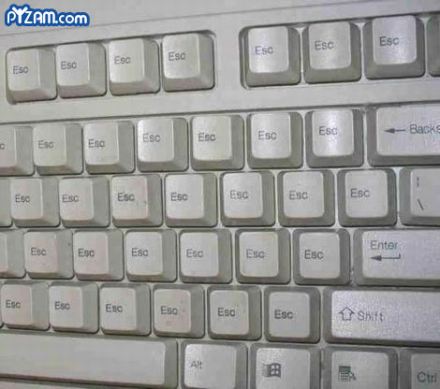
escapekeyboard“Step away from the wall,” Veronica yelled through her ear microphone, loud enough so everyone could hear her.
I knew if I released my grip, the chances of me remaining upright weren’t very good.  Permit me to roll back the clock thirty minutes.  Friday morning in Philadelphia.  It’s raining.  In Texas they call this much rain a frog-floater.  Two and a half hour delays at the airport.  A cold biting rain, the kind that sees you in Gortex and simply laughs at you for being too silly to be indoors.

I cancelled my run and decided to sit in on one of the classes at the gym, take a break, rest up for a long run tomorrow.  The only class scheduled was kickboxing, and it’s being led by the mother of my seven year-olds best friend—not exactly my biggest physical threat. She wore her hair like Veronica in the Archie comic books, and because I couldn’t remember her real name, for purposes of this narration, that’s how we will address her.  I don’t even know what kickboxing is, but I know it doesn’t get any easier than that.  I’d finished my lifting, finally got to thirty pull-ups today—yes, in a row, and I was pumped.

I walked into the mirrored room.  The floors were recently shellacked—I love the smell of shellac in the morning.  Spandex clad women decked out in puce—isn’t that a great word—purple, lime green, and hot pink were everywhere.  The music—some sort of electronic something or other—started to blare and bodies started to move.  Knowing that I wouldn’t be sucking wind, I thought about asking Veronica to put on some music with words so we could sing along.  She gave me one of those looks that said, “In five minutes you will be so mine.”

The class is scheduled to last sixty minutes.  We began by jumping rope and I almost broke both of my legs—I am the poster boy for the theory that white men can’t jump.  I grabbed a pair of dumbbells to do with the exercises, just to make sure I got a bit of a workout.  Twelve minute into the class and I looked like the rain had followed me inside.  At minute thirteen, I dropped the dumbbells.  By minute sixteen, I no longer had any feeling in my shoulders.  I thought I saw a few of the participants checking me out, one advantage of being the only Y chromosome in the class—the one closest to me came over to ask if I was okay.

A twenty-second break for a sip of water—I had already downed my liter.  The colors of the spandex outfits had started to blur into what looked like a Peter Max painting that had been left out during a downpour.  Minute twenty-two, thighs are burning.  Twenty-four, I am found clinging to the wall.  I would not have made the twenty-fifth minute.  I reached for my cell phone and pretended that I had a voice message.  Two minutes later, I crawled out of the room.

I had under estimated the threat level, under planned, and under delivered, surpassing even my own inadequacies.

My fall from grace was short lived.  A fall from grace once you get beyond seven figures of cost implementing your EHR won’t be so short lived.  Those names will echo down the commercially carpeted hallways for a long time.

What’s being under planned?  The plan for one thing.  Once you’re into eight figures, I hope you have a written and signed-off plan.  That sign-off may be your life jacket, unless they decide to parole only those above you.  Once you get into even the potential of a nine-figure spend, I’d plan on a planning process of three to six months.

Anything less may find you clinging to a wall.

021_18A

Acronym-free EHR–Same Great Taste, Less Confusing

acronymsI raised the following question on Twitter:  Who blieves the current approach (PR, EMR, EHR, Rhio, to NHIN) will actually work in 3, 4, or 5 years?  Will you state why.  I do no think it will.

I raise it here as well.  Can you make an agrument to help me understand what needs to happen for this to possibly work?


  • 400 vendors
  • 300-400 RHIOs–some home made
  • a few hundred standards groups
  • a few hundred thousand instnaces of EHRs
  • 300 million patients


The combinatorics alone of getting my PR up the food chain and back down to the right place should be enough to bring it to the idea to its knees.

Remember that ice-breaker kids play at parties where they sit in a circle?  A phrase is whispered in the ear of one child, and each child in turn whispers the phrase to the person next to them.  By the time the phrase returns to the originator, it sounds nothing like to original.

A colleague whose opinion I respect wrote that I’d get better responses if I explain the acronyms, so that why we’re here.

The offending terms are:

PR–Patient Record

EMR–Electronic Medical Record

EHR–Electronic Health Record

RHIO–Regional Health Information Organization

NHIN–National Health Information Network

Does anyone know of a link to a good healthcare IT/EHR acronym glossary?

My work here today is done.

021_18A

Conversations with a Wildebeest

my neighbors

my neighbors

Today’s narrative follows directly from yesterday’s tale of the wildebeest, so it may be helpful to revisit to prior post.  Suffice it to say that the Neiman’s set wasn’t thrilled to learned I  compared them to our cloven friends.

One rule of the Kalahari is that the pursuer must approach the prey stealthily. Picture if you will a David Attenborough looking and sounding chap, more suitably attired to attend a formal tea than a desert trek, inching towards that same Baobab tree we discussed in a prior narration. Bands of perspiration rim his pith helmet, darkening it. He pats his forehead with a freshly pressed linen handkerchief and returns it to the breast pocket of his Khaki shirt. The wildebeest have moved from the shade of the tree to the nearby watering hole. While some stand guard, he notices that a few at a time quench their thirst. For protection the youngest of the wildebeest ensconce themselves in the middle of the circle. The narrator moves the boom of his microphone towards the herd.

“Did you see the Greatest Looser last night?”  Inquired the group’s leader.

“I TIVO’d it.”

“Can I come over and watch it with you?” asked a third as she quenched her thirst with a half-caf, mocha frappachino iced latte. “I totally spaced.”

The circle of soccer moms seemed to tighten as they saw me approach. “Still blogging?” coyly asked the wildebeest—cum soccer mom–wearing the Lilly Pulitzer capris.

All wildebeest aside, here’s the deal. I want to have a conversation with you. I need your help. Here’s my premise. Somewhere along the way we lost our edge, our hunger for excellence. There was a big push twenty years ago, a lot of attention was paid to the topic, and a lot of people cleaned up writing books and giving seminars. I want your help in understanding what brought about the loss of excellence and what can be done to turn it around. I’d like to learn what you’ve seen and heard. You don’t have to name the organization. I won’t name names, yours or the organization. You can send me a message, a private email, or post it for everyone.

Some ideas for comments include but aren’t limited to:

1. What’s broken
2. Why isn’t it being fixed
3. Where does the breakdown for excellence occur
4. Why patients leave
5. What makes them mad
6. Why do they hate a given provider
7. Do patients think they matter
8. Who has the power to solve the problems
9. Do providers want to be excellent business people
10. Is excellence profitable
11. What 3-5 things can a provider do to get on the right path
Thanks in advance.

How does this impact EHR?  It has everything to do with it.  If you only remember one thing, let it be this: It’s not about the EHR.  The EHR is a vehicle.  It can either be a vehicle for change, or it can be used to hamper change.  All the EHR really does it automate certain things.  It’s easier to automated inefficient and ineffective things than it is to automate efficient and effective things.  Why?  Because the bulk of the work lies in making them efficient and effective.  That’s where the change management and workflow efforts come into play.

My best- Pauleddiesmal

May I have a receipt for the EHR in case I need to return it?

rman1560lThe hospital we use just dedicated a new wing.  For months the job site was a maze of people, duct, and tools.  It cost $145 million.  There’s a plaque displaying the name of the architect, the contractor, the mayor, and the rest of the adults who made it happen.  While it was being built there were numerous permits, certifications, and sign-offs taped to the building.  Their purpose was to ensure the public that the adults were keeping an eye on things.  A phase of work couldn’t be started until the prior phase had all the requisite sign-offs.

Those in authority had to be licensed.  Had to be certified as qualified.

They have another project underway.  One that costs more than the new wing and impacts more people.  This one doesn’t have a blueprint.  There are no building permits.  No certifications.  No licensed professionals.  You can’t even see it.  There are no hard-hatted workers.  No foreman.  You know who’s in charge of the project?  A hospital executive—prior experience—zero.  Has he ever built one before?  No.  Does he know what to do when he encounters risks, pitfalls?  No.  There is one other person running the show—a vendor—that should let everyone get a good night’s sleep.

Would anyone let this same executive be in charge of building a new wing?  Of course not.  Why then do we not employ the same standards for what will turn out to be the most expensive and far reaching non-capital project that the hospital will ever undertake?  If you think you know, please share your answer.

By the way, I asked one of those executives how it was that he happened to be selected to lead the EHR project.  “I forgot to duck,” he quipped.  I guess that’s as good a reason as any.

pastedGraphic.tiff.converted