National Consultant Month

Judging by the violent nature of the stab wounds, I'd say the victim was probably a consultant.

Judging by the violent nature of the stab wounds, I'd say the victim was probably a consultant.

I Googled it and there’s nothing.  I am starting one.  Have you hugged your consultant today?

There’s “employee of the month,’ “customer of the month,’ but, there’s no “National Consultant Month.”  Why?  Hallmark doesn’t even make a card for it.

pastedGraphic.tiff.converted

Will healthcare reform make private practice illegal?

home-by-nowI don’t have an answer.  However, I have not heard anyone in DC categorically state this will never be the case.

Perhaps illegal is too strong a term.  However, and I know this analogy is way over the top, but the first things that came to mind for me when I thought of it was farming in communist countries.  Farmers weren’t allowed to sell their crops on their own, they worked for the state and had to grow what the state told them to grow.

Please tell me why this idea is nonsense.

alien

Can an argument be made for a National browser-based EHR?

n6PdKiYWhhkxc9ypJgsdo554o1_400Of course it can.  Let us go forth from this time and place and let it be said it started here. Or not.  Five years from now you will buy a laptop for $100, the software will be free–it will pay for itself with ads.  Memory will be on-line, you will pay for apps.  Just like a camera and film, a cell phone and minutes.

The technology already exists for browser-based EHR.

What do you think?

Just say no to logic

Just say no to logic

Dr. Seuss on EHR

The Cat in The Hat Comes BackMy mind is a raging torrent, flooded with rivulets of thought cascading into a waterfall of creative alternatives. (Hedley Lamar—that’s Hedley)

Let’s see if we can tie this collection of thoughts into something that won’t waste your time or mine.

The sun did not shine.  It was too wet to play.  So I sat in the house all that cold, cold, wet day.  It was too wet to go out and too cold to play ball, so I sat in the house and did nothing at all. (Dr. Seuss)  It was around that time when my wife decided maybe this whole sitting around thing wasn’t optimizing my time, so she decided “we”—which can also be interpreted to mean “me”—should caulk the master shower.  Personally, I thought that why God invented the Yellow Pages, you know, the whole thing about, “Let your fingers do the walking.”

I notice we just blew through an entire paragraph without accomplishing anything.  Sorry.  I got my designer tool belt, the same one I’ve had for twenty years—still looks the same as the day I bought it.  Today’s Roemer Minute—the less you know about what you’re doing, the more important it is to dress the part.  (This does not seem to work with the people whom I’ve told that I’m studying cardiology.)

Tool belt.  Tools—caulk taker-outer, caulk puter-inner.  Paper towels—the need for these will become clear.  Worse case, this is a ten minute job, but if I finish too quickly, there will be additional assignments coming my way.  The trick with caulking is that the success or failure can all come down to how much of the plastic tip you circumcise (can I say that on TV?).  Too much and caulk is everywhere, not enough and it is nowhere.  I made the incision and started to lay down the first bead.  It was quickly apparent that I should have used clear caulk as the white stuff stared back at me like bleached bones—I try and add a little medical flavor wherever I can.

I’ve watched the same shows as you.  Sometimes people spread the caulk with a tool, others prefer a wet finger.  I am equally unskilled with both, so I went with the finger method, smoothing the caulk into the joint.  I wipe my sticky white finger on the paper towel, place the towel on the limestone tile, and return to work, only to notice that although the caulk looks good, my finger created to parallel lines of caulk on either side of the repair, sort of like a snow plow does.  I grab another piece of paper towel and begin the process of trying to remove the excess caulk, finally tossing the paper towel to the side.

Fast forward twenty minutes.  The caulking is done.  My hands are so white it looks like I am wearing a pair of Mickey’s gloves.  (That’s spelled M-O-U-S-E.)  As I wipe my hands with a used piece of towel—there are no more clean ones—I unknowingly step on one of the pieces.  The piece sticks to my shoe.  I retrieve the other pieces and notice that the caulk which had been on the paper towels is now spread all over the tile like someone had a food fight with smores.

Whatever I touched only exacerbated the problem.  I am immediately reminded of the Dr. Seuss book, “The cat in the hat comes back.”  In the book, the cat goes from good intentions to spreading a pink stain over everything—sort of like me with the caulk.

Sometimes good intentions don’t add up to much.  I’d wager that everyone in the EHR process has good intentions.  Sometimes it’s more important to pair good intentions with good skills.  Let’s call EHR one of those sometimes.  Good intentions are okay up to the point when you’re dealing with two or more commas on the cost side.

Most times it’s good to call a professional before you start tracking caulk across the floor.

saint

A must read: by Dr. Dave Janda

I received this in an email and found it well worth my time to read, thought you might too.

Written  by Dr. Dave Janda

Thursday, 23 July 2009

As a physician who has  authored books on preventative health care, I was given the  opportunity to be the keynote speaker at a Congressional Dinner at  The Capitol Building in Washington last Friday (7/17).

The presentation was  entitled Health Care Reform, The Power & Profit of Prevention,  and I was gratified that it was well received.

In preparation for the  presentation, I read the latest version of “reform” as authored by  The Obama Administration and supported by Speaker Pelosi and Senator  Reid.  Here is the link to the 1,018 page document:
http://edlabor.house.gov/documents/111/pdf/publications/AAHCA-BillText-071409.pdf

Let me summarize just  a few salient points of the above plan.  First, however, it  should be clear that the same warning notice must be placed on The  ObamaCare Plan as on a pack of cigarettes:  Consuming this  product will be hazardous to your health.

The underlying method  of cutting costs throughout the plan is based on rationing and  denying care.  There is no focus on preventing health care need  whatever. The plan’s method is the most inhumane and unethical  approach to cutting costs I can imagine as a physician.

The rationing of care  is implemented through The National Health Care Board, according to  the plan.  This illustrious Board “will approve or reject  treatment for patients based on the cost per treatment divided by  the number of years the patient will benefit from the treatment.”

Translation…..if you  are over 65 or have been recently diagnosed as having an advanced  form of cardiac disease or aggressive cancer…..dream on if you  think you will get treated…..pick out your coffin.

Oh, you say this could  never happen? Sorry…. this is the same model they use in  Britain.

The plan mandates that  there will be little or no advanced treatments to be available in  the future.  It creates The Federal Coordinating Council For  Comparative Effectiveness Research, the purpose of which is “to slow  the development of new medications and technologies in order to  reduce costs.”  Yes, this is to be the law.

The plan also outlines  that doctors and hospitals will be overseen and reviewed by The  National Coordinator For Health Information and Technology.

This ” coordinator”  will “monitor treatments being delivered to make sure doctors and  hospitals are strictly following government guidelines that are  deemed appropriate.” It goes on to say…..”Doctors and hospitals  not adhering to guidelines will face penalties.”

According to those in  Congress, penalties could include large six figure financial fines  and possible imprisonment.

So according to The  ObamaCare Plan….if your doctor saves your life you might have to  go to the prison to see your doctor for follow -up  appointments.  I believe this is the same model Stalin used in  the former Soviet Union.

Section 102 has the  Orwellian title, “Protecting the Choice to Keep Current  Coverage.”  What this section really mandates is that it is  illegal to keep your private insurance if your status changes –  e.g., if you lose or change your job, retire from your job and  become a senior, graduate from college and get your first job.   Yes, illegal.

When Mr. Obama hosted  a conference call with bloggers <http://www.huffingtonpost.com/2009/07/20/obama-calls-on-bloggers-t_n_241570.html> urging  them to pressure Congress to pass his health plan as soon as  possible, a blogger from Maine referenced an Investors Business Daily  article <http://www.ibdeditorials.com/IBDArticles.aspx?id=332548165656854> that claimed Section 102 of the House health  legislation would outlaw private insurance.

He asked: “Is this true? Will people be able to keep their  insurance and will insurers be able to write new policies even  though H.R. 3200 is passed?”  Mr. Obama replied: “You know, I  have to say that I am not familiar with the provision you are  talking about.”

Then there is Section 1233 of The ObamaCare Plan, devoted  to  “Advanced Care Planning.” After each American turns 65  years of age they have to go to a mandated counseling program that  is designed to end life sooner.

This session is to occur every 5 years unless the person has  developed a chronic illness then it must be done every year. The  topics in this session will include, “how to decline hydration,  nutrition and how to initiate hospice care.”  It is no wonder  The Obama Administration does not like my emphasis on  Prevention.  For Mr. Obama, prevention is the “enemy” as people  would live longer.

I rest my case. The ObamaCare Plan is hazardous to the health of  every American.

After I finished my Capitol Hill presentation, I was asked by a  Congressman in the question-answer session:  “I’ll be doing a  number of network interviews on the Obama Health Care Plan.  If  I am asked what is the one word to describe the plan what should I  answer.”

The answer is simple, honest, direct, analytical, sad but  truthful.  I told him that one word is FASCIST.

Then I added, “I hope you’ll have the courage to use that word,  Congressman.  No other word is more appropriate.”

Dr. Dave Janda, MD, is an orthopedic surgeon, and a  world-recognized expert on the prevention of sports injuries

Reads like Stephen King’s “Children of the Corn”

Poster children of reform (children of the corn?)

Poster children of reform (children of the corn?)

Sort of reminds me of the bit in the “Holy Grail”.  “I’m not dead yet.  I think I’m feeling better.”

In case you missed them at the book signing–1,018 pages of reform.  You can read it or wait for the movie.

http://edlabor.house.gov/documents/111/pdf/publications/AAHCA-BillText-071409.pdf

pastedGraphic.tiff.converted

How many days ago was Sunday?

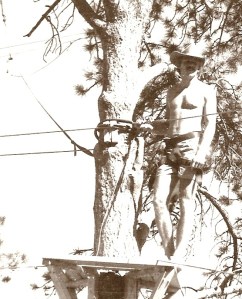
Me in the tree--see below

Me in the tree--see below

The photo comes from my Robert Redford look alike period.

Do you ever awaken wishing you were all you used to think you were before you figured out you weren’t?  Me either.  I’m someone who has these kind of days when it’s best to keep me away from shiny objects.

During college, I spent several summers volunteering for a group called Young Life at their camps throughout the US.  Silver Cliff was one of their camps in the mountains of Colorado.  Each week we’d take in a few hundred high school kids from throughout the US, and give them the opportunity to do things and challenge themselves in new ways; everything from riding horses to rappelling.

The prior summer I was the head wrangler at one of their camps—I had never ridden a horse prior to being placed in charge of the riding program.  This summer is was the person running the rappelling program.  Needless to say, I had never done that before either.

We received a day’s worth of instruction before we were turned loose on the kids.  One of the first things we had to learn was that the ropes and harness, if properly secured to the carabineers and figure eight, would actually keep you from falling to your death.  The first test was jumping from a platform way up in a tree while on belay.  After a few moments of white-knuckle panic, I stepped over the edge and was belayed safely to the ground.

From there, we scouted a place for the rappel, and found two suitable cliffs, each with about a hundred foot vertical drop.  Watching my first rappel must have reminded others of what it would have been like watching a chimp learn how to use tools for the first time.  After several tentative descents, I was able to make it safely to the bottom in a single jump.

Each day we’d run a few dozen kids through the course, ninety-nine percent of whom had never rappelled, or ever wanted to rappel.  To convince them that it was safe and that they could complete it, I would instruct them in the technique as I hung backwards over the chalk face of the limestone cliff.

Each day we’d have one or two kids who wanted nothing to do with my little course.  Occasionally, while on belay, one of them would freeze half way down the cliff, and I’d have to belay down and rescue them.

Once or twice I’d have an attractive female counselor on belay, her knowing that I was the only thing keeping her from being a Rorschach stain on the rocks below.  Scared, and looking for a boost of confidence, “She’d ask, how long have you been doing this?” I’d look at my watch and ask her how many days ago was Sunday.  I viewed it as an opportunity to have a little fun with her—sort of like turning to your friend in the checkout line in 7-eleven and saying loud enough for others to hear, “I thought we agreed we weren’t going to use our guns.” I also hoped maybe even having to go on a heroic rescue.

How long have you been doing this?  That’s seems like a fair question to ask of anyone in a clinical situation.  It’s more easily answered when you are in someone’s office and are facing multiple framed and matted attestations of their skills.  Seen any good EHR or HIT certificates on the walls of the people entrusted with the execution of the EHR endowment?  Me either.  I have a cardiologist and he has all sorts of paper hanging from his wall.  Helps to convince me he knows his stuff.  Now, if I were to pretend to be a cardiologist—I’ve been thinking of going to night school—I’d expect people would expect to see my bona fides.

Shouldn’t the same logic apply to spending millions of EHR dollars?  Imagine this discussion.

“What do you do?”

“I’m buying something for the hospital I’ve never bought.”

“Why?”

“The feds say we’ve got to have it.”

“Oh.  What’s it do?”

“Nobody really knows.”

“How long have you been doing this?”

“How many days ago was Sunday?”

“What’s it cost?”

“Somewhere between this much,” he stretches out his arms, “And this much,” stretching them further.

“Do the doctors want this?”

“Some do.  A lot don’t.”

“How will you know when you’re done if you got it right?”

“Beats me.”

“Sounds like fun,” she said, trying to fetter a laugh.

Sounds like fun to me too.

saint

The Spandex Insecurity

runlikeagirlThe title sounds like a Robert Ludlum novel.

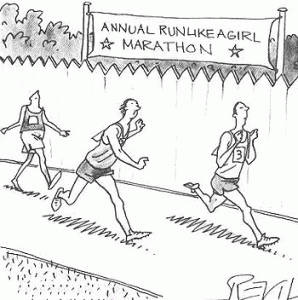
Now before you get all upset about the sexist picture, at least read a little bit of this to see why I selected it. Yesterday morning, five miles into my run, I was feeling pretty good about myself. I had passed seven runners, had a nice comfortable rhythm, no insurmountable aches, and Crosby Stills & Nash banging away on my MP3. I don’t like being passed—never have. Some people say I’m competitive. They say other things too, but this is a family show.

I’m a mile away from my car when I see a slight blurring movement out of the corner of my left eye. A second later I am passed by a young blond woman wearing a blue and yellow, midriff-revealing spandex contraption. Her abs are tight enough that I could have bounced a quarter off of them. She is pushing twins in an ergonomic stroller that looked like it was designed by the same people who designed the Big Wheel. I stared at her long enough to notice that not only was she not sweating, she didn’t even appear winded. Blondie returned my glance with a smile that seemed to suggest that someone my age should consider doing something less strenuous—like chess. Game, set, match.

Having recovered nicely from yesterday’s ego deflation, today at the gym I decide to work out on the Stairmaster, the one built like a step escalator. I place my book on the reading stand, slip on my readers—so much for the Lasik surgery, and start to climb.

Five minutes into my climb, a spandex clad woman chipper enough to be the Stepford twin of the girl I encountered on my run mounts the adjoining Stairmaster. We exchange pleasantries, she asks what I’m reading, and we return to our respective workouts. The first thing I do is to toss my readers into my running bag. I steal a glance at the settings on her machine and am encouraged that my METS reading is higher than hers, even though I have no idea whether that is good or bad.

Fifteen minutes; twenty minutes. I am thirsty, and water is dripping off me like I had just showered with one of Kohler’s full body shower fixtures. I want to take a drink and I want to towel off, but I will not be the first to show weakness. Sooner or later she will need a drink. I can hold out, I tell myself. Twenty-five minutes—she breaks. I wait another two minutes before drinking, just to show her I really didn’t need it.
She eyeballs me. Game on. She cranks up her steps per minute to equal mine. Our steps are in synch. I remove my hands from the support bars as a sign that support bars are for sissies–like bed railings for toddlers.  Without turning my head, I can see that she’s noticed. She makes a call from her cell to demonstrate that she has the stamina to exercise and talk.

When she hangs up I ask her how long she usually does this machine—we are approaching forty minutes and I am losing feeling in my legs. She casually replies that she does it until she’s tires, indicating she’s got a lot left in her. I tell her I lifted for an hour before I started; she gives me a look to suggest she’s not buying that. I add another ten steps a minute to my pace. She matches me step for step.

Fifty minutes. I’m done toying with her. I tell Spandex I’m not stopping until she does. She simply smiles. Her phone rings and she pauses her machine—be still my heart—and talks for a few minutes. I secretly scale down my pace, placing my towel over the readout hoping she won’t notice. She steps down from the machine. My muscles are screaming for me to quit, but I don’t until I see that she’s left the gym.

Victory at any cost. What’s the point? For what was lost, for what was gained (McKendree Spring).

Men versus women. Healthcare providers versus EHR vendors.  It’s warm and fuzzy until the contract is signed, and niether side is prone to yield, sort of like trying to dispute an insurance claim.  The only way to disarm this food fight is by being excrutiatingly detailed in the planning stage.  The value of warm and fuzzy in court is zero.

Both sides must be held accountable for what is implemented.  It does no good to say, “I thought it was going to be able to do this.”  What to do?  Document.  Everything.  Define the functional and technical requirements with rigor–the non medical kind.  Spell them out in a requirements document, have the vendor document if they can meet it and have them provide detailed estimates of any and all modifications or customizations.  Make the RFP a part of the contract.

Meet their customers.  Spend a few days with them.  This is not a phone call, this is not lunch, this is roll up the sleves, learn about what they did wrong, ask what the vendor didn’t do, document it, and–class–put it in the RFP.  Change management, workflows, training–soft issues.  Difficult to document.  Too bad.  Document the heck out of these–requirements and responsibilities of both sides.  I guarantee the vendor will document your responsibilities and then show you where you failed to meet them.

It is in the best interest of the vendor for you to do what is in your best interest.  That is the only way to make this work.  This is a double-sided ‘trust but verify’ situation.

pastedGraphic.tiff.converted

A little knowledge can kill you

popo2

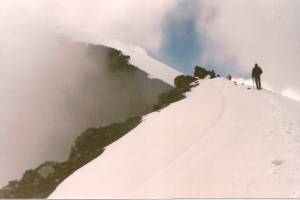
It almost killed me.  Curious?  I lived in Colorado for a dozen years, and spent almost every other weekend in the mountains, fly-fishing, skiing, climbing, and painting—any excuse would do.  Colorado has 54 peaks above fourteen thousand feet.  In my twelve years I climbed most of them.  Some solo; some with friends.

I owned almost everything North Face made, including a down sleeping bag with thermal protection which would have made me sweat on the moon and a one-burner propane stove which cranked out enough BTUs to smelt aluminum.  Two of my friends and felt we needed a bigger challenge than what Colorado’s peaks offered.

We decided on a pair of volcanoes in Mexico, Pico de Orizaba and Popocatépetl—both over 18,000’.  We trained hard because we knew that people who didn’t died.  We trained with ropes, ice axes, carabineers, and crampons.  One day in early May we arrived at the base of Pico de Orizaba.  The man who drove us to the mountain made us sign the log book, that way they’d know who they were burying.  After a six hour ride from a town with less people than a K-Mart, we were deposited at a cinder-block hut—four walls, tin roof, dirt floor.  Base camp.

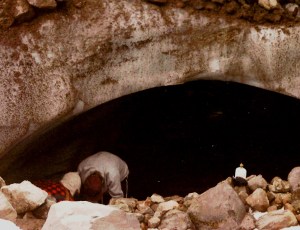
Before the sun rose we were hiking up ankle-deep volcanic ash; gritty, coarse, black sand.  The sand soon turned in to thigh-deep snow.  We took turns breaking trail, stopping only long enough to refill our water bottles by hand-pumping glacier melt from the runoff in the bottom of cobalt blue ice caverns carved from solid glacier.

ice cave

ice cave

Throughout the trek we passed crude wooden crosses that were stuck into the ash and snow, serving as grim reminders of those who’d gone before us.

We knew the signs of pulmonary edema, but were reluctant to acknowledge them when we first saw it.  It was about one the following morning when we decided to make camp.  My roommate was having trouble concentrating, and his speech was slightly slurred.  When we asked him if he was ill, he responded much like one would expect an alcoholic would respond when asked if he was okay to drive.  “I’m fine.”

We were at about 16,000’.  The slope seemed to be at about forty-five degrees.  The sheet of ice upon which we stood glistened from what little light the stars emitted.  I removed my tent pole from my pack and placed it on the ground—we were going to camp for the night.  We watched in awe as the pole gained speed and hurtled down the side of the volcano, quickly lost in the darkness.

Realizing my friend wasn’t doing well, and that I was now feeling somewhat punkish, we made the difficult decision to turn back.  The only survival for edema is to lose enough altitude until you reach an altitude where there is enough air pressure to force the oxygen into the blood.  Eighteen hours of climbing.  Pitch black.  And then it started to snow.  Any other time the view would have been awesome.  We headed down, me carrying my pack and his, he with our friend.

We arrived at the block hut around four that morning.  By then I was no longer making any sense.  My roommate had recovered, but I had become somewhat delirious—at least that’s what they told me later.  Not knowing right from left or wrong, I was determined to keep walking.  The two of them took turns laying on me to prevent me from sneaking out during the night.

A little knowledge almost killed us.  The scary thing is that we knew what we were doing.  We had trained at altitude, had a plan, worked the plan.  The plan shifted.  Sometimes shift happens.

It happens more with IT.  Much more.  Do you know what the chances are of any IT project ‘working’ that costs more than$7-10 million?  (Working is defined as having a positive ROI, a project that was delivered on time, withing the budget, and delivered the expected results.) (IT includes workflows, change management, training, etc.)  Two in ten.  Twenty percent.  That’s below the Mendosa Line—non baseball fans may have to look up that one.  Remember the last industry conference you attended?  Was it about EHR?  Pretty scary knowing most of them were planning for a failure.

Put your best efforts, your brightest people on planning the EHR.  Make them plan it, then make them plan it again, and then make them defend it, every piece of it.  If they don’t convince you they can do it in their sleep, you had better redo it.  Do they know what they’re planning to do?  Do they know why they’re planning to do it that way?  If they haven’t done it before, this may not be the best time for them to practice.  EHR is not a good project for stretching someone’s capabilities.

Planning is difficult to defend twice during the life of a large program.  First, at the beginning of the program when the C-Suite is in a hurry to see people doing things and signing contracts.  The second time planning is difficult to defend is the moment the C-I-Told-You-Sos are calling for your head for having such an inadequate plan.

How would I approach planning an EHR program for a hospital?  If we started in September, my goal would be to;

  • Have a dedicated and qualified PMO in place in four weeks
  • Begin defining workflows and requirements by October (I’m curious.  For those who have done or are doing this piece, how many FTE’s participated?  I ask because i think chances are good that your number is far fewer than I think would be needed.)
  • Issue a requirements document by mid-January.
  • Be able to recommend a vendor by the end of March.

That seems like a lot of time.  There are plenty who will tell you they can do ‘it’ quicker.  Good for them.  The best factor in your favor right now is time.

Reread this in a year and see where you are…

…See, I told you so.  Anyone want to go hiking?

pastedGraphic.tiff.converted

Reform? You do the math

2Even the consultants are worried.

If you’re not worried or confused, you’re missing the problem.  I’m having a Roemer Minute.  I am one of those people who feel it’s his responsibility to teach the world how to drive, on road-raged lunatic at a time.  I’m an INTJ who’s so far off the scale I would have made Howard Hughes seem like a people person.

I write in the belief that it helps me explain complex issues to me—if that helps you we both win.  I am beginning to believe that the problem no longer lies with me.  Each time someone explains reform I feel like the half-life on my IQ Do you feel that way each time you hear another explanation of the same issues?  After a certain number of times being confused about the same thing, you being to say, “I am not that dumb.  It’s not me who doesn’t get it, it’s the explainers.”

We have arrived at where we were before we left, but at least we still have the weekend to look forward to.  Here’s my best shot at explaining this to myself—this is deliberately oversimplified.  If I can’t explain it in a simple manner I think it means they are trying to fool all of us.

Maybe healthcare reform is meant to be like the Jedi mime trick: You have two buckets – one holds exactly 5 gallons and the other 3 gallons.  How can you measure out 4 gallons of water into the 5 gallon bucket?

Let’s try this illustration.  Take out two measuring cups, the healthcare cup which holds 2 cups, and a healthcare cost cup, a 4 cup cup—sounds like ‘wood chuck chuck’ but we covered that earlier.

The 2 cup line on the healthcare container represents full healthcare coverage for all.  The line at 1 ½ cups represents those who currently have healthcare.  Now, fill the 4 cup cup to three cups.  Let’s state that represents what it currently costs to provide healthcare for 1 ½ cups worth of people.  So, just to keep my mind from exploding, cost to coverage is a simple ratio of 2:1—it is not meant to represent reality, just call it Roemer Math.

Now, we have been told reform has two goals;

  • Provide coverage for all—add water to the 2 cup healthcare cup
  • Bring costs down—take water from the 4 cup healthcare costs cup

As we add water to the 2 cupper, we must add twice as much water to the 4 cupper.  Why, because more healthcare costs something.  Am I missing something?  Now we are going to bring costs down.  Take water out of the healthcare costs 4 cupper.  What does that require?  Exactly, we must also take water out of the healthcare two-cupper.  No matter which way you start, adding water, or taking it away, the result is the same.  There is no way to add to one and subtract from the other, unless of course we decide to add cost and decrease the number of people covered—some would argue that that is our current model.

There is a way to make this model work.  It requires a few more nuances.  It’s these ‘nuances’ that are being incorporated, but remain unspoken are called fine print.  How can it be made to work?  Ignore for a moment those who do not have healthcare, they will be covered momentarily.  Let’s do one thing at a time.  Let’s bring down the cost of healthcare for those who are covered.

We take water out of our cost cup to the level somebody at a high pay-grade determines, but leave the line at 1 ½ cups in the healthcare cup.  How can we make that happen?  Make the amount of water (healthcare) appear to be the same even though it won’t be.  Maybe there’s a way to insert air in the water to make it look the same, but we all know there is now less water (healthcare) in the cup to distribute to those people.

Now we need to fill the healthcare cup all the way to the 2 cup line, and we need to do this without adding any water to the healthcare costs cup, the 4-cupper.  Okay sports fans, what next?  The only option is more air.  Since the volume in the 4-cupper is now a constant, we must make the 2-cupper appear full using only the amount of water it has.  How to do that?  More air.  More nothing.

We know this is nonsense.  The only way to make this happen is to take something away from those who have healthcare.  What is there to take away?  Services, access, coverage, quality, quantity.  If enough of those are removed, costs can come down.  If you remove them yet again, you can add new people.

The argument they are trying to sell is you don’t have to take any of those away.  You can do it without rationing, without raising taxes.  You become more efficient, remove waste.  How do you do that?  Government healthcare.  You do the math.

pastedGraphic.tiff.converted