EHR Short Cuts

StairwayShortCutHow able are you to conjure up your most brainless moment—don’t worry, we aren’t on the EHR part yet.

As I was running in San Diego I was passed by a harem of seals—Navy Seals.  Some of them were in better shape than me, I couldn’t judge the fitness of the others as they ran by me too fast.  That got me thinking.  For those who having been regular readers, you’ll know this is where I have a tendency to drive myself over a cliff.

Seeing the Seals took me back to my wistful days as a cadet at the US Air Force Academy.  Coincidentally, my hair looked then a lot like it looks now.  One of the many pastimes they tossed our way for their amusement and our survival was orienteering; sort of map reading on steroids.  One night they took us to the foothills of the Colorado Rockies, paired off the doolies, gave us a set of map coordinates, a compass, map, and flashlight.  The way training worked, those who proved to be the fastest at mastering skills fared better than those who weren’t.  Hence, there was plenty of incentive to outperform everyone; including getting yourself to believe you could do things better than you could, sort of a confidence building program.

We were deposited in a large copse—I’ve always liked that word—of trees—I don’t know, but it seems adding trees to the phrase is somewhat redundant.  We had to orient ourselves and then figure out how to get to five consecutive locations.  The sun had long since set as we made our way through the treed canyon and back up a steep ravine.  After some moments of searching we found the marker indicating we were at point Able.  The group started to examine the information that would direct our journey to point Bravo.

While they honed their skills, I was examining the map, taking some bearings with the compass, and trying to judge the terrain via the moonlight.  My roommate, a tall lanky kid from Dothan, Alabama asked why I didn’t appear to be helping.

“Look at this,” I replied.  “Do you see that light over there, just to the right of that bluff?  I think I’ve found us a shortcut.”

“What about it?”  Asked Dothan.

“If my calculations are correct, that light is about here,” I said and showed them on my map.  “It can’t be more than a hundred yards from point Delta.”

“So?”

“So why go from Alpha to Bravo to Charlie to Delta, if we can go right to Delta from here?  That will knock off at least an hour.”  I had to show my calculations a few times to turn them into believers, but one by one they came aboard.  The moon disappeared behind an entire bank of thunderheads.  We were uniformly upbeat as we made our way in the growing blackness through the national forest.  Unlike the way most rains begin, that night the sky seemed to open upon us like a burst paper bag.

“Get our bearing,” I instructed Dothan.  As it was my idea, I was now the de facto leader.  As we were in a gully, getting our bearings required Dothan to climb a large evergreen.

“I don’t see it,” he hollered over the wind-swept rain squalls.  I scurried up, certain that he was either an idiot or blind.

“Do you see the light?”  They asked me.  I looked again.  Checked my map.  Checked my compass.  “It has to be there,” I yelled.

A voice floated up to me.  To me I thought it probably sounded a lot like the voice Moses heard from God as he was building the Ark.  (Just checking to see if you’re paying attention.)  “What if they turned off the light?”

I almost fell out of the tree like an apple testing the laws of gravity.  What if someone had turned off the light?  There was no ‘what if’ to consider.  That is exactly what happened.  Some inconsiderate homeowner had turned off their porch light and left us stranded.

Fast forward.  We were lost, real lost.  We didn’t finish last, but we did earn extra exercise the next day, penalized for being creative.  Who’da thunk it?

Short cuts.  When they work, you’re a headliner.  When they fail, chances are you’re also a headliner—writing the wrong kind of headlines.  I hate being redundant, but with EHR we may be dealing with the single largest expenditure in your organization.  It will cost twice as much to do it over as it will to do it right.  If you haven’t done this before—I won’t embarrass anyone by asking for a show of hands—every extra day you add to the planning process will come back to you several fold.  There may be short cuts you can take, but planning should not be one of them.  How much should we plan?  How long should it take?  Who should participate?  We will look at each of those questions in some detail.  For now, let’s answer those three questions with; more than you think, longer than you’ve planned for it to take, and different skills than you’re currently using.saint

EHR Tips from a ‘real’ CMIO

0712ifyoutalkedtopeopleI only play one on TV.

These come from Dr. Dirk Stanely whose blog link is on this site.

#CMIO tip #1 for DOCS wanting to fit into the new #EMR paradigm WELL: Learn to type, even a little, or learn to use Dragon well. Your thoughts are too important to be lost to handwriting.
#CMIO tip #2 for DOCS wanting to fit into the new #EMR paradigm WELL: prepare to redesign yourself. You won’t be Dr. Kildare or Dr. Welby or Dr. Auslander or Dr. Dorian or Dr. McDreamy when you’re done –
You’ll be a whole new doctor. Same look, same skills, same caring, same name, new doctor.
#CMIO tip #3 for successful #EMR implementation : the EMR isn’t “an IT thing”, or an “MD thing”, or a “RN thing” – it’s everybody’s thing.
#CMIO tip #4 for successful #EMR adoption : Patience, part II: Like humans, no product is perfect. You will always question if you made the right choice. The truth : it probably was.
#CMIO tip #5 for successful #EMR adoption : Patience. Realize that government, vendors, docs, administrators, and patients are “still trying to figure it all out”
#CMIO Tip #6 for a successful #EMR implementation : Persistence. Never stop pruning, weeding, and gardening. Have a good gardening team.
#CMIO Tip #7 for successful #EMR implementation : Learn that no doc, nurse, pharmacist, administrator, IT person, or consultant knows the whole story. You need them all to work together before you’ll understand.
#CMIO tip #8 for a successful #EMR implementation : plan your budget well. Then increase your budget for training and support.
#CMIO tip #9 for a successful #EMR implementation : Plan your data needs for go-live. Then prepare for them to increase exponentially after go-live.
#CMIO tip #10 for a successful EMR implementation : Break down the wall between IT and clinical worlds. Promote both sides together.
#CMIO tip #11 for a successful EMR implementation : Prepare to cringe every time you hear “Why can’t we just _____?” Generally this is NEVER the answer.
#CMIO tip #12 for a successful EMR implementation : Plan for docs in the middle ground. Aim for happy mediums. Walk before you run.
#CMIO tip #13 for a successful EMR implementation : don’t just plan for your inpatient docs, plan for your outpatient docs EARLY. Doing this well can be strategic as long as you stay within Stark laws.
#CMIO tip #14 for a successful EMR implementation : Leave your emotions and personal baggage at the door when redesigning clinical workflows. Focus on good patient care.
#CMIO tip #15 for a successful EMR implementation : Recognize the tribal culture of medicine, but don’t be limited by it.
#CMIO Tip #16 for a successful EMR implementation : try to avoid the four-letter word : “INTERFACE”. Use only when absolutely needed.

#CMIO tip #17 for a successful EMR implementation : Plan staffing for an initial reduction in efficiency. Develop measurable metrics.
#CMIO tip #18 for a successful EMR implementation : be prepared for more training AFTER go-live.
#CMIO tip #19 for a successful EMR implementation : Have a politically neutral, teambuilding, personable, persuasive, and creative CMIO.
#CMIO tip #20 for successful EMR implementation : Dont be discouraged. Even a flat #CPOE rate will respond to nurturing and TLC.
#CMIO tip #21 for a successful EMR implementation : make sure you work on building allies early, before purchasing software.
#CMIO tip #22 for a successful EMR implementation : The secret to physician involvement – give them a chance. A good CMIO will help.
#CMIO Tip #23 for a successful EMR implementation : Grow a crop of clinical “Jedis” who KNOW your clinical workflows,can help bargain and teach them, and help reinforce good IT behaviors. (Clinical “Jedis” : they’re not just superusers. They investigate workflows and datamine. They’re your best management consultants.)
#CMIO: Tip #24 for a successful EMR implementation : work hard to make a comfortable environment for change. Bad blood slows progress
pastedGraphic.tiff.converted

EHR triathlon

Triathlon logoI explore life in the form of didactic narratives, apologues.  Life as one non-stop non-sequitur.


I may have mentioned that I am training for my first triathlon.  The running and biking won’t be a problem.  I may drown during the swim.  I understand they penalize you for that which hardly seems fair.

I’m thinking of creating my own event, sort of the thinking man’s triathlon.  I’d call it the Crest White Strips-Mensa Triathlon.  The events would be the following—teeth whitening, points awarded based on degree of whiteness, lumineers not allowed; IQ—the difference between what you think it is and what others know it is times three; and the number of Ju Ju Bees in the jar on my desk.  I feel pretty good about my chances in at least placing in the top ten.

So, back to business.  I think part of the problem we face when addressing the topic of implementing an EHR system is that we are taking a complex problem and making it overly complex, or at least focusing on the wrong complexities.  What if there was a way to make it complex in a less complex way?

Let’s see if we can chunk it into three chunks, each chunk quite complex in its own right and co-dependent on the prior chunk.  Call the chunks;

  • Plan
  • Implement
  • Try it

My acronym for the EHR triathlon is the PIT.  Each phase has plenty of meat behind it.  The great news is that we do not need to be in a hurry.  There’s at least as much time left to get it right as there is to get it wrong.

Let’s say you’re just starting.  There’s no reason not to consider starting with a six month detailed planning phase.

Over the next few weeks I will address each of these in detail and would like to learn from what you’ve experienced.  Having received his permission, I will supplement the narrative with some of the real-life experiences encountered by one of our readers, Dr. Dirk Stanley, CMIO.

pastedGraphic.tiff.converted

Vendors are like a fine wine—

hannibal01_lFashion can be reinvented every 6 months, healthcare can’t.


That’s plenty of reason to try to get EHR/HIT right.  Remember this little principle, DIRT-FIT–Do It Right The FIrst Time.  Don’t know how?  There are some who do, there are more who think they do.  If you look pretenders in the eye, sometimes they blink.  Vendors are like a fine wine—you have to stomp on them and keep them in the dark until they’re ready to have for dinner.  To be fair, they may feel the same way about me.

A vendor client of mine mentioned that their customers told them that they did not understand their customer’s business. They thought the customer’s comments were unfounded–their basis for believing this is that they had been in the business for years. I told the CEO I would buy dinner for everyone in their firm who previously worked on the clinical side of a healthcare provider.

I ate by myself, no wine.  A nice Chianti with fava beans would have been nice.  Clarice?

pastedGraphic.tiff.converted

How’s your EHR?

catonroofI’m in San Diego for a few days.  Every time I go to California I wonder if I need to exchange money.

I called my neighbor who is watching my cat and checking on my mom while I’m away.

“How’s everything?”  I asked.

He paused f or a second…”Your cat died,” he said softly.

“Aw jeez. Don’t tell me that.  At least break it to me gently.”

“Like how?”

“Well you could say, the cat got out, and then climbed a tree, and you couldn’t get her down so you called the firs department, and the cat got on the roof, and when they were trying to get it down it fell and died.”

“Oh.”

“So, anything else?  How’s mom?”

“Your mom’s on the roof.”

(I made that up, the part about the cat.)

Anyway, so when someone asks you about the EHR project, what do you say?  “The EHR’s on the roof?”

saint

Be afraid, be very afraid


Didn't I used to be on Bullwinkle?

Didn't I used to be on Bullwinkle?

It’s not like I wake up this way.


I’ve tried to provide opportunities for ‘them’ to assuage the fear surrounding EHR.  (By the way, why does Word constantly inform me that EHR is actually HER—isn’t that taking being PC a little too far?)

Shall I explain?  Yes, please.

I’ve posited the following questions on public forums whose combined members exceed 100,000 professionals.  Most of those professionals, as we know, are professional sales people, sales persons, sales humans—are we humans, or are we dancers?—I’m not sure what’s considered to be the most acceptable term, and you’ve learned I probably don’t care.  Sorry for the digression—I get this way every time I see wall-to-wall TV coverage of…I won’t go there.

The questions I posed are:

What are the biggest EHR implementation problems?

What are the ‘best’ EHR systems?

What is a ‘ballpark’ cost estimate for HER for a 500 bed hospital?

I understand all the legitimate disclaimers that need to be offered.  However, a summary of the answers I received reads as follows:

The biggest problems are caused by the healthcare providers.

No vendor stepped forward with an explanation as to why they believe their system is the best.

Most answers about having to do with cost had to do with why it isn’t possible to provide an answer about costs.

You better have your best interests at heart, it’s pretty clear others won’tSaintLogo

What’s in it for me?

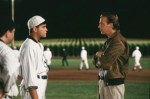
field_of_dreams1Field of Dreams.  Best guy movie of all times?  Forgive me, but I don’t usually start my day being PC.  (I don’t end it that way either.)  Pardon me as I wipe a tear.  Want to have a catch Dad?  For those of you whose minds don’t immediately shift to the shooting of Old Yellar, you’re on the wrong blog.

First there’s the field.  It’s green.  The same green God made when he made green.  There’s a cross-hatched pattern to the cut, the white lines brilliantly juxtaposed.  The air smells of peanuts and dogs.

Baseball, as spoken by James Earl Jones:

“Ray. People will come, Ray. They’ll come to Iowa for reasons they can’t even fathom. They’ll turn into your driveway, not knowing for sure why they’re doing it. They’ll arrive at your door, as innocent as children, longing for the past. Of course, we won’t mind if you look around, you’ll say. It’s only $20 per person. They’ll pass over the money without even thinking about it: for it is money they have and peace they lack…And they’ll walk off to the bleachers and sit in their short sleeves on a perfect afternoon. They’ll find they have reserved seats somewhere along one of the baselines where they sat when they were children, and cheered their heroes. And they’ll watch the game, and it’ll be as if they’d dipped themselves in magic waters. The memories will be so thick, they’ll have to brush them away from their faces… People will come, Ray…The one constant through all the years, Ray, has been baseball. America has rolled by like an army of steamrollers; it has been erased like a blackboard, rebuilt, and erased again. But baseball has marked the time. This field, this game, is a part of our past, Ray. It reminds us of all that once was good, and it could be again. Ohhhh, people will come, Ray. People will most definitely come…”

This is the twelve step nightmare for anyone who had a father.  At the end of the movie there is a dialog between Ray Kinsella and Shoeless Joe Jackson:

Ray Kinsella: I did it all. I listened to the voices, I did what they told me, and not once did I ask what’s in it for me.
Shoeless Joe Jackson: What are you saying, Ray?
Ray Kinsella: I’m saying? What’s in it for me?

Amidst all the confusion, amidst all the regulation, where does that leave you?  Ask, “What’s in it for me?”  What’s in it is whatever you put into it.  Drive this process to your benefit.  Build an EHR because it benefits you, not because it’s forced upon you.

saint

A lunch time thought

3847_072209Dreams.  All intelligent beings dream.  Remember the one where you don’t pass your college final, or when you can float above your friends in the hallway in high school, or when you show up in class naked?

No?  Just me?  I guess that whole twelve-step thing isn’t working as well as I hoped.

Here’s the one I had last night–when reform is complete, nobody will be able to reform it.

saint

EHR PowerPoint Presentation

In case you might be interested, http://www.slideshare.net/paulroemer/ehr-as-we-see-it

Infinite monkey theorem

Monkey-typingI begin with a disclaimer—this is an illustration, it is not meant to be disrespectful.  The infinite monkey theorem states that monkeys hitting keys at random on a typewriter for an infinite amount of time will almost surely type a given text, such as the complete healthcare bill—that’s not where I’m going with this even though that’s not too bad an idea.

When I think about this, the illustration is about what could happen, however improbable, not what will happen.  It requires a situation, tools, actors, and no direction—sort of like deism—no divine intervention.

Here’s my take on how this applies.  The situation—healthcare reform.  The tools—money.  The actors—providers, vendors, transformers, regulators.  Who’s in charge?  Nobody—unless of course you count Pelosi and Reid—but who are we kidding?

The only thing that makes the infinite monkey theorem even plausible is the fact that the monkeys are given infinite time.  Washington is not giving reform infinite time.  In fact, there’s a real sense of urgency.  That urgency, coupled with no leadership, none, makes the task unachievable.  All that has been offered is money.  Money without a decider will not yield reform.

Twenty-ish billion for healthcare IT sounded like a lot.  It’s not.  AIG got $79 billion.  Canada estimated HIT would cost $450 per person—they were low.  Our $20 billion is less than $60 a person.

Nobody is in charge, which means everybody is in charge.  Without AIG money and a leader, I believe we’re better off waiting to see what the monkeys build.

SaintLogo