Patient Relationship Management (PRM)-why men can’t boil water

poker_head_pic

There was a meeting last week of the scions of the Philadelphia business community. The business leaders began to arrive at the suburban enclave at the appointed hour. The industries they represented included medical devices, automotive, retail, pharmaceutical, chemicals, and management consulting. No one at their respective organizations was aware of the clandestine meeting. These men were responsible for managing millions of dollars of assets, overseeing thousands of employees, and the fiduciary responsibility of international conglomerates. Within their ranks they had managed mergers and acquisitions and divestitures. They were group with which to be reckoned and their skills were the envy of many.

They arrived singularly, each bearing gifts. Keenly aware of the etiquette, they removed their shoes and placed them neatly by the door.

The pharmaceutical executive was escorted to the kitchen.

“Did your wife make you bring that?” I asked.

He glanced quickly at the cellophane wrapped cheese ball, and sheepishly nodded. “What are we supposed to do with those?” He asked as he eyeballed the brightly wrapped toothpicks that looked banderillas, the short barbed sticks a matador would use..

“My wife made me put them out,” I replied. “She said we should use these with the hors d’oeuvres.”

He nodded sympathetically; he too had seen it too many times. I went to the front door to admit the next guest. He stood there holding two boxes of wafer thin, whole wheat crackers. Our eyes met, knowingly, as if to say, “Et Tu Brutus”. The gentleman following him was a senior executive in the automotive industry. He carried a plate of freshly baked chocolate chip cookies. And so it went for the next 15 to 20 minutes, industry giants made to look small by the gifts they were forced to carry.

The granite countertop was lined with the accoutrements for the party. “It’s just poker,” I had tried to explain. My explanation had fallen on deaf ears. There is a right way and a wrong way to entertain, I had been informed. Plates, utensils, and napkins were lined up at one end of the counter, followed in quick succession by the crock pot of chili that had been brewing for some eight hours, the cheese tray, a nicely arrayed platter of crackers, assorted fruits, a selection of anti-pastas, cups, ice, and a selection of beverages. In their mind, independent of what we did for a living and the amount of power and responsibility we each wielded, we were incapable of making it through a four hour card game without their intervention.

I deftly stabbed a gherkin with my tooth pick. “Hey,” I hollered “put a coaster under that glass. Are you trying to get us all in trouble? And you,” I said to Pharmacy Boy, “Get a napkin and wipe up the chili you spilled. She’ll be back here in four hours, and we have to have this place looking just as good as when she left.”  I thought I was having the neighborhood guys over for poker; I was wrong. So was each of the other guys. We had been outwitted by our controllers, our spouses. Nothing is ever as simple as it first appears. We didn’t even recognize we were being managed until they made themselves known.
Who’s managing the show at your shop, you or the patients?  The answer to that question depends on who owns the relationship, who controls the dialog.  If most of the conversation about your organization originates with them, the best you are doing is reacting to them as they initiate the social media spin, or try to respond once the phone started ringing.  It’s a pretty ineffective way of managing.  It’s as though they dealt the cards, and they know ahead of time that your holding nothing.
There are times when my manager isn’t home, times when I wear my shoes inside the house—however, I wear little cloth booties over them to make certain I don’t mar the floor.  One time when I decided to push the envelope, I didn’t even separate the darks from the whites when I did the laundry.  We got in an hour of poker before I broke out the mop and vacuum.  One friend tried to light a cigar—he will be out of the cast in a few weeks.

Be afraid. Be very, very afraid.

saint

what’s your HIT group doing for you?

duck

I love to cook and I belong to several internet food related sites. As an aside, one of my favorites is www.chowhound.com. Maybe it’s my personality, or lack of one, but I’m not a fan of recipes, at least not the details like measuring, ingredients, cook time, and temperature. I think that this is where the fact that I function with equal vigor from both hemispheres of my brain causes conflict—probably also explains why I had such a difficult time completing my math degree. If I don’t like the details, what else is there, you may ask? It’s more than the pictures, if that was all there was I’d be satisfied just cutting pictures out of Better Homes and Gardens magazine. I like the ideas those sites generate, but I also can’t stand to be encumbered by some silly set of rules. I guess I figure that with a set of rules anyone can be successful making that particular recipe, so where’s the challenge in that.

So anyway, I decided to smoke a nice sized duck on my grill. I rinsed the bird, trussed it, pricked the skin with a fork, stuffed it with a few blood oranges, and applied my homemade rub to the skin. The apple-wood chips were smoking nicely as I placed the bird, breast-side up on the roasting rack I had placed inside the cast-iron skillet. After turning down the burners I closed the lid. The grill, I should point out, is a seven-burner, infrared, stainless steel monstrosity with which one could probably roast an entire pig or forge iron ore into ingots. Total roasting time, about two hours. I checked the thermometer on the grill’s hood; it displayed a temperature of three hundred and fifty degrees–perfect, more or less.

It turns out that it can take as long as five minutes for the grill’s thermometer to register the correct temperature. The temperature dial on this particular model redlines at seven hundred degrees, high enough to produce spontaneous combustion. After two hours at 700 degrees, interesting things begin to happen to the carcass of a duck. Upon raising the lid the entire bird looked as though it had been spray painted a matte black. The roasting rack had melted. The leg bones appeared to have been charred from the inside out—they disintegrated the moment I touched them. I felt like a helpless doctor in the ER, there was nothing I could do to save it.

Have you ever felt that way when you try to understand how any of the healthcare IT projects are progressing? How’s EHR?  What’s the impact of reform on EHR?  Why aren’t we doing more with social media?  How come we don’t have a patient relationship management (PRM) system?  According to the reports that come across your desk, everything seems to be humming along nicely. In the committee meetings, seats are filled.  The emails imply all is fine.  Looking fine and being fine are not the same.  Looks can be deceiving. Ask the duck.

By the way, the duck fat did a great job of seasoning the iron skillet, so if that ever happens to you simply explain that what you were really doing was seasoning the pan.

saint

One component of H2.0, Social Media

fd24_1

With a torn Achilles tendon and two months in a cast, my running had hit a snag. What to do when you’d rather be running? Shop, and shop with the same zest and determination that I brought to running. After all, the two sports have a lot in common. One of the things I like most about running is that it can be done almost anywhere—just like shopping. I take my running shoes with me when I travel, just like I take my favorite store; EBay.

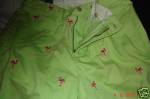
I just lost something on EBay I’d been tracking for six days. The chinos. Granted, not something everyone would wear. But I know of at least two people, me and the person who outbid me. Outbid me with four seconds left—my strategy. Over confidence killed me. I didn’t follow my own rules. I bid high with a few hours left, and since there wasn’t any activity, outsmarted myself. I usually rush in at the last second and dash someone else’s hopes. I don’t like losing, especially when there is no chance to regroup. After I lost I Googled, ‘lime green chinos with pink flamingos’. There aren’t any.

I was an earlier adapter, made more than 500 purchases ranging in price from a penny to more than $20,000. Only had a problem with one, a two-dollar knife sharpener. You can find anything you want on EBay, except for perhaps a second pair of lime green chinos with pink flamingos. I like EBay, a lot. What’s not to like? You have an almost infinite selection, everything is on sale, you don’t have to wait while a clerk takes a call from someone who interrupted the clerk from helping you, no need to pack the kids into the car, no gas to buy. You can think about a purchase for days before committing to it, so it eliminates the impulse buy. You can comparison shop, and you can rate the sellers. You can’t rate the sellers at the mall. It’s as close to a perfect social networking experience as you can get.

If you’re Venn-diagramming as you read, there’s EBay and there’s no-EBay.  There’s no intersection of the two groups.  The no-EBayers need additional tools just to keep up with their patients.  Those tools include patient relationship management (PRM) and social networking.  Without those tools, you’re forced to have a battle of wits with your patients, and you come to the battle unarmed.  These tools are part of what’s needed to navigate the gap between H0.2 and H2.0.

EBay knows they are on top of the social media discussion. How can you tell that they know it? There is no ‘contact us’ link that is readily visible. No way to reach out and call customer care. They don’t make things, they don’t inventory it, they don’t ship it, they simply collect the money, and they bought the firm that allows them to do that. They’ve reinvented the principle of the Maytag Man. Maybe somewhere there’s a person in a small office waiting to take a complaint call. If he is, he better not be wearing my lime green chinos with pink flamingos.

pastedGraphic.tiff.converted

Patient Relationship Management (PRM)

orienteering1A few weeks back I fly to San Diego. Having forgone the luxury of paying two dollars for a cup of lukewarm burnt coffee I gaze out the window through the haze to the landscape below—below is one of those redundant words since if I’m gazing at the landscape above we must be flying inverted, in which case I should be assuming the crash position. It’s amazing how clear everything becomes from 30,000’. I can see clearly where I want to go. Looking at the highways, one would think it difficult to ever get lost; follow the white line, turn right at the lake, then follow the next white line.

Lost is a lot easier when you are on the ground. I got a GPS for Christmas because in Philly, I am the king of lost. I’ve lived here 13 years and driven to the city on my own three times, and I don’t anticipate a fourth. I’ve traveled the world without a map, but put me in my own backyard and it’s an instant panic attack. That wasn’t the case when I lived in Denver, Colorado. Colorado was easy; there were three cities of note and a mountain range, so I always knew where I was.

Or, almost always. The first time I lived in Colorado my room and meals were free, courtesy of the US Air Force Academy—so were the haircuts. Basic training is an exercise one must experience to fully comprehend. We had about a thousand Alpha eighteen year-olds being yelled at by a thousand Alphas two years older. I learned early on that the best way to excel was to turn the entire experience into a competition, us against them—outthink, outwit, outlast—sort of like Survivor in uniforms. Several weeks into basic, we left the relative comforts of the academy and moved en-mass to a camp ground called Jack’s Valley—KOA on steroids. We did all sorts of fun things at camp; shined boots, raked dirt, learned how to kill with a bayonet.

And since the Air Force knew that wars weren’t always fought during the day, we did a number of nighttime activities. One such activity involved a compass, a partner, and a very dark forest. I think the idea of the exercise was to teach us how to find our way home if we were shot down. We’d been up since five, so naturally I was looking for a way to shorten the exercise while still scoring the maximum number of points. We were given our first compass bearing and we headed into the night in search of our next bearing. About an hour into the exercise I did an extrapolation based on the azimuth of the sun and the number of pieces of bubble gum it would take to fix a flat tire, and I told my partner I had a pretty good idea about where we were supposed to wind up the exercise. I argued that if I was right we could save ourselves more than an hour. He argued that were I wrong, we would finish last. I must have swayed him. We took a bearing on a light we could see from out spot in the forest. The light was from the city of Colorado Springs. We dashed through the forest, every hundred yards or so, stopping only long enough to recalibrate our bearing. We were making great time.

There’s a funny thing about lights. Sometimes they’re on. And sometimes, when you’re dashing through a forest with a compass in the middle of the night, someone turns them off. For those not familiar with the sport of orienteering, if that is the only fixed point you have to determine your position relative to everything on the planet, having the light go out will hinder your score. It did ours. There’s last, and then there’s so last that people have to come and find you in the very dark forest. This meant that the people whose job it was to yell at me during the day were going to miss their sleep all on account of my bright idea. They were highly motivated yellers the next day.

So much for my visionary idea. We were discussing that one of the basic requirements of the patient experience champion is their ability to visualize. In addition to being able visualize the end game, the vision must be credible. One can’t say follow me into the forest without knowing how to get to the other side. That said, the point of the exercise is that the first thing the champion must do is to define the vision. The roadmap will follow, but you have to know what the future will entail. We call that your “to be” state. Today is your “as is”, and the difference between the two is your Gap. If it sounds simplistic, that’s because we haven’t done anything yet. If you want to see how many people you have in your camp, start kicking around your notion of your “to be” model.

saint

Patient Relationship Management (PRM)

georgeIf you watch too much television your brain will fry. Sometimes I feel like mine is in a crepe pan that was left sitting on the stove too long. Two nights ago I’m watching Nova or some comparable show on PBS. The topic of the show was to outline all the events that took place that helped Einstein discover that the energy of an object is equal to its mass times the speed of light squared, better known as E=mc². It was presented to the audience at a level that might best be described as physics for librarians, which was exactly the level at which I needed to hear it. It’s physics at a level that is suitable for conversation at Starbucks or any blog such as this.

So here’s what I think I understood from the show. It tracked the developments of math and physics in 100 years prior to Einstein’s discovery. The dénouement appeared to occur when Einstein and his fiancée were riding in the bow of the small boat. Apparently, he was leaning over the side of the boat and noticed that the waves generated by the front of the boat moved at the same speed as the boat. He then noted that fact only held true for those persons in the boat, who were in fact, traveling at the same rate of speed. However for those persons watching from the shore, that same wave was not only moving slower than the boat it got further behind over time. Some other things occurred, yada, yada, yada, and there you have it. Clearly, the details are in the yada, yadas.

So here’s what happens when you watch too much television. As I’m running this morning somehow my mind takes pieces from that show and staples them together to yield the following. Let’s go back to the equation E=mc². For purposes of this discussion I’ll redefine the variables, so that:


E = the percentage of Patient Complaints/Inquiries.
m = Patient in-bound calls.
c = number of Patients


If this were true–this is an illustration, not an axiom–the percentage of complaints in the call centers of an healthcare provider is equal to the number of in-bound calls times the square of the number of patients. So as the number of calls increases the number of complaints/questions increases and as the number of patients increases the number of complaints increases exponentially. Of course this is made up, but there appears to be a grain of truth to it. As a number of calls increase the percentage of complaints is likely to increase, and as the number of patients increases there will probably be an even greater increase in the percentage of complaints incurred. I think we can agree that a reasonable goal for a healthcare provider is to decrease the percentage of complaints and perhaps to shift a hefty percentage of inquiries to some form of internet self-service vehicle. 

I think sometimes the way providers like to assess the issue of Patient Relationship Management  (PRM) is by looking at how much money providers throw at the problem. I think some people think that if one provider has 2 call centers, and another provider has 3 call centers, that the provider with 3 must be more interested in taking care of the their patients, and might even be better at PRM.  I don’t support that belief. I think it can be demonstrated that the provider with the most call centers, and most Patient Service Representatives, and the most toys deployed probably has the most problems with their patients. I don’t think it’s a chicken and egg argument. If expenditures increase year after year, and resources are deployed continuously to solve the same types of problems, I think it’s a sign that the provider and its patients are growing more and more dysfunctional.

How does this tie to Einstein and his boat? Perhaps the Einsteins are those who work with the provider; those who are moving at the same speed, those in lockstep. From their vantage point, the waves and the boat, like the provider and its patients, are all moving forward at the same speed. Perhaps only the people standing along the shore are able to see what is actually occurring; the waves distance themselves from the boat in much the same way that the patients distance themselves from the provider.

PRM is such an easy way to see large improvements accrue to the provider, especially using social media.

pastedGraphic.tiff.converted