Have you lost the social media turf war to your patients?

Remember as kids trying to see how many bumble bees you could catch in a jar before you panicked and they all got lose? You couldn’t get the top all the way on and all of a sudden dozens of bees exited the jar as you raced across the field of clover. That’s how patients are. You try and catch as many as you can, but once they get out it’s over. So, here we go again. Social networking. We’ll get there in a moment.

For those old enough to remember the seventies, what are you able to recall about high school? If you’re like me, much of it’s selective. The web seems to be changing some of that. Classmates.com. Facebook. Ever notice how there are no rules? Anyone can get to anyone else. Unhindered. Uninvited.

There are those who never grew up, and there are those who never grew older–there’s a difference. Sometimes it’s a good thing. Like for instance trading emails with the girl in the red velvet dress, the one with whom you first slow danced in the ninth grade.

Then there’s the other side to the social networking coin. A darker side. Unless you happened to be among the minutia of students who gambolled care freely down the crowded halls during those four years believing that the school year book should only contain your picture, graduating high school gave you your out, gave you permission to euphemistically bury the bourgeoisie who needed burying. People who, when you were eighteen wouldn’t put you out if you were on fire, the very people who probably set you ablaze, now knock digitally on your facebook door asking to befriend you. Did I miss something here? The part where my fabebook-buddy-wannabe says, “Now that we’re grownup, forget I was a jerk in high school, ignore the fact that I was dumber than a bowl of mice”—sounds like I may have missed one or two of my twelve-step meetings. Recovery is progressing well—really.

Just because a hospital is paranoid doesn’t mean their customers don’t hate them. Poltergeists. The undead. The kind of customers you’d hope you’d never hear from. And yet, those are the very ones who bother to write about their experience. They Twitter, and blog, and YouTube your organization. Don’t take my word for it.  Run a search and see what you find.  More is being said about you than you are saying about yourself.  That means you are losing the social media turf war, you don’t control the high ground or the conversation.

Patients come back and haunt deliberately. Their haunts are reflected in lower satidfaction, fewer repeat visits, and higher churn. Isn’t technology great?

Can you name your Chief Patient Officer?

(This column is not outsourced to Mexico.)

How many chiefs can you name? C-Levels, not Indians. I found these–COO, CIO, CTO, CMO, CMIO, CEO, CAO, CFO, Chief Purchasing Officer, Chief Network Officer, Chief Engineering Officer, Chief Benefits Officer, Chief Development Officer, Chief Brand Officer, Chief Staff Officer, Chief Health Officer, Chief Legal Officer, Chief Quality Officer.

Besides who gets the corner office, these titles demonstrate a firm’s commitment to those areas of their business, and these positions provide that business sector visibility all the way to the top of the firm. There’s a certain cachet that comes from having your sector of the business headed by a C-Level. Those are the ‘in’ jobs, the jobs to which or to whit one is supposed to aspire. You never see anyone clambering for a B-Level position. B-Level is the repository for all non C-Level jobs.

Remember Thanksgiving dinner when you were a child—apologies to those of who aren’t from the colonies. Anyway, if yours was anything like mine, there were two tables, the nice dining room table for the adults, and the smaller card table for the children, the B-Level guests.

So what does this have to do with patient care? You tell me. Let’s go from the premise that the C-Level positions are an accurate reflection of you firm’s focus. Why are we in business? If you go from the premise it must be because of finance, marketing, IT, Purchasing, or any of a dozen other things. The only thing missing in this view of the firm is the patient. The only entity without a seat at the grownup’s table is the person in the firm responsible for the patient. It seems to me a firm’s very existence, it’s raison d’être, is the patient. If that’s true, when do they get to eat with the grownups?

Taking Care of Patients (TCOP)


That’s me in the back row–just kidding. There are approximately 640 muscles in the human body. Yesterday I pulled 639 of them. In anticipation of the onset of winter I’ve been ramping up my workouts, and at the moment am scarcely able to lift a pencil. I came across an article that describes the full body workout used by the University of North Carolina basketball players. It involves a ten-pound medicine ball, and 400 repetitions spread across a handful of exercises. I’m three days into it and giving a lot of thought about investigating what kind of workout the UNC math team may be using. At my son’s basketball practice last night, the parents took on the boys—they are ten. That 640th muscle, the holdout, now hurts as bad as the rest of them.

So, this morning I’m running on the treadmill, because it’s cold and the slate colored clouds look heavy with rain. While I’m running, I am watching the Military History Channel, more specifically a show on the Civil War’s Battle of Bull Run—I learned that that’s what the Yankees called it, they named the battles after the nearest river, the Rebs called it the Battle of Manassas, named after the nearest town. The historian doing the narration spoke to the wholesale slaughter that occurred on both sides. He equated the slaughter to the fact that military technology had outpaced military strategy. The armies lined up close together, elbow to elbow, and marched towards cannon fire that slaughtered them. Had they spread themselves out, the technology would have been much less effective.

Don’t blink or you’ll miss the segue. You had to know this was coming. Does your hospital have one of those designer call centers? You know the ones—wide open spaces, sky lights, sterile. Fabric swatches. The fabric of the chair matches that of the cubicle, which in turn are coordinated with the carpeting. Raised floors. Zillions of dollars of technology purring away underfoot. We have technology that can answer the call, talk to the caller, route the caller, and record the caller for that all important black hole called “purposes of quality.”

The only thing we haven’t been able to do is to find technology to solve the patient’s problems. Taking Care of Patients (TCOP).  We’ve used it to automate almost everything. If we remove all the overlaying technology, we still face the same business processes that were underfoot ten years ago. Call center technology has outpaced call center strategy. Call center technology hasn’t made call centers more effective, it’s made them more efficient. Call center strategies are geared towards efficiencies. Only when we design call center strategies around being more effective will the strategy begin to maximize the capabilities of the technologies.

Patient Relationship Management: Got Pigeons?


I was recently in a large call center of one of my clients. Supervisors and CSRs were scurrying about clearing their desks of binders and cheat sheets in an effort to make the center look paperless. I looked up just in time to see an ominous looking flock of people being given the nickel tour. They swept through in a scene reminiscent of the gathering of fowl in Hitchcock’s The Birds. In an instant we knew the flock was from corporate. The suit-people were tethered to their Blackberries and they kept glancing at their watches as though doing so was going to make lunch arrive quicker.

They encircled a cubicle, a few of them preening themselves, leaned forward, pretended to be interested in what they were being shown, nodded appropriately, scribbled down a few notes, and moved on. At one point, a few of them donned headsets to monitor a call. Within thirty minutes, it was all over, just like in the movie.

The next day the memo filtered down from corporate customer care and marketing, outlining all the new procedures the flock deemed necessary based on all the information they’d gleaned during their brief flyover.

Remember, pigeons happen.

Patient Relationship Management-there are some easy answers

MANUALSThere’s a reason penguins don’t play the viola—maybe that’s why they don’t have a home page. I used to try to approach things with an open mind, but people kept trying to put things like that in it. Did you ever notice that it’s difficult to encourage people to think outside the box especially if you haven’t seen evidence that the people inside the box are thinking? I’m sure there are those who think these ideas are mere snake oil, but who among you has ever seen a rusty snake?

There is often an inverse relation between the relevance of a document and its brevity. Roemer’s Law 17: the value of a patient user manual used in your call centers is approximately equal to the square root of the number of chapters. (That bit of insight is the equivalent of 4.6 raiments, where one raiment has been universally established as the amount of consulting insight needed to awe a frog for one hour.)

How many different patient user manuals are there in your patient call center? How many pages do those manuals occupy? I think user manuals are so long because call center managers believe busy people are effective people. People who aren’t busy all the time might start to think, and what good has ever come from that?

The United States Constitution is about 9,000 words—that’s about thirty pages. What is it about the interactions between patients and call center reps that requires more verbiage than the amount needed to keep 350,000,000 people living in prosperity and at peace with one another for more than 220 years?

For some people, work takes place in the fast lane. For me, it often takes place in oncoming traffic. To conclude, let’s agree to quit viewing things from the dark side of the sun. Sometimes instead of complaining about the darkness, it’s better to ignite a flame. The next time you are at your desk, open the user manuals, take out all the pages, and replace them with this one rule:

DO WHATEVER IT TAKES TO SOLVE THE PATIENT’S PROBLEM.

I guarantee that will improve performance. Some executives argue that the chances of something so patently absurd actually being true are a million to one. But consultants have calculated that million-to-one chances crop up nine times out of ten. It’s also fair to state that all mushrooms are edible, however it’s equally fair to state that some mushrooms aren’t edible more than once.

To those who want to prove me wrong, go ahead. Destroy the fabric of the universe, then call me.

saint

What if your patients controlled their relationship with you?

There are no atheists in foxholes.  The corollary is that there are no bloggers on bright sunny days.  The best blogs come from angst, gloom, from something amiss.  Things that can take the sun right out of the day.

Today is such a day.  I begin with a question.  How important are patients to your practice or hospital.  Is the attitude that they were coming here one way or another because that’s where the ambulance took them, or we’re the only hospital their payor covers?

If so, you’re home free—it’s like having a built-in retention model.  It reminds me of the line in The Eagles song, “Hotel California”—you can check out any time you want but you can never leave.  You don’t need to be good; you just need to be there.  You can eschew PRM (patient relationship management).  As long as people continue to get sick year-over-year at an increasing rate, your PRM, Marketing, and Social Media strategy can be that of Alfred E. Newman, “What, me worry?”

However, if having good PRM is important because of what it adds to the bottom line, or simply because it’s the right and polite way to relate to patients, here’s an example of how not to keep your patients.

I was on the phone with HP, trying to get someone to answer a question about why my desk-top speakers are filled with static.  Prior to calling, I replaced the old speakers with new ones, same model, and heard the same static.  No answers on line, no answers on Google.  I wind up be handled by an ESL/ASC person, English as a Second Language, America as a Second Country.

We spend nine minutes and fifty-four seconds on the phone as I give him my phone number, my wife’s email which somehow confirms I’m not a mirror image of myself, and crawl under my desk and flip over the HP trying to find and read a serial number that is written in smaller text that the directions on a bottle of cough syrup.  Purchase date, operating system, product ID.

“Now, while I’m waiting on my system, tell me your problem.”

I did.  To which he said, “I can help you for a nominal fee.”  Ten minutes into the conversation before he’s able to tell me that answers cost money.  I shared my dissatisfaction with him and his firm and his country—not really.  I suggested he could have answered my question nine minutes ago for less cost than HP had already incurred for this service call.  I suggested he could point me to a helpful web site, or save us all additional embarrassment and just whisper something like, “you have a bad sound card.”  No, no, and no.

For those who may be new to the idea of PRM and social media, this is how it works.  I will not buy another HP even if the ambulance takes me to the HP store.  Since I can’t listen to my music on my HP, I will make it my mission to go out of my way to convince others that HP is not worth their money.  I will post and Tweet until I grow tired of the exercise or until I simply plug in my iPod.  Whatever happens, I will have done my best to take all of the toothpaste out of the HP tube, knowing they can’t put it back.

This is what happens when customers and patients take PRM and social media into their own hands.  It may also be what happens when the 12-step program proves to have been a few steps short of complete therapy program.

pastedGraphic.tiff.converted

Social Media: Learn from Patients

mixer


Ever notice how the computer can shave about fifteen years off your looks? This is especially true when you post old photos of yourself. High School friends, which you know you will never see again, find you on Facebook and comment as to how good you look. That’ll show ‘em.

So, how’s your day going? Mine’s fine—thanks for asking. I’ve been meaning to write about a few customer care experiences I liked, and then see who we can apply the idea to healthcare and Patient Relationship Management (PRM), so here goes.

It recently occurred to me that very few of today’s children know how freshly baked bread smells, so I decided I would learn how to bake. For those who know me, I’m neither big on details nor on taking direction—not a big detail when it comes to mowing the lawn, but rather significant in baking since it’s almost all chemistry. I like sourdough, so I thought I’d start with that.  It turns out you can’t.  You can start to start, but you can’t actually bake any until you’ve created a ‘starter’.  The starter is somewhat akin to creating life where there was none.  From a concoction of flour, water, sugar, and salt (basically the recipe for Play-dough) wild yeasts will infest the mix and begin to grow.

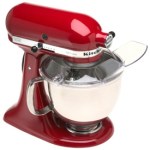
With my science project growing in a Ball jar on my counter, and after several rather impressive attempts at white bread, I decided to whip up a rather large batch of pizza dough.  Since I was in a hurry I ignored the admonition to slowly add the remaining three cups of flour, and dumped it into the mixing bowl.  Thwump!  As the bright red mixer ground loudly to a halt I learned why they’d included that little warning. A faint smell of burnt ozone wafted through the kitchen as the cloud of flour settled slowly on the granite counter top.

The KitchenAid mixer was dead. The last thing I fixed was the bell on my tricycle when I was four, so I don’t know what made me thing I could fix this. I went to Kitchenaid’s web site, typed in the model number, and hit enter. Nothing. I searched their site. Nothing. Went to Google. Typed in, “repair Kitchenaid mixer.” Within two minutes I found a web site that matched exactly my problem. I clicked the link. There was a step-by-step set of instructions and photos instructing how to disassemble the mixer right down to the broken part, the worm gear. The author also provided a link to a parts supplier, the price of the part, and an estimate for how long it takes for it to arrive.

Painless. Within a week my mixer was working although I did have one screw left over. I didn’t have to box it, ship it, pay for it; nothing. Some kind soul had taken it upon himself to make my day by posting his success on the internet. Could KitchenAid have done the same thing? Yes, for almost no cost. Another example of a firm who hasn’t learned to color outside the lines. Thank goodness one of the customers had.

Chances are good that your patients have posted more information about how to help their fellow patients than your hospital has posted.  It’s worth a look.  Chances are that they’ve also posted information that is wrong, things you would like to correct, but if you don’t know about it, you can’t correct it.  Want to know a good place to start a social media strategy?  Learn from your patients.

saint

Patient Equity Management; Rome wasn’t burnt in a day

marty_brain5_76


There’s the scene in Young Frankenstein when the character states, Could be worse, could be raining. The line is followed immediately the by sound of thunder and pouring rain. Lately, I’m reminded of that each time I ready the industry news and blogs. The message is that it is raining. Forty days and forty nights worth. Wet. Getting wetter. No towels in sight.

How’d we get there? We worked hard at it. What surprises me is how many providers are surprised by the situations in which they find themselves. During times like this patients discard marginal providers, the providers who never got around to valuing them. This is when it comes down to patient equity management (PEM)–providers who continue to manage by reacting to social media are going to continue to get wet.

It took years of mismanagement and lip service to make patients feel like they weren’t valued. Without a concentrated program of PEM it may take just as long to get them back. Rome wasn’t burnt in a day.

saint

Patient Relationship Management (PRM) – where to start

francis_gary_powers


I was watching something on the Smithsonian channel and caught a clip of an interview by Gary Powers, Jr. He was discussing his father, and the interviewer asked him about his dad’s ill-fated U2 flight—Gary Powers’ spy plane was shot down over the Soviet Union in 1960 by a surface-to-air missile.

“I asked him how high he was flying when the missile hit his plane,” the son replied. “His answer was, ‘obviously not high enough’.”

Not high enough. A bit of an understatement. When you’re piloting the spy plane and you can see the SAM’s contrail you’re about to have a bad day. By the time you see the smoke streaking towards you it’s already too late. Would’a, should’a could’a don’t matter. At this point all you can do is make the best of a bad situation. The time to prevent the problem has passed; the only option left is to minimize the consequences.

I look at Patient Relationship Management (PRM) pretty much the same way. For the most part, by the time the phone rings, it’s already too late to have done what was required to have prevented the need for the call.  Would’a, should’a could’a don’t matter. At this point all your organization can do is make the best of the situation. The time to prevent the call has passed; the only option left is to respond to the caller’s request.

If your hospital or office is like most others, almost all of the attention and technology are focused at responding to the caller once the call’s been received, kind of like trying to put the toothpaste back into the tube.  There are very cost-effective ways to evaluate providing excellent PRM prior to having to do it via a call center.  Social media can play an important role.

saint

Patient Relationship Management (PRM)

orienteering1A few weeks back I fly to San Diego. Having forgone the luxury of paying two dollars for a cup of lukewarm burnt coffee I gaze out the window through the haze to the landscape below—below is one of those redundant words since if I’m gazing at the landscape above we must be flying inverted, in which case I should be assuming the crash position. It’s amazing how clear everything becomes from 30,000’. I can see clearly where I want to go. Looking at the highways, one would think it difficult to ever get lost; follow the white line, turn right at the lake, then follow the next white line.

Lost is a lot easier when you are on the ground. I got a GPS for Christmas because in Philly, I am the king of lost. I’ve lived here 13 years and driven to the city on my own three times, and I don’t anticipate a fourth. I’ve traveled the world without a map, but put me in my own backyard and it’s an instant panic attack. That wasn’t the case when I lived in Denver, Colorado. Colorado was easy; there were three cities of note and a mountain range, so I always knew where I was.

Or, almost always. The first time I lived in Colorado my room and meals were free, courtesy of the US Air Force Academy—so were the haircuts. Basic training is an exercise one must experience to fully comprehend. We had about a thousand Alpha eighteen year-olds being yelled at by a thousand Alphas two years older. I learned early on that the best way to excel was to turn the entire experience into a competition, us against them—outthink, outwit, outlast—sort of like Survivor in uniforms. Several weeks into basic, we left the relative comforts of the academy and moved en-mass to a camp ground called Jack’s Valley—KOA on steroids. We did all sorts of fun things at camp; shined boots, raked dirt, learned how to kill with a bayonet.

And since the Air Force knew that wars weren’t always fought during the day, we did a number of nighttime activities. One such activity involved a compass, a partner, and a very dark forest. I think the idea of the exercise was to teach us how to find our way home if we were shot down. We’d been up since five, so naturally I was looking for a way to shorten the exercise while still scoring the maximum number of points. We were given our first compass bearing and we headed into the night in search of our next bearing. About an hour into the exercise I did an extrapolation based on the azimuth of the sun and the number of pieces of bubble gum it would take to fix a flat tire, and I told my partner I had a pretty good idea about where we were supposed to wind up the exercise. I argued that if I was right we could save ourselves more than an hour. He argued that were I wrong, we would finish last. I must have swayed him. We took a bearing on a light we could see from out spot in the forest. The light was from the city of Colorado Springs. We dashed through the forest, every hundred yards or so, stopping only long enough to recalibrate our bearing. We were making great time.

There’s a funny thing about lights. Sometimes they’re on. And sometimes, when you’re dashing through a forest with a compass in the middle of the night, someone turns them off. For those not familiar with the sport of orienteering, if that is the only fixed point you have to determine your position relative to everything on the planet, having the light go out will hinder your score. It did ours. There’s last, and then there’s so last that people have to come and find you in the very dark forest. This meant that the people whose job it was to yell at me during the day were going to miss their sleep all on account of my bright idea. They were highly motivated yellers the next day.

So much for my visionary idea. We were discussing that one of the basic requirements of the patient experience champion is their ability to visualize. In addition to being able visualize the end game, the vision must be credible. One can’t say follow me into the forest without knowing how to get to the other side. That said, the point of the exercise is that the first thing the champion must do is to define the vision. The roadmap will follow, but you have to know what the future will entail. We call that your “to be” state. Today is your “as is”, and the difference between the two is your Gap. If it sounds simplistic, that’s because we haven’t done anything yet. If you want to see how many people you have in your camp, start kicking around your notion of your “to be” model.

saint