Call me a cock-eyed nihilist

I offered the following comment to Kent Bottles post,

My New Year’s Resolution: To See the World Clearly (Not as I Fear or Wish It to Be).

http://icsihealthcareblog.wordpress.com/2010/01/04/kent-bottles-my-new-year’s-resolution-to-see-the-world-clearly-not-as-i-fear-or-wish-it-to-be/#comment-131

As this is the first Monday of the New Year, I had not planned on thinking, at least not to the extent necessary to offer comment on your blog.  I distilled it to three points—perhaps not the three about which you wrote, but three that tweaked my interest—happiness, counterfeit, and healthcare clarity.

Suppose one argues that happiness lives in the short-term.  It is something that one spends more time chasing than enjoying, something immeasurable, and once attained has the half-life of a fruit fly.  I do not think it is worthy of the chase if for no other reason that it cannot be caught.  As such, I choose to operate in the realm of contentment.  Unlike happiness, I think one can choose contentment.

There are those who would have us believe that contentment, with regard to healthcare, comes about through clarity, and that clarity comes from contentment—the chicken and the roaders.  Those are the ones who argue that reform, any reform, is good.  Where does the idea of counterfeit come into play?  I think it is the same argument, the one which states that any reform, even something counterfeit, is good.  The healthcare reform disciples argue that reform in itself is good; be it without objective meaning,purpose, or intrinsic value.  Therein lays the clarity, even if the clarity is counterfeit.

Call me a cock-eyed nihilist, the abnegator.  I am not content.  My lack of contentment comes not from what is or isn’t in the reform bill.  It stems from the fact that reform, poorly implemented, yields an industry strapped to change, an industry that may require greater reform just to get back to where it was.

Healthcare IT reform, HIT, will have to play a key role in measuring to what degree reform yields benefit.  Without a feasible plan, HIT’s role will be negative.  There are those who feel such a plan exists.  Many of those are the same people who believe the sun rises and sets with each announcement put forth by the ONC.

I think the plan, one with no standards, one that will not yield a national roll out of EHR, is fatally flawed.  I think that is known, and rather than correcting the flaws, the ONC has taken a “monkey off the back” approach by placing the onus on third parties, and offering costly counterfeit solutions like Meaningful Use, Certification, Health Information Exchanges, and Regional Exchange Centers.  If the plan had merit, providers would be leapfrogging one another to implement EHR, rather than forcing the government to pay them to do it.

At some point you’re no longer twenty

There is a first time for everything.  Yesterday was the first time it occurred to me that there is a difference between being twenty and not being twenty.  A few days ago one of the women at the gym was bemoaning the fact that being forty wasn’t at all like being thirty–puhleeaasse.

There are those who would have you believe that there is no single muscle that is connected to every other muscle, a muscle which if pulled will make every other muscle hurt.  I beg to differ.  I think I found it—I call it a my groinal—it’s connected to my adverse and inverse bent-egotudinals, the small transflexors located behind the mind’s eye.  I found the muscle while running back a kickoff during a Thanksgiving morning game of flag football.

Call it homage to the Kennedys.  Sort of made me feel like one of them—I think it was Ethyl.  Old guys versus new guys—I know it’s a poor word choice but you know what I mean which after all is why we’re both here.  Did I mention that everything aches, so much so that I tried dipping myself in Tylenol?

There are two types of people who play football, those who like to hit people and those who don’t like being hit.  I am clearly a member of the latter camp.  I used to be able to avoid being hit by being faster than the other guy.  This day I avoided getting hit by running away from the other guy.

The weird part is that my mind still pictures my body doing things just like the college kids on the field, and it feels the same, it just isn’t.  Two kids just ran past me at the speed of light, and my only reaction was feeling like I wanted to ground the two of them.  Half the guys are moving at half the speed of the other guys.  At the end of each play, we find our side doubled over, our hands on our knees, our eyes scanning the sidelines for oxygen and wondering why the ground appears to be swaying.

As the game progresses, instead of running a deep curl pattern, I find myself saying things like, “I’ll take two steps across the line of scrimmage, hit me if I’m open.”  Thirty minutes later I’m trying to cut a deal with their safety, telling him, “I’m not in this play, I didn’t even go to the huddle.”  After that I’m telling the quarterback, “If you throw it to me, I’m not going to catch it, no matter what.”

All the parts are the same ones I’ve always had, but they aren’t functioning the way they should.  It’s a lot like assembling a gas grill and having a few pieces remaining—I speak from experience.  Unfortunately, implementing complex healthcare information technology systems can often result in things not functioning the way they should, even if you have all the pieces.  It helps to have a plan, have a better one than you thought you needed, have one written by people who plan nasty HIT systems, then have someone manage the plan, someone who can walk into the room and say, “This is what we are going to do on Tuesday, because this is what you should do on Tuesday on big hairy projects.”.

Then, if you still happen to lose your EHR bearings, remember it grows best on the north-facing wall of the hospital.

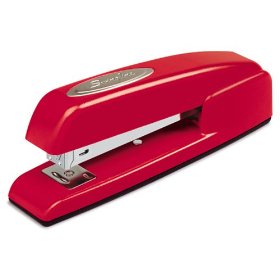
“We need to talk about your TSP reports”


If you recognize the stapler, you know the movie.  “Office Space”—Possibly the best movie ever made. Ever worked for a boss like Lumbergh? Here’s a smart bit of dialog for your Friday.

Peter Gibbons: I work in a small cubicle. I uh, I don’t like my job, and, uh, I don’t think I’m gonna go anymore.

Joanna: You’re just not gonna go?

Peter Gibbons: Yeah.

Joanna: Won’t you get fired?

Peter Gibbons: I don’t know, but I really don’t like it, and, uh, I’m not gonna go.

Joanna: So you’re gonna quit?

Peter Gibbons: Nuh-uh. Not really. Uh… I’m just gonna stop going.

Joanna: When did you decide all that?

Peter Gibbons: About an hour ago.

Joanna: Oh, really? About an hour ago… so you’re gonna get another job?

Peter Gibbons: I don’t think I’d like another job.

Joanna: Well, what are you going to do about money and bills and…

Peter Gibbons: You know, I’ve never really liked paying bills. I don’t think I’m gonna do that, either.

One more tidbit:

Peter Gibbons: Well, I generally come in at least fifteen minutes late, ah, I use the side door – that way

Lumbergh can’t see me, heh heh – and, uh, after that I just sorta space out for about an hour.

Bob Porter: Da-uh? Space out?

Peter Gibbons: Yeah, I just stare at my desk; but it looks like I’m working. I do that for probably another hour after lunch, too. I’d say in a given week I probably only do about fifteen minutes of real, actual, work.

I like to think of Peter as my alter-ego.

When I’m playing me in a parallel universe, I’m reading about a surfer dude cum freelance physicist, Garrett Lisi. Even the title of his theory, “An exceptionally simple theory of everything,” seems oxymoronic. He surfs Hawaii and does physics things—physicates—in Tahoe. (I just invented that word; it’s the verb form of doing physics, physicates.)

Ignoring that I can’t surf, and know very little physics, I like to think that Garrett and I have a lot in common. I already know Peter Gibbons and I do. So, where does this take us?

It may be apparent that I look at healthcare IT and reform from a different perspective than most; I’m the guy who doesn’t mind yelling ‘fire’ in a crowded theater. The guy who will never be invited to speak at the AMA convention unless they need a heretic to burn for the evening entertainment. I can live with that.

Like Garrett, I too see an exceptionally simple theory in everything, especially when it comes to improving the business of healthcare. It’s not rocket surgery, but then, it was never meant to be–before someone writes, I know it should be scientists.  It’s process, change management, leadership and foresight.

Sometimes I like to look at the problem from a different dementia—Word didn’t have a problem with my usage of that word.  I look at healthcare and ask myself three questions:

1. How did they ever get so siloed?

2. How did they ever get so so big without a cohesive IT strategy?

3. Is it possible to reverse both of those AND improve the business.

I am convinced the answer is yes.

Why the N-HIN will be owned by public firms

Here are a few more thoughts just to Emerilize the discussion—to kick it up a notch.  Not only do I think the national EHR market is ripe for the taking by a big three like Microsoft, Google, and Oracle, I’ll go so far to suggest that when the dust settles in 5-7 years, the N-HIN, the National Health Information Network, will be a regulated combination of a handful of those firms.

As for the other firms offering or planning to offer PHRs, permit me to suggest the following scenario.  Let’s say I am in charge of Google’s so far somewhat nonexistent healthcare line of business.  One of my goals would be to have more users of my PHR than any other firm.

Why does this model make sense?  Two ways, both of which come from the cable/telco business model.  Rule number one, content is king.  In cable, it is shows like HBO and Discovery.  In healthcare it is data; patient data, effectiveness data, disease data.

Reason number two, the cable/telco model values the businesses based on the number of assets.  What are the assets?  Subscribers.  You and me.  Each body adds somewhere between five and ten thousand dollars to the valuation model of a Comcast or Verizon.  Downstream, some valuation will be placed on each PHR subscriber.

So, back to the example of me running Google’s healthcare offering—if you don’t like Google as an example, insert your favorite firm.  If I’m Google, am I troubled by the fact that other firms are building their own solutions?  No, and here’s why.  The difficult part of the business model is adding users, adding subscribers.  Why not let a bunch of firms do the business development work for me, do the dirty work to get the users, and then just devour those firms?  Once I own them, I convert them to my platform.  Do I then get some ‘ownership’ or right to use the data?  That would certainly be the business goal.

One million users valued at five thousand dollars adds five billion in valuation.  Ten million adds fifty billion.  Ten billion is about 2.5% of the US market.  Do I stop at the border?  Of course not.

By the way, while all this is going on, Google, MS, or whoever will also be creating standards and be building or buying up EHR firms.

EHR-a doctor/CMIO’s perspective

Dirk Stanley wrote this in reply to a post on http://radar.oreilly.com/2009/11/converting-to-electronic-healt.html

I felt it needs to be heard.

I can only say that no matter what we do from a technical standpoint, a lot of medicine isn’t ready from the cultural standpoint.

Medical culture is a weird creature, that not a lot of people understand. (I’m sure Glenn above can attest to this.) Docs, historically, have been used to people “compensating for them”, for example :

1. A doc writing a script for Percocet (1) tab PO QID PRN instead of Percocet (1) tab PO q6h PRN pain.
2. A doc writing for “regular diet” instead of “Regular diet, dysphagia level I, nectar thickened liquids.”
3. A doc having weeks to co-sign their verbal orders.
4. A doc writing “Vanco 1gram IV x1 STAT” instead of “Vancomycin 1 gram in 250mL 0.9% NS run over 2 hours at a rate of 125mL/hour”
5. A doc writing “Heparin protocol” in the pre-EMR world, versus an electronic order for “Heparin protocol” where *all of the teammembers know what to do*.
6. A doc choosing an EMR because “It’s the best for me” versus “It’s the best thing for my patient”.

These are the hidden implementation costs. Training docs to think along these lines is important, but nobody has a clear training plan on how to change this medical culture.

This is why, some people look at OpenVista as the solution – IMHO, putting OpenVista into a private hospital will not produce the results it does in a VA hospital. Docs need to understand there will be compromises, and they need to buy-in to those compromises, before any migration to EMR will work.

Technology only works if the culture supports it.
I can tell you there are still a LOT of cynical docs out there who are quick to try a solution, and if it doesn’t work the first time, they lose faith.

Again, I wish things were different, but as a practicing physician who sees a lot of different medical computing environments (ICU to private office), I’m really concerned about the implementation plan here.

Finally, I agree, we do need an EMR Czar, or a “rockstar” who will talk about these things openly to help change the culture to be more supportive of technology. The problem is that to talk about it openly would mean having frank discussions that a lot of people don’t want to hear yet…

– Dirk 😉

Health IT: magical thinking?

Below are a few thoughts I submitted to the WSJ Healthblog at http://blogs.wsj.com/health/2009/11/12/a-doc-warns-of-magical-thinking-on-health-it/?mod=rss_WSJBlog


Interesting to note that they refer to the IT as it.  That’s because healthcare IT is being approached as a solution looking for a problem.  In may respects, the problem providers are trying to solve is the one created by Washington (the city, not the 1st president) mandating EHR.
If that’s the problem a provider is trying to solve, all solutions look good.  Healthcare providers need to approach HIT and EHR as real business problems, problems that require adult supervision, thoughtful analysis, and program officers with a track record of implementing big, hairy IT projects.
What’s your take on it?

pastedGraphic.tiff.converted


EHR: work plans are necessary but not sufficient

114454101_a0f39220a7


I wonder about things, little things, things I see on Nova or on Bizarre Foods.  Take water, more specifically, ice.  It floats.  The only solid that floats in its liquid state.  Most solids sink, not ice.  For those of you thinking boats float, they’re not considered to be solids—does that make them liquids?

It turns out that as water goes from four degrees centigrade, its densest point, and towards freezing, it becomes less dense and floats.  It’s volume increases by 9%, and part of that 9% is trapped air.  That air, even though you can’t see it, exists between the two H’s and the O.  which takes us to the following.

Have you spent much time studying work plans?  While there are more interesting ways to spend your time, there are times meant for writing them, and times meant for studying them.

Having a work plan can be a little like having a bike; nice, practical for some things, impractical for others.  Like with most things, there are work plans and there are work plans.  Some may not be worth the paper on which they are written.

Just like not everyone can write a book worth reading, not everyone can write a work plan worth implementing.  Lines on paper don’t necessarily yield a project of much value.  Remember how with the ice there are things between the H’s and O’s?  Well, with a lot of healthcare IT and EHR work plans, there are things between the tasks on the work plan, or at least there should be.  Can’t see them either.  Those things?  The missing tasks, the tasks that should have been in the plan, the tasks that would have given the plan a fighting chance to succeed.

Some gaps are good, like with ice.  Others can leave you hanging.

saint

EHR Tips for supplementing ARRA funding

tipjar

EHR meeting etiquette and survival guide

cricket


How many times have you been involved in one of those EHR committee meetings whose purported purpose was to elicit ideas?  I find it to be a helpful barometer to scout the room and see if the person who offered an idea at last month’s meeting was invited to this month’s meeting.   To survive across months of meetings requires a lemmingesque ability to walk in silence to the edge of the cliff.

Don’t be fooled into offering an idea simply because the leader is doing that tricky thing about using silence to see who will get so uncomfortable that they just need to hear a voice–their own.  Mistakenly, you believe that someone is actually interested in what you have to say, and you toss your idea into the black hole that used to be your career. Your idea is met with silence, the kind of silence you hear on a warm summer night. You swear you can discern the chirping of individual crickets outside.

Those voices you’ll been talking about in counseling are trying to warn you.  But to no avail, out it comes; “How come we’re not doing those work flow things they talked about?”  “Why did Our Lady of Perpetual EHR Hospital use and RFP to select their EHR vendor?”  “Why is radiology bulding their own EHR?”  “How come nobody is worried about whether this system will allow the referral docs to connect?”

You notice that your brother-in-law, the CMIO, has moved his chair away from yours.  Your best friend’s eyes are locked on his Blackberry.  It’s only then you learn that you and your colleagues aren’t petting the same dog. I think EHR implementations are a lot like that. There’s a lot of talk about doing something new, but more often than not it’s just talk.

sainttop5

Some EHRs are better than others

The health club offers a boot camp course—see how this ties into healthcare?  I used to make fun of it until I decided to try it.  The spandex factor is about 9.8 on the spandex/Richter scale.  Thirty-something women whose color coordinated apparel makes it worth the sweat.  (Permit me a brief segue.  Some fashionista recently discovered that it was possible to convince women that instead of wearing one shirt, that it would be more fashionable to wear multiple shirts with coordinated colors.  So, the women in the boot camp course wear an array of clothes such that their headbands match their fingernail polish.)

On most days I am the lone male in the class.  I’ve summited 50 (years, for those wondering the use of the word).  Most of the women in the class are unable to have an intelligent conversation over a latte about Viet Nam.  Trying to be gentle, I attribute that to their age rather than the fact that they were waitlisted on the most recent Mensa membership drive.  Despite their inability to go mano y mano with the former secretary of defense, Robert McNamara, they look darn good in spandex.

I try not to look like I covet their fawning, but as a seven year survivor of the White Male RCA Stent Award, I accept it with a degree of grace.  (For the male readers who wish to make light of Boot Camp, try it before you tease.)

So, there I am, I am there.  It’s my Green Eggs and Ham moment.  Prior to the class I’d run five miles, and completed 33 pull-ups without stopping.  Did I mention I like being the lone male in the class?   There’s a certain adulation that goes with the title.  Some would covet the position, but as an adult, I take it in stride.

However…today another male comes to the class.  I do not mind having another male.  I do however look unfavorably having another male in the class who looks like he trains navy SEALS in his spare time.  The class had the usual amount of male gawking, albeit at the wrong person.

What does this have to do with healthcare information technology?  Not much other than it goes to show you that there are those whose efforts may have superseded your own.  It doesn’t mean much when the item in question is pushups, it means a lot more when you’re trying to determine who did the best job spending one hundred million dollars on an electronic records system.

sainttop5