Why additional money is not needed to solve your EHR problems

Have you ever done any sort of group problem solving exercise like Outward Bound to help you to think as a team? Suppose there was an exercise for healthcare and IT executives, whose goal was to get the executives to think about how to best deploy can EHR system. To do this they are given a problem and access to ‘technology.’

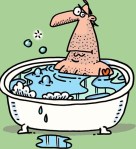
Here is the scenario and the rules as they are presented to the group. They are given ten dollars. The executives are presented with a bathtub filled with water, and told that the winning team will figure out the best use of money and time to empty the bathtub. Also available to them is a bucket which costs ten dollars and has a hole in it, a four-dollar cup, and a collection of wooden spoons which are free.

Any idea what the right combination is? Is there a best answer? Bucket? Cup and spoons? How would you solve the problem? Sometimes the best answer is so obvious it’s silly. Kind of like call centers? What’s the best use of the available tools? Faced with the option of buying more technology to solve the problem, when was the last time you saw someone refuse the funds?

Figured it out?

Pull the plug from the drain.

In many cases, we already have everything we need to solve the problem, we just need to know how to use it.

Just like Dorothy in the ‘Wizard of Oz.’  She had the ruby slippers the entire time, she just didn’t know how to use them. I think most EHR strategies can be improved without spending requiring millions more in technology.

That’s my story and I’m sticking to it.


EHR… “You are not twenty anymore”

There is a first time for everything.  Yesterday was the first time it occurred to me that there is a difference between being twenty and not being twenty.  A few days ago one of the women at the gym was bemoaning the fact that being forty wasn’t at all like being thirty–puhleeaasse.

My wife would have me point out her admonition of “You are not twenty anymore.”  Women do not understand that to men this phrase goes into our little brains and comes out reshuffled as the phrase “Just you wait and see.”

There are those who would have you believe that there is no single muscle that is connected to every other muscle, a muscle which if pulled will make every other muscle hurt.  I beg to differ.  I think I found it—I call it a my groinal—it’s connected to my adverse and inverse bent-egotudinals, the small transflexors located behind the mind’s eye.  I found the muscle while running back a kickoff during a Thanksgiving morning game of flag football.

Call it an homage to the Kennedys.  Sort of made me fee like one of them—I think it was Ethyl.  Old guys versus new guys—I know it’s a poor word choice but you know what I mean which after all is why we’re both here.  Did I mention that everything aches, so much so that I tried dipping myself in Tylenol?

There are two types of people who play football, those who like to hit people and those who don’t like being hit.  I am clearly a member of the latter camp.  I used to be able to avoid being hit by being faster than the other guy.  This day I avoided getting hit by running away from the other guy.

The weird part is that my mind still pictures my body doing things just like the college kids on the field, and it feels the same, it just isn’t.  Two kids passed me–they were probably on steroids, and my only reaction was the parent in me wanting to ground the two of them.  Half the guys are moving at half the speed of the other guys.  At the end of each play, we find our side doubled over, our hands on our knees, our eyes scanning the sidelines for oxygen and wondering why the ground appears to be swaying.

As the game progresses, instead of running a deep curl pattern, I find myself saying things like, “I’ll take two steps across the line of scrimmage, hit me if I’m open.”  Thirty minutes later I’m trying to cut a deal with their safety, telling him, “I’m not in this play, I didn’t even go to the huddle.”  After that I’m telling the quarterback, “If you throw it to me, I’m not going to catch it, no matter what.”

All the parts are the same ones I’ve always had, but they aren’t functioning the way they should.  It’s a lot like assembling a gas grill and having a few pieces remaining—I speak from experience.  Unfortunately, implementing complex healthcare information technology systems can often result in things not functioning the way they should, even if you have all the pieces.  It helps to have a plan, have a better one than you thought you needed, have one written by people who plan nasty HIT systems, then have someone manage the plan, someone who can walk into the room and say, “This is what we are going to do on Tuesday, because this is what you should do on Tuesday on big hairy projects.”.

Then, if you pull your groinal muscle implementing EHR, try dipping yourself in Tylenol.


EHR–WWOD (What would Oprah do?)

So, I’m watching the Alabama Auburn game and it suddenly strikes me, there are probably a lot of people trying to understand what it is a consultant does that we can’t do for ourselves.

For those who have a life, those who missed the game, Auburn entered the game undefeated and had a good chance to play for the national title.  Alabama opens the game with several well-scripted opening plays and grabbed an early lead.

Their first ‘n’ offensive plays were brilliant.  They were planned perfectly.

It became apparent they had not planned the however many of the ‘n + 1’ plays.  Their plan failed to go beyond what they’d already accomplished.

How does that apply to what you do, what I do, and why I think I can help you?  It is best described by comparing your brain to a consultant’s brain.  Your work brain functions exactly as it should.  It’s comprised of little boxes of integrated work activities, one for admissions and registration, one for diagnosis, another for care.  There’s probably another box for whatever it is the newsletter stated IT was doing three months ago and how that impacts what you do.  That’s your job.

Your boxes interface in some form or fashion with the boxes of the person next to you in the hospital’s basement cafeteria who is paying for her chicken, broccoli, and rice dish that reminds you of what you ate at crazy Uncle Bob’s wedding reception.  That interface is the glue that makes the hospital work.  It’s also the synapse, the connective tissue—I know it’s a weak metaphor, but it’s a holiday weekend—give me some slack—that tries to keep healthcare functioning in an 0.2 business model.

There are names for the connective tissue, you know it and I know it.  It’s called politics.  It’s derived from antiquated notions like, “this is how we’ve always done it”, “that’s radiology’s problem”, and “nobody asked me”,

At some point over the next week or two the inevitable happens; the need arises for you to add some tidbit of information.  Do you add it to an existing box, put it in an empty box, or ignore it?  This is where you must separate the wheat from the albumen—just checking to see how closely you’re following.

Your personal warehouse of boxes looks like the final scene in Raiders of the Lost Ark—acre after acre of dusty, full boxes, no Dewy-decimal filing system, and no empty box.  There are two rules at the hospital; one, bits of information must go somewhere, and two, nobody can change rule one.

The difference, and it’s a big one, is that consultants have an empty box.  It’s our Al Gore lockbox.  We were born that way.  It’s like having a cleft chin.  We also have no connective tissue to your organization.  No groupthink.  No Stepford Wives. No Invasion of the Body Snatchers to turn us into mindless pods.  Consultants may be the only people who don’t care.  Let me rephrase that.  We don’t care about the politics.  We don’t care that the reason the hospital has four IT departments is because the hospital’s leadership was afraid to tell the siloed docs that they couldn’t buy or build whatever they wanted.

Sometimes it comes down to your WWOD (what would Oprah do) moment.  Not ‘what do they want me to do’, not ‘what would they do’, not ‘what is the least disruptive’, not ‘what goes best with what the other hospital did’.

At some point it comes down to, what is the right thing to do; what should we do.

Big, hairy healthcare IT projects come out of the shoot looking like Alabama did against Auburn.  The first however many moves are scripted perfectly.  Heck, you can download them off Google.  Worse yet, you can get your EHR vendor to print them for you.

The wheat from the albumen moment comes when you have to come up with an answer to the questions, “What do we do next,” and “Why doesn’t it work like they said it would?”

That’s why consultants have an open box.  You know what we are doing when our brain takes us to the open box?  Thinking.  No company politics to sidetrack us.  Everybody knows the expected answers, but often the expected answer is not the best answer.  Almost everybody knows what comes after A, B, C, and D.

Sometimes…E is not the right answer or the best answer.
EHR: Show me the money

Every wonder how it is that all the billions in healthcare IT money came about?  I imagine it went something like this.

DC 1: Email those fellows over at HHS and tell them we should just make the doctors install Electronic Health Records (EHR).

DC 2: While we’re at it, how about we pay them a bonus to do it…

DC 1: …and we penalize them if they don’t.  Give them money with one hand and take it back with the other.

DC 2: How do we get EHRs to communicate?

DC 1: Make the states do figure it out.  They are looking for more money.

DC 2: I’ll email the governors and tell them we’ve got more billions to pass around.  Let them build some sort of Information Exchange.  They can set up committees and staff them with appointees.

DC 1: Then we can glue those together in some kind of national network.  Where are we going to get one of those?  Figure another ten billion for that.

DC 2: I’ll email the DOD, they are supposed to know something about building national networks.

DC 1: Just to get things kick-started, let’s email the troops and tell them we’ll sweeten the state pots a little more.  Get them to build these extension centers on a region by region basis.

All these dollars, so little value.  Most of it focused on trying to figure out how to get millions of somethings from point A to point B.

How did all those millions of emails get securely from point A to point B?  For a lot less than forty billion dollars isn’t it possible to figure out  how to get my health information to whomever needs it?  Email me, maybe we can come up with an idea for a network.

If you’re still puzzled, we can play hangman.  It has eight letters, starts with an ‘I’, and ends with ‘ternet’.


HIT/EHR: A little adult supervision

Among other things, EHR requires adult supervision like parenting.  My morning was moving along swimmingly.  Kids were almost out the door and I thought I’d get a batch of bread underway before heading out for my run.  I was at the step where you gradually add three cups of flour—I was in a hurry and dumped it all in at once.  This is when the eight-year-old hopped on the counter and turned on the mixer.  He didn’t just turn it on, he turned it ON—power level 10.

If you’ve ever been in a blizzard, you are probably familiar with the term whiteout.   On either side of the mixer sat two of my children, the dog was on the floor.  In an instant the three of them looked like they had been flocked—like the white stuff sprayed on Christmas trees—I guess we could call them evergreens—to make them look snow-covered.  (I just em-dashed and em-dash, wonder how the AP Style Book likes that.)  So, the point I was going for is that sometimes, adult supervision is required.

What exactly is Health IT, or HIT?  I may be easier asking what HIT isn’t.  One way to look at it is to consider the iPhone.  For the most part the iPhone is a phone, an email client, a camera, a web browser, and an MP3 player.  The other 85,000 things are other things that happen to interact with or reside on the device.

In order for us to implement correctly (it sounds better when you spilt the infinitive) HIT and EHR a little focus on blocking and tackling are in order.  Some write that EHR may be used to help with everything from preventing hip fractures to diagnosing the flu—you know what, so can doctor’s.  There are probably things EHR can be made to do, but that’s not what they were designed to do, not why you want one, and not why Washington wants you to want one.  No Meaningful Use bonus point will be awarded to providers who get ancillary benefits from their EHR especially if they don’t get it to do what it is supposed to do.

EHR, if done correctly, will be the most difficult, expensive, and far reaching project undertaken by a hospital.  It should prove to be at least as complicated as building a new hospital wing.  If it doesn’t, you’ve done something wrong.

EHR is not one of those efforts where one can apply tidbits of knowledge gleaned from bubblegum wrapper MBA advice like “Mongolian Horde Management” and “Everything I needed to know I learned playing dodge ball”.

There’s an expression in football that says when you pass the ball there are three possible outcomes and only one of them is good—a completion.  EHR sort of works the same, except the range of bad outcomes is much larger.


Why is implementing EHR like getting kids to eat broccoli?

Do you ever wonder if perhaps you are the only person who was never photographed with one of the Kennedys?  That got me thinking about our presidents.  NPR interviewed the person who spent eighty hours interviewing Clinton during the eight years during which he was allowed to park freely anywhere in DC.  See how this is already starting to come together?

The interviewer mentioned that Clinton described the Lewinski episode as a distraction.  I also employed several descriptors of that affairs—and yes, the pun is intentional—but I must have overlooked calling it a distraction.  People on both sides of the aisle called the episode a stupid thing.  Perhaps we should define the term ‘stupid thing’—doing long division and forgetting to carry the one is ‘a stupid thing’; mixing a red sock with a load of whites is ‘a stupid thing’.  Sometimes politics can have us all screaming infidelities.

When I share my thoughts about these things, some look at me like they are staring at an unlabeled can of food and trying to guess the contents.  Perhaps objectivity is only for the truly unimaginative.

Here comes the segue.  All of that thinking about presidents got me to thinking about Mr. Obama, reform, and EHR.  A lot of the original economic reform discussion had to do with TARP monies being tossed at the banks.  It was almost like a reverse bank holdup as the feds made the banks take money.

Which now takes us to healthcare reform and EHR.  ARRA money and states like New York providing a stimulus to the stimulus.  What is so distasteful about EHR that it makes governments offer money to get providers to implement it?  How might we illustrate this?

Let’s say I offer my children a choice of two things to eat; broccoli and chocolate cake.  What happens?  My kids make a bee-line for the cake.  The broccoli requires an incentive to get any takers.  My children are prepared to suffer untold penalties instead of eating the broccoli.  There may be some financial incentive which will entice them to eat broccoli, but it will be pricey.  Telling them it’s good for them, or that they have to eat it makes no difference to short people—they need to be bribed.

Telling healthcare providers EHR is good for them, or that they have to do it makes no difference to tall people—they want to be bribed.  What does this signify?  What is it about EHR that requires incentives and some foreign force majeure to get the discussion underway?  It’s not as though the healthcare providers don’t want to do things that will improve their business.  What is it they know that we don’t?  What other than money would make them run towards EHR rather than away from it?

You don’t suppose it has something to do with broccoli, do you?

For those who enjoy Dana Carvey, here’s a link to his song about chopping broccoli.

http://www.youtube.com/watch?v=gO57XRDDodk


The effect of poor planning

I’ve always considered myself to be rather athletic, although I must have been on break when they handed out the coordination genes.  Perhaps that is why I tended towards individual efforts like running.

As it was, I was fairly good at ice skating as long as I was moving forward, the straighter the better.  Turning and stopping required an abundance of room, and an absence of other skaters.

Whoever came up with the notion that if you can ice skate you can roller skate was either lying through his teeth, or I became skating’s anti-matter.  At the time of my first attempt at roller skating I was unaware that ice and roller skating skills weren’t transferable.  Have I mentioned I like having an audience?  I decided to audition my roller skating skills at a public skating rink while on a first date.

The night was proceeding swimmingly.  I learned quickly that if I stayed to the edge and leaned towards the center of the rink, centrifugal force would keep me from falling.  My confidence in my abilities began to build.  Music boomed from the overhead speakers.  Several couples held hands, the more skilled ones crossed their arms in front of them and held hands.  I locked on to my date’s wrists and eased us into the first turn.  The song switched to Barry Manilow’s “I write the songs.”  To my misfortune–an the misfortune of everyone else, I knew the words, and began to serenade my date.  When an alpha-male sings Barry Manilow in front of anyone but his own shadow, only two things can happen and they’re both bad.

We hit the second turn and I began to accelerate.  We sped past a number of couples.  I sang louder, concentrating more on the words than on the task of keeping us both upright.

For those unfamiliar with the design of roller skates I should explain what I perceive to be a fatal design flaw—one which you will note has been eliminated in roller blades.  The flaw?  On the front of each roller skate about an inch from the bottom is a round rubber device that resembles a stunted hockey puck.  It serves no known purpose other than to sucker punch novice skaters.  If you mistakenly try to build speed by pushing off with the toe of your roller skate—as you do in ice skating—you are actually hitting the emergency brake.  And because the brake is at the front of the skate, the physics is such that once your feet stop, the only direction the rest of your body can go is head over heels.

I pushed off with the front of my foot; big mistake.

I looked like I had purposefully launched us over a pommel horse.  During the first few seconds of my flight I was reluctant to let go of my date’s hands.  I thought that if we fell together that there was some small chance that I could shift the blame for the crash to her.  We separated at speed and created sort of a demolition derby for those around us; bodies piling up like logs awaiting entrance to a saw mill.  For the rest of the evening it felt like people were pointing at me as if to say, “Steer clear of him, he’s the one who took us all out.”

My one mistake caused a chain reaction of bad events and a severely hematomaed ego.  Bad things rarely happen in a vacuum.  There’s cause and effect, and the effect can be disastrous.  For those of you whose EHR program is underway who may have scrimped on the planning process—you know who you are—you may as well be the captain of the Titanic throwing refrigerant in the water.  There is no recovery from bad planning.

No matter what the shape of your EHR implementation, if you find yourself humming a few bars of “I write the songs”, only two things can happen and they’re both bad.

What are the voices telling you?

My favorite thing about healthcare is having witnessed it up close and personal both as a cancer patient in the 80’s and as the survivor of a heart attack seven years ago.
I was fortunate enough to have testicular cancer before Lance Armstrong made it seem kind of stylish.  Caught early, it’s one of the most curable cancers.  As those who’ve undergone the chemo will attest, the cure is almost potent enough to kill you.

I self-diagnosed while watching a local news cast in Amarillo where I was stationed on one of my consulting engagements.  As we were having dinner, my fellow consultants voted to change the channel—I however had lost my appetite.  I went to my room, looked in Yellow Pages—see how times have changed—and called the first doctor I found.  This is one of those times when Never Wrong Roemer hated being right.

So, yada, yada, yada; my hair falls out in less time than it took to shower.  A few more rounds of chemo, the cancer’s gone and I start my see America recovery Tour, my wig and I visiting friends throughout the southeast.  If I had it to do over, I would go without the wig, but at twenty-seven the wig was my security blanket.  I don’t think it ever fooled anyone or anything—even my house plants snickered when I wore it around them.

I owned a TR-7 convertible—apparently it never lived up to its billing as the shape of things to come, more like the shape of things that never were.  My wig blew out of the convertible as I made my way through Smokey Mountain National Park.  I spent twenty minutes walking along the highway until I spotted what looked like a squirrel laying lifelessly on the shoulder—my wig.

The last stop on my tour was at a friend’s apartment in Raleigh.  Overheated from the long drive and the August sun, I decided to take a few laps in her pool.  I dove in the shallow end, swam the length of the pool, performed a near-flawless kick-turn and eased in to the Australian Crawl.  As I turned to gasp for air, I noticed I was about to lap my hair.  I also noticed a small boy, his legs dangling in the water, with a look of astonishment on his face.

My ego had reached rock bottom and had started to dig.  Realizing my wig wasn’t fooling anyone but me, I had one of those “know when to hold ‘em, know when to fold ‘em moments” and never again wore the wig after learning it was such a poor swimmer.

Do you get those moments, or get the little voice telling you that your EHR strategy isn’t fooling anyone?  It’s okay to acknowledge the voices as long as you don’t audibly reply to them during meetings—I Twitter mine.

Sometimes the voices ask why we didn’t evaluate the EHR vendors with a detailed RFP.  Other times they want to know how that correspondence course in project management is coming along.  It’s okay.  As long as you’re hearing the voices you still have a shot at recovery.  It’s only when they quit talking that you should start to worry.  Either that, or try wearing a wig.


Pigeon Project Management Office (PMO)

I just finished stacking two cords of wood, much like a squirrel getting ready for a long cold winter. My feet were doing the “Boy is it cold dance” in an effort to keep the blood circulating.

As I was picking up the scraps, my eldest picked up a piece and placed it in his backpack. When I asked him what he would do with it he told me he was going to carve it after school. His statement brought back boyhood memories of hours of whittling, an activity done if for no other reason than to get from one minute to the next. Grab a stick and whittle it away until there was nothing left.  What next? Grab another. The weight of the pocketknife felt equally good in my hand as it did in my pocket.

When is the last time the thought of whittling crossed your mind? Probably been a long time. It’s an activity meant for idle minds and hands, or minds that should be idle.

Speaking of idle minds, there are times I find myself questioning what value so and so brings to the party. Do you do that?  “Why is she in this meeting?”  You know who I mean. You’re sitting there trying to get your work done and all of a sudden, some Mensa wannabe with more idle time on their hands than a Lipitor salesman at a BBQ cook-off, makes an aerial assault on your cubicle like a pigeon on a Rodin bronze.  Drops in and changes the rules of the universe, at least your universe.

This happens more often than is documented on large healthcare IT projects.  People set new courses and define program rules that may have nothing whatsoever to do with the project’s charter or scope.  You do have a written charter and scope in the project office, don’t you?  If not, it’s easy to see how new directions and rules can be given a certain specious authority.

What’s the best way to handle this situation? Often these management Mensas are nervous about a lack of visible results and they need to report on something.  They may feel the need to be doing something, something resembling leading.  They don’t mean to interfere, and they believe that their little forays into the world of super PMO (Program Management Officer) will actually add value. You tell me, are they adding value, or are they preventing the team from sticking to the scope? There’s that irritating scope word again.  The next time you see one wandering aimlessly through the rows of cubicles, hand that person a pocketknife and a nice piece of balsa wood.  Although their efforts won’t add any value to what you’re trying to accomplish, at least it will get them out of the way for a little while.

EHR: How to purchase an EHR

Are you really going to where that?  Do these pants really make my…

Did you ever have one of those non-halcyon days when you felt the need to ask someone “Did a house fall on your sister?”  Try to stay with me, it will come to you.  Enough about falling houses Toto.

I sought the counsel of a friend before heading down this path, and I’ve decided to choose the road less traveled anyway.

I may have written that I have observed differences between men and women.  You too?  Here are a few examples from my side of the gated compound.

  • We are willing to make mistakes as long as someone else is willing to learn from them
  • A good excuse is almost as good as getting it right
  • Good intuition will often make up for a lack of any facts
  • We refine our personality flaws, for without them we may not have a personality
  • Peter the Great heard the voices too

I regret that I am unable to share my list about women, for I am a coward.

While shopping the other day, I noticed that women shop for clothing differently from men.  For women, shop is a participatory verb—whatever that is—involving all twelve senses, for men it’s something we’d rather do online while watching the game.  From what I’ve observed, in fostering the she-conomy women:

  • Do their homework—what’s in, what’s not, what’s on sale
  • View shopping as a competitive sport, for some, a blood sport
  • Try on things, often more than once
  • Buy something they may need in case they someday find some other thing they may need that may go with it
  • There is no rule about having too many shoes—buy in volume
  • There is no rule about having too many black shoes

So, let’s see if we can segue beyond this jingoistic tractate on one to something more in line with the lofty subscription fee you paid for this site.

Permit me to employ two definitions which help me keep my ideas cogent.

  • IntraEHR—EHR statements that relate mostly to the healthcare provider
  • InterEHR—EHR statements that relate mostly to the movement  or transport of the EHR record from point A to point B

EHR and shopping.  Can one be at one with this duality?  How can one not be?  From having spoken with a number of healthcare providers about their IntraEHR selection, my take on a lot of the process is that more often than not there is no process.  It’s a lot like watching men shop.  It’s over and done with without much reasoned or substantiable—I was afraid I’d have to invent this word but I found it on Google—thought.  Over and done with, now back to the game.

Maybe EHR scholars will one day be able to trace speed buying of IntraEHRs back to that whole Neanderthal hunter gatherer thing in the Pleistocene epoch.  Sort of a think fast on your feet or you’ll be eaten approach to software selection—an awful metaphor, however CNN ran a feature with that title, so it has some legitimacy.  Maybe the hospital’s executive committee will be able to trace the hastily made IntraEHR purchase back to a lack of a plan, the lack of business requirements, and the lack of an adequate request for proposal RFP.  Maybe your successor will figure it out.

For those who haven’t contracted for their IntraEHR, it may be better to approach this like a woman.  To those who are women—you should know who you are—you are probably already approaching it that way.

Now, where did I leave my black pumps?  And no, I am not going to finish my thought about the pants.