 The opinions expressed by this author do not necessarily reflect the opinion of the author, nor were any consultants hurt in the writing of this editorial.
It may not matter what I think, but I think ‘it’s’ dead. The problem is that the ‘it’ to which I refer depends on what your definition of it is. That the ‘it’ is too obtuse to define underscores my belief that the possibility that healthcare reform as it is currently envisioned will materialize is only about fifty-fifty.
What are some leading indicators? For starters, both Fox News and MSNBC appear to be in general agreement—albeit for different reasons—that the people, also known as voters, are not drinking the Kool Aid. Why? It has very little to do with whether the average person thinks everyone is entitled to healthcare. A good portion of it may have to do with the part of us that doesn’t like being told what to do. HMOs taught us to be that way. Rightly or wrongly, the average person believes the government will only add to a series of restrictions telling us who we can see for care, and the type of care to which we are entitled.
Ignore if you can the thousand pages of regulation, that we already spent a trillion stimulus dollars, that we’d have to spend another trillion dollars on healthcare under the guise of decreasing the cost of healthcare, paying for reform with a tax increase, or that if reform is pushed back to 2010 Congress will vote for whichever option is most likely to get them re-elected.
Here’s what I think it all boils down to. Nobody can fully and clearly articulate what the ‘it’ is. Is it government mandated healthcare, coverage for all, cost reduction, shifting the cost burden, improving care, improving care for all, interoperable electronic health records, payor reform, equal access to equal services, improved quality of care, or improved efficiency? It may be all of the above. Preferences seem to differ depending on the individual who hopes to influence them.
What’s the impact on what your EHR Strategy ought to be? It depends. That was helpful, wasn’t it? It depends on how many of the components of reform come to fruition, and to what degree. If the goal of efficiency on a national level wins out over other goals, interoperability should have greater emphasis. If it’s cost reduction and efficiency at the provider level, place your emphasis on CDRs and EMRs. The problem, as I see it, is that the result of healthcare reform will likely be an amalgamation of most of the reform goals.
How does the uncertainty surrounding reform impact your HIT and EHR strategy today? In defining your requirements, selecting and implementing a system, and redefining reform workflows. If nothing else, the consequences of having the wrong strategy will be much greater in terms of an organization’s ability to drive real benefits from the EHR. It will impact its ability to redesign its workflows, and it will either simplify or exacerbate change management and your ability to communicate outside of your own four walls.
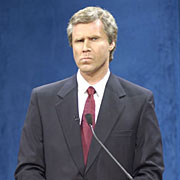
Do you have EHR strategery meetings? The next time you do, make sure you put the following on your agenda. My conclusion is that the most important component of your EHR strategy is flexibility. Do not skimp on flexibility—pay extra for it. Build in flexibility. Flexibility for what—that’s the big question, isn’t it?
What do you think?

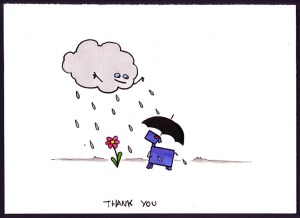 You know how when your flight lands the flight attendant—even I can have a PC moment—says, “We’d like to thank you for flying with us.” They’d like to thank you but they never do. That aside, the purpose of this short muse is to thank you for reading and sharing your thoughts.
 Several years ago I was invited to go on the ultimate boys’ toys, weekend getaway. A dozen of us flew from Denver to Utah, and then drove to a point somewhere west of Bozeman Montana. It was to be a weekend of sport, a weekend of competition, and a more than occasional libation. To say that the people who organized the trip came from money would be a major understatement. They were in the oil bid’ ness. The father of one of the guys was the CEO of the second or third largest petroleum company in North America. We stayed at his ranch, a 12 bedroom log cabin in the middle of Nowhere, Montana, which is about 20 miles west of Next to Nowhere, Montana.
 There’s been a lot of interesting discussion underway on a number of sites about a number of topics all having to do with some aspect of what ought providers be doing to optomize their chances of success around the issues of EHR, healthcare reform, workflow engineering, and so on. Most of the discussion on the web focus on the fact that the train has already left the station and you should just hop on. There is little or no discussion about whether a provider should stop and consider if that train is the best one for you.
 Sometimes it pays to hire an expert. Given the uncertainty around standards and interoperability, selecting and implementing an EHR may be one of those times.
 It may be helpful as you read this to use your highlighter on the screen to accentuate the important parts or some white-out for the parts you don’t favor.
 Have you started to feel like the more you fill your plate at the EHR smorgasbord the more you start to notice things in a “Where’s Waldo” kind of way? It can cause a kerfuffle even among the mugwumps.
 Been there, done that, got the T-shirt. Everybody who thinks they have their arms around EHR and healthcare reform, take one step forward……whoa, where are you going Sparky?
 (Please excuse the quality of my drawing, it didn’t scan well.)
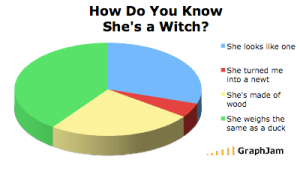 Maybe Monty Python said it best:

 Pale Rhino Consulting