EHR: Is your plan aiming far enough out?

Can being an early adopter save your hospital millions of dollars?  We both know the answer depends on what one happens to adopt.  Suppose we are discussing the adoption of an idea?  Can that be analogous to not adopting another idea?  I think it can.  Allow me to explain.

Many providers are in the process of making a very expensive, highly complex, and wide-ranging decision regarding their healthcare information technology strategy (HIT) for their electronic healthcare records system (EHR).

A non-trivial moment.  Careers will be made and lost as a result—I’m betting more will be lost.  Why?  By making a bad choice on the EHR, on how to implement it, and on how to modify your organization.

I think the choices will be bad not from lack of effort but from lack of understanding of the complete issue.  What is the part of the issue that is lacking?  It’s the part which requires clairvoyance.  Whew, that was easy.

Defining your requirements does not pass the test of necessity and sufficiency.   It’s like playing darts while blindfolded.  The plan to select, implement, and deploy an EHR must account for a number of risky unknowns, including:

  • How will healthcare reform impact my organization
    • What constraints will it produce
    • What demand will it create for new HIT systems
    • What new major operating processes will result
    • When will reform really be implemented
    • How will reform be reformed
    • How will payors, suppliers, and people react to reform
    • How will you offset a resource shortage of fifty percent
    • What will change as a result of
      • Interoperability
      • Certification
      • Meaningful Use
      • Mergers and acquisitions

We don’t know what we don’t know.  That is not a throw-away line.  By definition, we never know what we don’t know.   However, the downstream success of your EHR will be highly dependent on these unknowns.

So, where does your need to be clairvoyant come into play?  One word—flexibility.  Every part of the plan must be built with that requirement in mind.  What will the system need to do in three years?  How will the landscape have changed?

If you aren’t convinced your EHR is either flexible or disposable, you’d benefit by rethinking your plan.  The idea for which I think we need early adopters is to spend time building to what will be, not what is.

Today is not a dress rehearsal, or is it?


Or is it? Who makes that determination? This is probably the one area of your job over which you still have the most control.

Why is EHR too much for normal brains?

So, I’m watching the Alabama Auburn game and it suddenly strikes me, there are probably a lot of people trying to understand what it is a consultant does that we can’t do for ourselves.

For those who have a life, those who missed the game, Alabama entered the game undefeated and had a good chance to play for the national title.  Auburn opens the game with the best scripted opening plays I’ve ever witnessed—touchdown, onside kick, trick plays, touchdown.  14-0.

Their first however many offensive plays were brilliant.  They were planned perfectly.  The next time they had the ball it was apparent that they had not planned the however many and first play.  The plan failed to go beyond what they’d already accomplished.

How does that apply to what you do, what I do, and why I think I can help you?  It is best described by comparing your brain to a consultant’s brain.  Your work brain functions exactly as it should.  It’s comprised of little boxes of integrated work activities, one for admissions and registration, one for diagnosis, another for care.  There’s probably another box for whatever it is that the newsletter stated IT was doing three months ago and how that impacts what you do.  That’s your job.

Your boxes interface in some form or fashion with the boxes of the person next to you in the hospital’s basement cafeteria who is paying for her chicken, broccoli, and rice dish that reminds you of what you ate at crazy Uncle Bob’s wedding reception.  That interface is the glue that makes the hospital work.  It’s also the synapse, the connective tissue—I know it’s a weak metaphor, but it’s a holiday weekend—give me some slack—that tries to keep healthcare functioning in an 0.2 business model.

There are names for the connective tissue, you know it and I know it.  It’s called politics.  It’s derived from antiquated notions like, “this is how we’ve always done it”, “that’s radiology’s problem”, “nobody asked me”,

At some point over the next week or two the inevitable happens; the need arises for you to add some tidbit of information.  Do you add it to an existing box, put it in an empty box, or ignore it?  This is where you must separate the wheat from the albumen—just checking to see how closely you’re following.

Your personal warehouse of boxes looks like the final scene in Raiders of the Lost Ark—acre after acre of dusty, full boxes, no Dewy-decimal filing system, and no empty box.  There are two rules at the hospital; one, bits of information must go somewhere, and two, nobody can change rule one.

The difference, and it’s a big one, is that consultants have an empty box.  It’s our Al Gore lockbox.  We were born that way.  It’s like having a cleft chin.  We also have no connective tissue to your organization.  No groupthink.  No Stepford Wives. No Invasion of the Body Snatchers to turn us into mindless pods moments.  Consultants may be the only people who don’t care.  Let me rephrase that.  We don’t care about the politics.  We don’t care that the reason the hospital has four IT departments is because the hospital’s leadership was afraid to tell the siloed docs that they couldn’t buy or build whatever they wanted.

Sometimes it comes down to your WWOD (what would Oprah do) moment.  Not, what do they want me to do, not what would they do, not what is the least disruptive, not what goes best with what the other hospital did.

At some point it comes down to, what is the right thing to do; what should we do.

Big, hairy healthcare IT projects come out of the shoot looking like Auburn did against Alabama.  The first however many moves are scripted perfectly.  Heck, you can download them off Google.  Worse yet, you can get your EHR vendor to print them for you.

The wheat from the albumen moment comes when you have to come up with an answer to the question, “What do we do next?”

That’s why consultants have an open box.  You know what we are doing when our brain takes us to the open box?  Thinking.  No company politics to sidetrack us.  Everybody knows the expected answers, but often the expected answer is not the best answer.  Almost everybody knows what comes after A, B, C, and D.

Sometimes…E is not the right answer or the best answer.

At some point you’re no longer twenty

There is a first time for everything.  Yesterday was the first time it occurred to me that there is a difference between being twenty and not being twenty.  A few days ago one of the women at the gym was bemoaning the fact that being forty wasn’t at all like being thirty–puhleeaasse.

There are those who would have you believe that there is no single muscle that is connected to every other muscle, a muscle which if pulled will make every other muscle hurt.  I beg to differ.  I think I found it—I call it a my groinal—it’s connected to my adverse and inverse bent-egotudinals, the small transflexors located behind the mind’s eye.  I found the muscle while running back a kickoff during a Thanksgiving morning game of flag football.

Call it homage to the Kennedys.  Sort of made me feel like one of them—I think it was Ethyl.  Old guys versus new guys—I know it’s a poor word choice but you know what I mean which after all is why we’re both here.  Did I mention that everything aches, so much so that I tried dipping myself in Tylenol?

There are two types of people who play football, those who like to hit people and those who don’t like being hit.  I am clearly a member of the latter camp.  I used to be able to avoid being hit by being faster than the other guy.  This day I avoided getting hit by running away from the other guy.

The weird part is that my mind still pictures my body doing things just like the college kids on the field, and it feels the same, it just isn’t.  Two kids just ran past me at the speed of light, and my only reaction was feeling like I wanted to ground the two of them.  Half the guys are moving at half the speed of the other guys.  At the end of each play, we find our side doubled over, our hands on our knees, our eyes scanning the sidelines for oxygen and wondering why the ground appears to be swaying.

As the game progresses, instead of running a deep curl pattern, I find myself saying things like, “I’ll take two steps across the line of scrimmage, hit me if I’m open.”  Thirty minutes later I’m trying to cut a deal with their safety, telling him, “I’m not in this play, I didn’t even go to the huddle.”  After that I’m telling the quarterback, “If you throw it to me, I’m not going to catch it, no matter what.”

All the parts are the same ones I’ve always had, but they aren’t functioning the way they should.  It’s a lot like assembling a gas grill and having a few pieces remaining—I speak from experience.  Unfortunately, implementing complex healthcare information technology systems can often result in things not functioning the way they should, even if you have all the pieces.  It helps to have a plan, have a better one than you thought you needed, have one written by people who plan nasty HIT systems, then have someone manage the plan, someone who can walk into the room and say, “This is what we are going to do on Tuesday, because this is what you should do on Tuesday on big hairy projects.”.

Then, if you still happen to lose your EHR bearings, remember it grows best on the north-facing wall of the hospital.

Patients Relationship Management-why not think like one?

I met last week with a number of 1st Year MBA students who have a consulting club to help them figure out if they are suited for this noblest of all professions–supposedly the second oldest profession. “How can you tell if you’ll be any good at it?” They asked.

As far as I can tell, there are two basic requirements. One, you have to be a bit out of kilter, a tad of ADHD doesn’t hurt either. You have to hate repetition.   Second, it helps if you have a belief that there is almost nothing you couldn’t figure out how to improve. While thinking it doesn’t make it true, the attitude is a critical success factor.

For example, I just returned from the post office.  Noon on the Wednesday before the holiday–lunch time rush hour.  I’m standing in a long line underneath a banner with a message emphasizing quality.

There are two clerks, postmen, postpersons, postladies–I’m not sure which one is most appropriate, but as we both know, I’m not going to lose any sleep over it either. The line is out the door. Clerk ‘A’ tells clerk ‘B’, “I’m going on break.” At which point I turned to the person next to me and uttered, “And I’m going to UPS.”   It’s not that difficult to improve.  Not letting half of your customer-facing employees go on break during your busiest time would be a good way to start to improve things.

It’s not rocket surgery. Patient Experience Management, Patient Equity Management. Whatever you call it, big inroads can be made.  Quit thinking like an executive and start thinking like a patient and you’ll have plenty of ideas.

Patient Relationship Management-Master of the Jedi Order

They don’t call me Yoda for nothing. This little rant is for those acolytes drinking the Kool Aid of disbelief, the recipe that says that one day, if we stay the course, this will all get better, those who believe that the light at the end of the tunnel isn’t a train.
For the next few minutes try and disassociate yourself from your responsibilities at work and become a patient.  Recall a time when you’ve been a dissatisfied patient. If you’re totally honest, that simple exercise should quicken your pulse. Cold beads of sweat appear on your forehead; your palms feel a little clammy.

The transition is faster than Clark Kent in a phone booth. A mild mannered and pedestrian acolyte transformed into a right-winged, Myers-Briggs INTJ A-Type with a passion for metaphorically devouring the unfortunate person awaiting your visit.

As you think about managing the equity of your patients think about it from the perspective of the patient, goodness knows they do. That relationship is black and white—there are no shades of gray. It’s good versus evil, Yoda versus Darth Vader.

I think with most patient interactions the patients believe that the person on the other end of the line is incented to make them go away as quickly as possible and at the lowest possible expense to the provider.

For most patients, patient loyalty is a thing of the past. Who do you do business with? Why? For any product that is even close to being a commodity, I deal with the firm who I find to be the least offensive, the one that will irritate me the least. That’s why I buy cars on EBay so I never again have to hear the phrase, ‘What’s it going to take to get you into that car?” If you find yourself doing that, why is it such a stretch to believe that so many patients feel the same way? That said, could it rather naïve to believe that your firm’s current approach to patient relationship management will make any difference?

A thought for Thanksgiving

May I take you on a tour of our homes—yours and mine?  Although we’ve never crossed one another’s thresholds, we’ve been there, at least if you live in America. Take the tour with me.  You enter through the front door.  On one side is the living room, on the other sits the dining room.  If you’re left-handed, as am I, the dining room is on the left and the living room is on the right.

The living room looks exactly like it did the day the movers dropped off your furniture.  It might as well be cordoned off with red velvet rope and polished brass stanchions.  It reminds me of taking the tour of Independence Hall, seeing the quill pen right where Mr. Hancock left it.  Nothing has been disturbed.

We don’t use our living room.  We vacuum and dust, just like everyone does.  We didn’t use it when I was young; I’m starting to think it might be a better spot for a hot tub.

Opposite the living room is the dining room.  One or two brass chandeliers depending on your tastes.  Oriental rug, side board, hutch.  Ask a thief about the rest—bone china, a velvet lined box of silver dinner wear.  Candlesticks.  Hand cut lead crystal.  Linens; tablecloth and napkins.  That sort of covers it.

If your family is at all like mine, when the dining room isn’t being used for folding laundry, building 1,000 piece puzzles, or tax preparation, it is used for high holidays, proms, weddings and funerals.

We have a set of china I bought from England on eBay that is more translucent that Saran wrap.  We’ve probably used it a half dozen times.  It’s for those special occasions—like the passage of the healthcare reform bill.

Seven years ago this Thanksgiving I was sitting on the floor of the dining room, inspecting the dishes and silverware when I came upon an unopened box of off-white tapered candles that was tucked away under the starched Egyptian cotton linens.

It gave me pause.  The receipt was taped to the box—purchased five years ago.  Why?  In case we needed them.  In case there was an occasion so special as to warrant candles, better yet, candles in the dining room, with the china and lead crystal.  (Sounds a little like Colonel Mustard in the dining room with the lead pipe.)

At the rate we were going, the candles and china were so well preserved so as to survive an archeological dig in the year 3,000.  What is the correct candle lighting threshold?  What is yours?

I almost never had the chance to learn mine.  Less than two weeks after that Thanksgiving, while watching an episode of the Sopranos, I had difficulty breathing, a lot of difficulty.  Collapsing to the floor while trying to convince my wife I was fine was enough to get her to call for an ambulance.  I was having a heart attack.

Less we be distracted, these few paragraphs are about the candles, not the heart attack.  These days we burn the candles, stain the linens, and break the crystal and the china.

I used to think, wouldn’t it be neat if, or if I had the chance for a do-over I’d like to be.  How cool would it be to have been Ted Kennedy or Paul Newman?  Celebrity.  Impacting world events.  Able to pay John Edwards money for a haircut.  Why not want that?

One reason.  Each of us has the ability to choose to complain about tomorrow, an ability they do not have.  Too hot, too cold, to busy, too bored.  The question is, do we also have the smarts, the God-given wisdom, not to complain but just to be grateful for being.

I also had cancer twenty years ago.  I have vivid memories of wishing I was caught in traffic jam on I-75 in Dallas, yet I’m the same guy who often finds himself a nanosecond away from having a news helicopter filming my traffic road-rage.  My moments of clarity wax and wane as I’m sure do yours.

It’s difficult if not impossible to see your candles from the back of an ambulance.

I’ve been fortunate to have met some really special people on the Internet.  Smart people, generous people, people willing to share ideas diametrically opposed to mine.  People caught up in their lives and the lives of others.  People who in an awkward moment would think it might be great to trade their lot for that of another.  People who’d rather save their candles for a more important occasion.

No occasion will ever be any more important than the occasion of having tomorrow.  Let’s agree to light a lot of candles this year.

Donuts and plants, project management 101

(I sometimes find it helpful to recite my blogs using different voices like Neil Diamond.  You?)

Do you ever look back with amazement on how naïve you were in your first job?  You walk in, your head so full of knowledge it feels like it should explode.  You’re just waiting for that first opportunity to release the pearls of wisdom accumulated during all those years of schooling.  I was pretty sure I knew almost everything that needed knowing.

I worked as the assistant to the CFO of a large petroleum services firm in Fort Worth, Texas.  Lot’s of visibility, lot’s of people watching my every move.

My first day on the job, I was expected to attend a meeting at 7:30 AM.  Overtime.  I brought donuts, knowing how hungry everyone must be because they hadn’t had time to eat breakfast.  As I soon learned, the others in the room had been there since 6 AM for another meeting—they were not impressed by my offer of donuts.  My boss walked me over to an east-facing window an pointed at the orange ball of light floating above the horizon.

“That’s the sun,” he said.  “It’s been up two hours—so have we.  It comes up this time every morning.  Get used to it.”

That went well.  I noted that five o’clock had come and gone and nobody made any attempt to rush the doors.  I decided to leave around seven.  As I waited for the elevator I noticed that two very large plants in very attractive pots were being thrown away.  They’d be perfect for my barren apartment.  It took me several trips to get the plants and pots situated in my TR-7 convertible.  Over the next several days I noticed that next to the elevator bays on the other floors were identical plants in identical pots.  What was the likelihood that these were all being thrown away?  Probably zero I surmised.

So, my first day on the job I unknowingly stole the company’s plants.  What would day two offer, a walnut credenza, brass lamps?  Gonna’ need a bigger car.

Do you know people like that on your project, those who portend to know everything that don’t?  Plant thieves.  Sometimes they masquerade as program managers, sometimes as analysts.  They hide what they don’t know behind a flurry of meetings, a full calendar, reams of emails.

It’s easier to spot the plant thieves than it is to stop them from adversely affecting your project.  It’s easy to observe, easier to complain about.  What to do about it?  Why are you asking me?  That’s why they pay you the big bucks.

“We need to talk about your TSP reports”


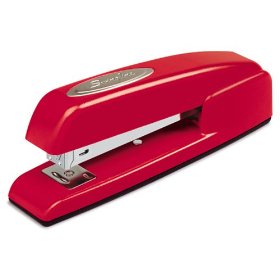
If you recognize the stapler, you know the movie.  “Office Space”—Possibly the best movie ever made. Ever worked for a boss like Lumbergh? Here’s a smart bit of dialog for your Friday.

Peter Gibbons: I work in a small cubicle. I uh, I don’t like my job, and, uh, I don’t think I’m gonna go anymore.

Joanna: You’re just not gonna go?

Peter Gibbons: Yeah.

Joanna: Won’t you get fired?

Peter Gibbons: I don’t know, but I really don’t like it, and, uh, I’m not gonna go.

Joanna: So you’re gonna quit?

Peter Gibbons: Nuh-uh. Not really. Uh… I’m just gonna stop going.

Joanna: When did you decide all that?

Peter Gibbons: About an hour ago.

Joanna: Oh, really? About an hour ago… so you’re gonna get another job?

Peter Gibbons: I don’t think I’d like another job.

Joanna: Well, what are you going to do about money and bills and…

Peter Gibbons: You know, I’ve never really liked paying bills. I don’t think I’m gonna do that, either.

One more tidbit:

Peter Gibbons: Well, I generally come in at least fifteen minutes late, ah, I use the side door – that way

Lumbergh can’t see me, heh heh – and, uh, after that I just sorta space out for about an hour.

Bob Porter: Da-uh? Space out?

Peter Gibbons: Yeah, I just stare at my desk; but it looks like I’m working. I do that for probably another hour after lunch, too. I’d say in a given week I probably only do about fifteen minutes of real, actual, work.

I like to think of Peter as my alter-ego.

When I’m playing me in a parallel universe, I’m reading about a surfer dude cum freelance physicist, Garrett Lisi. Even the title of his theory, “An exceptionally simple theory of everything,” seems oxymoronic. He surfs Hawaii and does physics things—physicates—in Tahoe. (I just invented that word; it’s the verb form of doing physics, physicates.)

Ignoring that I can’t surf, and know very little physics, I like to think that Garrett and I have a lot in common. I already know Peter Gibbons and I do. So, where does this take us?

It may be apparent that I look at healthcare IT and reform from a different perspective than most; I’m the guy who doesn’t mind yelling ‘fire’ in a crowded theater. The guy who will never be invited to speak at the AMA convention unless they need a heretic to burn for the evening entertainment. I can live with that.

Like Garrett, I too see an exceptionally simple theory in everything, especially when it comes to improving the business of healthcare. It’s not rocket surgery, but then, it was never meant to be–before someone writes, I know it should be scientists.  It’s process, change management, leadership and foresight.

Sometimes I like to look at the problem from a different dementia—Word didn’t have a problem with my usage of that word.  I look at healthcare and ask myself three questions:

1. How did they ever get so siloed?

2. How did they ever get so so big without a cohesive IT strategy?

3. Is it possible to reverse both of those AND improve the business.

I am convinced the answer is yes.

Why the N-HIN will be owned by public firms

Here are a few more thoughts just to Emerilize the discussion—to kick it up a notch.  Not only do I think the national EHR market is ripe for the taking by a big three like Microsoft, Google, and Oracle, I’ll go so far to suggest that when the dust settles in 5-7 years, the N-HIN, the National Health Information Network, will be a regulated combination of a handful of those firms.

As for the other firms offering or planning to offer PHRs, permit me to suggest the following scenario.  Let’s say I am in charge of Google’s so far somewhat nonexistent healthcare line of business.  One of my goals would be to have more users of my PHR than any other firm.

Why does this model make sense?  Two ways, both of which come from the cable/telco business model.  Rule number one, content is king.  In cable, it is shows like HBO and Discovery.  In healthcare it is data; patient data, effectiveness data, disease data.

Reason number two, the cable/telco model values the businesses based on the number of assets.  What are the assets?  Subscribers.  You and me.  Each body adds somewhere between five and ten thousand dollars to the valuation model of a Comcast or Verizon.  Downstream, some valuation will be placed on each PHR subscriber.

So, back to the example of me running Google’s healthcare offering—if you don’t like Google as an example, insert your favorite firm.  If I’m Google, am I troubled by the fact that other firms are building their own solutions?  No, and here’s why.  The difficult part of the business model is adding users, adding subscribers.  Why not let a bunch of firms do the business development work for me, do the dirty work to get the users, and then just devour those firms?  Once I own them, I convert them to my platform.  Do I then get some ‘ownership’ or right to use the data?  That would certainly be the business goal.

One million users valued at five thousand dollars adds five billion in valuation.  Ten million adds fifty billion.  Ten billion is about 2.5% of the US market.  Do I stop at the border?  Of course not.

By the way, while all this is going on, Google, MS, or whoever will also be creating standards and be building or buying up EHR firms.