EHR: shift happens

After several years of therapy, I’d begun to accept that I might not be the “Voice of Reason” for all things, maybe just for the important things.  Laugh all you want—most of you have been here, you just don’t blog about it.  To fully grasp the import of what I’m about to write, for the newbies, there’s benefit in reading https://healthcareitstrategy.com/2009/09/19/ehr-how-to-recover-from-poor-planning/.  If there was ever déjà-vu all over again, this is it.  It takes an idiot to be this stupid once.  I’ve managed to refine the process.

At some point, there may be benefit to society as whole for someone to do the math and holler above the fray, “he doesn’t get it and he never will.”  This is not a discussion about what is PC, it’s about my ineptitude.  I have become my own euthanasia moment.

The chicken breasts are moved from the freezer to the sink to be thawed by water because the energy used to heat water is cheaper than energy used to run the microwave.  Forgive me for tearing.  (I am at an impasse between tear and tear.)

This is twice in fewer months than it takes not to approve healthcare reform.

I am watching, “Trauma in the ER”.  It’s part of my MD correspondence course.  I’d just about learned to insert a chest tube when something reminded me of running water.  I ran to the kitchen.  The water is running. The chicken breasts are floating. Hawaiians are surfing the curl in my kitchen.  We have so been there done, that.  I am stupefied.  The last time I did this, I was able to hide it from my wife.  The oak floor boards are now warped to the point where they now look more like bread bowls from the Plymouth colonies than boards.

I wish I spent my days inventing this material.  It’s difficult to understand, but in spite of my ineptitude, I am allowed to vote to determine who will be the next president.  I have become a Mensa wanna-be gone amuck.

Where does this leave us?  There are no second chances with healthcare reform, EHR, or HIT.  We are talking about gazillions of dollars and people whose lives depend on the outcome.  This is an economy shifting moment.  This is our paradigm shift.  ess it up and we will all be saying, “shift happens”

saint

The real role of the C-suite in selecting an EHR vendor

coolhandluke4


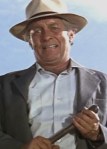
Cool Hand Luke.  Great guy film, not on Oprah’s chick flick list.  “What we have here is a failure to communicate.” That’s the line spoken by the captain of the prison pronouncing his summary judgment of the problem between he and Luke—Paul Newman: the line refers to Luke failing to understand the one-way nature of the communication between the chain gang prison captain and Luke. The line is an opening for a second speech directed to the other prisoners who are watching the abuse. The captain goes on to say “Some men you just can’t reach.”

A failure to communicate. Indeed. It’s not always obvious where to place the blame. For example. I had pulled together a pile of my clothes to donate to Goodwill; suits, blazers, pants—the usual mélange. Next to them, several feet away, on top of the ironing board, were two of my new suits, a taupe, double-breasted Jones of New York, and an Ungaro Uomo Parisian pinstripe—they were destined for the cleaners. Stop me if you’ve heard this one before. Seeing the pile on the floor, my wife offered to drop my donated items at the Goodwill.

It wasn’t until later that same day that I thanked her for dropping my suits at the dry cleaner, at which point the quisling replied with a look that told me she did not know that of which I spoke. A failure to communicate. All of my suits, those destined for Goodwill, and the two destined for the drycleaner had done an Elvis and left the building.  Poof, nada, nothing.  Disappeared into the fashion catwalk abyss.  Never mind that I was planning to wear the pinstripe to a rather important meeting.  Wave goodbye to the suits.

Two intelligent people separated by a common language.  Dictionary dot calm defines that as marriage.  Mars and Venus.  In our case it was Goodwill versus Chin’s drycleaner—that’s not racist, just the name of the business.

Two intelligent people separated by a common language.  Like healthcare providers and vendors. Like the IT and the hospital’s C-suite. If A implies B, and B implies C, then maybe B is just intended to be a clever roadblock. Maybe the C-suite invented B so they didn’t have to deal with A—vendors. It sure seems like it sometimes. If the C-suite was really interested in selecting the best EHR, they should start by listening and learning to the clinicians and those in IT.

black saint 2

Stilleto Change Management

shoe


I just returned from the Prada show in Milan. Not really—that was the opening line from a piece on NPR. Apparently this year’s runaway hit on the runways has to do with high heels, with the emphasis on the notion of high.

The following comes from the UK Telegraph: The girls looked like rabbits trapped in the headlights; their faces taut and unsmiling, their eyes wide with fear and apprehension. Were they about to undertake a parachute jump? Abseil down a 1,000ft mountain? None of the above. All they were doing was trying to negotiate the catwalk at Prada during this week’s Milan fashion shows in shoes that were virtually impossible to walk in. At least two models tripped and fell on to the concrete floor; others wobbled and stumbled, teetering and tottering, clearly in agony, and all the while their minds were fixated on just one thing: reaching the sanctuary and safety of the backstage area without suffering a similar fate.

According to the NPR reporter, the heels are so high that regular people—women people that is—can’t seem to walk in them without falling. This problem has led to the creation of an entirely new micro-industry. In L.A. and New York, there are classes to teach ladies how to walk in very high heels without hurting themselves. These classes are being offered through dance schools that couldn’t fill their dance classes—they are now booked solid.

Tell me this isn’t the same as trying to walk and chew gum at the same time. Multitasking. Now before I make fun of some thirty year-old that has to relearn how to walk, let us turn our attention back to those dancing—cum—walking schools. From a consultant’s perspective what makes this story interesting is that those businesses saw a need and re-engineered a part of their operation to meet that need, sort of like we’ve been discussing regarding the impact EHR and reform can have on your organization.  With the implementation of EHR, many things will change.  If they don’t require change, you probably wasted your money on the EHR.  What’s important is having a plan to define the change and manage it.  Rework work flows, remove duplicated processes and departments.

Now I’m going to go saw the heels off my wife’s shoes before she hurts herself.

saint

A few thoughts on ethics

Leigh Fazzina pointed me to this posting on ethics and suggested I may wish to comment.  You know me, I can’t resist a keyboard.  Here’s the link.  http://comprehension.prsa.org/?p=792&cpage=1#comment-2877

Ethics–if all it required was an understanding of the English (the language, not the British) then there wouldn’t be much to say.

I am not someone who believes there is a need for ethics training. The rules for what constitutes ethical behavior have not changed. Something is either ethical or it isn’t. What has changed are the boundaries. Individuals constantly shift the boundaries, expanding the realm of what is ethical. In the minds of most individuals, those boundaries differ by person and by situation.

I operate from a mindset that ethical boundaries are fixed. As an example, consider the boundaries between the US and its neighbors. Those are fixed. That doesn’t mean there aren’t those who don’t like where the boundary is between the US and Canada, or those who would argue that the boundary should be different, or those who believe the boundary is different. Disliking the positioning of the boundary, or disbelieving the positioning of the boundary does not invalidate the boundary.

When people expand the boundaries for what they choose to call ethical behavior, they rarely do so at their own peril. Generally, they do so for their own convenience, they do so to remove any latent feelings of guilt. Each time they move the boundary, it makes it that much easier to move it the next time. Taken to its limit, at some point there are no boundaries.

Setting larger boundaries in some sense allows people to draft their own sets of Commandments, like little mini-Moseses descending from Mount Sinai with their sets of ethics. Unlike Moses’ stoned-carved commandments, the mini-Moseses draft theirs on an Etch-A-Sketch, making them much easier to change.

However, I don’t think ethical behavior need stem from nor be limited to any religious belief. It need not be employed because of some fear of punishment, but because of a love of righteousness and out of respect for others.

My perspective is integrity is doing what’s right even if nobody is watching. A person of ethics knows what’s right even if nobody is asking, and ethical behavior requires action in order to be expressed.

saint

Patient Relationship Management–why patients and hospitals collide

Rod


When universes collide, or is universi the plural? Not that is matters. I was watching NOVA.  The show focused on the lead singer of the Indie group The Eels.  The show walked through the singer’s attempt to understand was his father had done for a living.  His father was a physicist, in fact he was the person who came up with the notion of colliding universes. Colliding universes has something to do with quantum mechanics and cosmology—did you also wonder what makeup had to do with particle physics? In its rawest meaning, parallel universes have something to do with the notion of identical worlds living side-by-side, with no notion of each other, with differing outcomes from similar events. Got it?  Me either.

I’ll try to illustrate if for nothing else than my own attempt to understand. Let’s say I’m concurrently teaching my two sons to play two different card games, Poker and War. Poker, albeit a game of chance, is heavily rules-based—when to bet, when to fold, when to raise. On the other hand, War is purely a game of chance. The poker player likes rules and order. The one playing war—he’s seven—likes to win, and will do what is required to bring about that outcome. Each one plays independent of the other, using the tools at their disposal to direct the outcome of the game in their favor. They are oblivious to the goals and tactics employed by the person sitting beside them. Parallel universes.

What if we allowed these two universes to collide, to come into conflict with one another? For example, let’s say I have them play each other and I re-deal the cards, giving one the cards he needs for a poker hand, and the other the cards to play war. I then instruct them to play one another. The poker player becomes focused on the rules, and the one playing war has a laser focus on one thing—winning. The poker player quickly caves, knowing that he is engaged in a futile endeavor. This does not bother the other one whose only focus was to win.

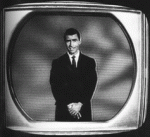
Imagine if you will—sort of Rod Serlingish—two other games going on simultaneously, one team whose sole focus is winning, the other whose focus is on the rules. For the rules-based team there is no winning. The best they can ever hope to do is to measure up to the rules by which they are judged. Millions have been spent on technology to help ensure that adherence. Adherence to the rules will be monitored, recorded, reported, and measured. The rules-based team’s ability to continue to play the game will be based solely on how well they follow the rules. Now imagine that the universes in which these two teams are playing collide and these two teams play their separate games but against each other. One team having never been told how to win, never been instructed to win, never even given permission to win. The other team’s only purpose is to win.

This is a nonsense game. One we play every day.  One team is the hospital’s patients the other team is the employees who are tasked with patient customer care, patient relationship management (PRM).  The patients are focused on winning, those tasked with customer care or PRM are not permitted or equipped to win.

It’s possible for these two groups to change the outcome, to take away the nonsense.  To make that happen, the rules must change.  PRM can be very effective provided that it is designed to help the patients “win”, designed to facilitate favorable outcomes for patients.  The trick to changing the outcome is that the hospital must understand that a win for the patients in most cases is also a win for the hospital.

saint

Pigeon Project Management Office (PMO)

1906_Whittling_Webster_adx

I just finished stacking two cords of wood, much like a squirrel getting ready for a long cold winter. My feet were doing the “Boy is it cold dance” in an effort to keep the blood circulating.  As I was picking up the scraps, my eldest picked up a piece and placed it in his backpack. When I asked him what he would do with it he told me he was going to carve it after school. His statement brought back boyhood memories of hours of whittling, an activity done if for no other reason than to get from one minute to the next. Grab a stick and whittle it away until there was nothing left.  What next? Grab another. The weight of the pocketknife felt equally good in my hand as it did in my pocket.
When is the last time the thought of whittling crossed your mind? Probably been a long time. It’s an activity meant for idle minds and hands, or minds that should be idle. There are times I find myself questioning what value so and so brings to the party. Do you do that?  “Why is she in this meeting?”  You know who I mean.  You’re sitting there trying to get your work done and all of a sudden, some Mensa wannabe with more idle time on their hands than a Lipitor salesman at a BBQ cook-off, makes an aerial assault on your cubicle like a pigeon on a Rodin bronze.  Drops in and changes the rules of the universe, at least your universe.

This happens more often than is documented on large healthcare IT projects.  People set new courses and define programs rules that may have nothing whatsoever to do with the project’s charter or scope.  You do have a written charter and scope in the project office, don’t you?  If not, it’s easy to see how new directions and rules can be given a certain specious authority.

What’s the best way to handle this situation? Often these management Mensas are nervous about a lack of visible results and they need to report on something.  They may feel the need to be doing something, something resembling leading.  They don’t mean to interfere, and they believe that their little forays into the world of super PMO (Program Management Officer) will actually add value. You tell me, are they adding value, or are they preventing the team from sticking to the scope? There’s that irritating scope word again.  The next time you see one wandering aimlessly through the rows of cubicles, hand that person a pocketknife and a nice piece of balsa wood.  Although their efforts won’t add any value to what you’re trying to accomplish, at least it will get them out of the way for a little while.

saint

A reply to the idea of Mandated Coverage

Below is a comment on a Washington Post article on mandated coverage, http://www.washingtonpost.com/wp-dyn/content/article/2009/10/25/AR2009102502607_Comments.html

Great movie, poor reform—at least that’s my take on how poorly the current healthcare legislation will actually work regarding a mandate.  There are probably more federal judges with gangsta rap on their iPods than congressmen who have actually read the reform bill.

I call the idea of the mandate “must carry”.  The only option of the public option and must carry provisions is the option to “opt”.  Individuals can “opt” and so can firms.  “Opt-in”, “Opt-out”—like clap-on clap-off.

However well intended it may be, as structured, the mandate will not work; neither for individuals or for firms.  The individuals who will be required to carry, can opt out for a $750 annual fine and “opt” in when they are sick or injured.  The fine will be less than the cost of the insurance premiums.  That way, their out-of-pocket costs are actually paying co-payments not premiums.

It appears that firms may be able to pay the fines on a per person basis rather than opting to pay for healthcare insurance for their employees.

Hence, mandated coverage may only apply to those who haven’t figured out that it doesn’t apply.

sainttop5

The effect of healthcare reform on others

"Not a real boy"

"Not a real boy"

Somebody had to do this, so it may as well be me.  Sometimes to bring clarity to issues, it helps me if I dumb-it-down.  Which got me to wondering, how would the whole healthcare reform debate play out with Mother Goose?  Here’s what I was able to learn from my interviews.

Jack & Jill went up the hill, Jack fell down, and learned Mother Goose’s insurance wouldn’t cover him because he’s not a real boy.  Having recovered, Jack was soon found not so nimbly jumping over the candlestick.  His charred wooden body is being sanded in an effort to heal the burns.  Not only is Jack not a real boy, he’s also not a candidate for Mensa.

They sent the Little Old Woman who lived in the shoe home with a can of Desenex because her AARP insurance had expired and Medicare told her she already used her share of the money.  Afterwards, she was interviewed by Planned Parenthood for an episode of “I didn’t know I was pregnant.”

And remember that tuffet upon which Little Miss Muffet sat?  It wasn’t the spider who frightened her away, it was the deductible she’d hay to pay to cover the rash she got.  She tried sussing out her own treatment using social media on WebMd.

Jack Sprat could eat no fat, but he forgot to disclose that when he completed his insurance application.  He now suffers anemia anonymously as his not so lean wife left him.

How about Peter Peter Pumpkin eater?  All that fiber blocked his colon—a little personal prevention could have saved him a lot of time posed in the Thinker position.

Mary and Little Bo-Peep had a little mutton for dinner which after having sat on the counter all day produced various toxins which were absorbed into their bloodstream.  This resulted in them being rushed to the Mother Goose Clinic with a case of food poisoning.

Simple Simon met a pieman who knew nothing of pasteurization.  Simple is sitting three seats away from Mary in the waiting room.  The Clinic has been unable to locate either of their records on their EHR which cost in excess of one hundred million dollars.

Old King Cole called for his pipe even though he had a severe case of sinusitis.  CVS was out of Z-packs, and home he went with just a tin of Prince Albert.

All the king’s men tried to make a meal out of Mr. Dumpty.  Several were to learn later that one can get Salmonella from eating a raw egg that had been tromped on by horses.

Pat-a-cake.  The baker’s man, not one for washing his hands before pattying his cakes, caused Tommy to be seen by an internist.  Apparently neither real men nor cartoon men wash there hands.

The Butcher, the Baker, and the Candlestick-Maker, were being treated for nontuberculous mycobacterial disease for poor hygiene having been found bathing together.

It was reported that Georgie Porgie who’d been kissing girls had made them cry when they discovered they had contracted the herpes simplex virus.  Their mother, embarrassed by the turn of events, reported to the school that her twins were out with the H1N1 virus.

The Three Blind Mice were found to have stitched themselves together after unsuccessfully trying to sew back on each other’s tails.  It was later discovered that the tails had been cut off by the Farmer’s wife with the Butcher’s knife.  The mice are suffering from septicemia.  The Crooked Man and Yankee Doodle are trying to ascertain why the Farmer’s Wife and the Butcher were later found hiding in the barn.  The Farmer’s wife is being treated with Effexor on an out-patient basis for clinical depression.  The Farmer was not available for comment.

It’s believed that Willie Winkie is suffering from a plantar wart after running through the town in just his nightgown.  Uninsured, he tried removing the wart with the knife he’d borrowed from the Butcher, only learn the knife had been recently use to amputate the tails of some handicapped mice.

Old Mother Hubbard, a spinster of questionable repute, upon learning that there were no bones in the cupboard for her dog Hannibal, began to get hungry herself.  She settled for a meaty broth, and fava bean soup, and a nice Chianti.  Polly was seen putting on the kettle.  The SPCA continues to look for Ms. Hubbard’s dog.

saint

Is the term “Payor” healthcare’s oxymoron?

One of the great things about fall is that as I prune back the vestiges of my virtual garden I am able to collect basketful upon basketful of overly ripe metaphorical tomatoes, perfect for tossing at aberrant analogies and inappropriate idioms.

It’s a curious time.  We give away money to the middle class and rich so they can upgrade their BMWs on the backs of the poor.  The feds market that idea as though that pittance will either jump start the economy, or to hide the fact that that the administration has managed to budget for a nine trillion dollar deficit gap over ten years.

By now we know there are no quick fixes, no magic formulas for fixing the economy.  Finding a formula that works will be more difficult than learning how to neatly fold a fitted bed sheet.

“Is it the essential paradox of the age of Obama that we have to destroy the village in order to save it, bust the budget in hopes someday we’ll balance it?” Nancy Gibbs, Time, September 9, 2009.

“It takes an idiot to raze a village.” Paul Roemer, today.

Congress is trying to decide what the final bill will look like without ever having read the first draft.  How will we know when they have something that makes sense?  Do we watch the Congressional chimney to see if the smoke is white or black?  Does that mean we have a bill, or is it simply that the chef burnt the Peking Duck?

Then there are the payors.  Get me started, or don’t.  We all know that one of the driving factors for reform is the behavior of the payors.  A friend asks—for full disclosure I note that she is one of “them”—why do people view health insurers differently from auto, life, or home owners insurance.  She was serious.

Here’s my take on the answer.  If the health insurance firms provided life insurance they’d be exhuming the deceased and trying to prove they weren’t dead.  Car smashed, get a check.  House leaks, get a check.  Die, get a check.  Need surgery.  Not so fast.  Let’s see if you’re covered for that.  If not, whew.  If yes, let our doctors decide if you really need the surgery.  It won’t cost you a minute of your time as our doctors don’t even need to examine you.  You see how this plays out?

It happened to me after my heart attack, albeit with my disability payor, sort of the evil step sister of the health side.  My doctor put me on six months disability, naturally, the payor declined to pay.  There doctor, who never examined me decided I was fine, at least that’s what their letter stated.  How do we know these doctors even exist?  Have they ever been seen in the daylight?

Most Americans don’t believe that insurance companies are interested in helping people.  They like us fine when people are payors.  They are much less fond of us when people become patients.  It’s a simple matter of flow theory.  As long as the flow of cash is in-bound, all is well.  When people move to the dark side, from payors to patients, payors have no patience.

Is there anyone who believes that there is a single payor in the country whose mission statement says anything about doing all we can to help those who need us?  Of course not.  Payors have claims adjusters.  What is their role?  It’s certainly not to adjust the payment higher.

Do payors incent their employees to pay out as little as possible?  I believe they do.  Do payors penalize or retrain people who pay out too much?  I believe they do.  Do they design the claims and dispute process so as to make it so cumbersome on patients and doctors that parties give up prior to settling?  I believe they do.

I believe the payor business model is not much different from that of tobacco companies.  For years tobacco firms claimed there was no public evidence to support the fact that nicotine was addictive.  It turns out they buried the evidence.  Payors claim they are not bad actors.  Some claim the moon landing was faked.

I am a firm believer that pictures can sometimes convey more than mere words.  To me, this link explains a lot about what’s wrong with healthcare.

http://www.youtube.com/watch?v=Z7Forzj5-O0 Start playing at 6 minutes and 40 seconds.

pastedGraphic.tiff.converted

Patient Relationship Management (PRM)-why men can’t boil water

poker_head_pic

There was a meeting last week of the scions of the Philadelphia business community. The business leaders began to arrive at the suburban enclave at the appointed hour. The industries they represented included medical devices, automotive, retail, pharmaceutical, chemicals, and management consulting. No one at their respective organizations was aware of the clandestine meeting. These men were responsible for managing millions of dollars of assets, overseeing thousands of employees, and the fiduciary responsibility of international conglomerates. Within their ranks they had managed mergers and acquisitions and divestitures. They were group with which to be reckoned and their skills were the envy of many.

They arrived singularly, each bearing gifts. Keenly aware of the etiquette, they removed their shoes and placed them neatly by the door.

The pharmaceutical executive was escorted to the kitchen.

“Did your wife make you bring that?” I asked.

He glanced quickly at the cellophane wrapped cheese ball, and sheepishly nodded. “What are we supposed to do with those?” He asked as he eyeballed the brightly wrapped toothpicks that looked banderillas, the short barbed sticks a matador would use..

“My wife made me put them out,” I replied. “She said we should use these with the hors d’oeuvres.”

He nodded sympathetically; he too had seen it too many times. I went to the front door to admit the next guest. He stood there holding two boxes of wafer thin, whole wheat crackers. Our eyes met, knowingly, as if to say, “Et Tu Brutus”. The gentleman following him was a senior executive in the automotive industry. He carried a plate of freshly baked chocolate chip cookies. And so it went for the next 15 to 20 minutes, industry giants made to look small by the gifts they were forced to carry.

The granite countertop was lined with the accoutrements for the party. “It’s just poker,” I had tried to explain. My explanation had fallen on deaf ears. There is a right way and a wrong way to entertain, I had been informed. Plates, utensils, and napkins were lined up at one end of the counter, followed in quick succession by the crock pot of chili that had been brewing for some eight hours, the cheese tray, a nicely arrayed platter of crackers, assorted fruits, a selection of anti-pastas, cups, ice, and a selection of beverages. In their mind, independent of what we did for a living and the amount of power and responsibility we each wielded, we were incapable of making it through a four hour card game without their intervention.

I deftly stabbed a gherkin with my tooth pick. “Hey,” I hollered “put a coaster under that glass. Are you trying to get us all in trouble? And you,” I said to Pharmacy Boy, “Get a napkin and wipe up the chili you spilled. She’ll be back here in four hours, and we have to have this place looking just as good as when she left.”  I thought I was having the neighborhood guys over for poker; I was wrong. So was each of the other guys. We had been outwitted by our controllers, our spouses. Nothing is ever as simple as it first appears. We didn’t even recognize we were being managed until they made themselves known.
Who’s managing the show at your shop, you or the patients?  The answer to that question depends on who owns the relationship, who controls the dialog.  If most of the conversation about your organization originates with them, the best you are doing is reacting to them as they initiate the social media spin, or try to respond once the phone started ringing.  It’s a pretty ineffective way of managing.  It’s as though they dealt the cards, and they know ahead of time that your holding nothing.
There are times when my manager isn’t home, times when I wear my shoes inside the house—however, I wear little cloth booties over them to make certain I don’t mar the floor.  One time when I decided to push the envelope, I didn’t even separate the darks from the whites when I did the laundry.  We got in an hour of poker before I broke out the mop and vacuum.  One friend tried to light a cigar—he will be out of the cast in a few weeks.

Be afraid. Be very, very afraid.

saint