A different way to look at the public option

Louisiana Senator Landreiu was interviewed on NPR and was asked why she does not favor a public option.  Finding it to be the most reasoned argument on either side of the discussion, I felt it worth sharing.

She began by using an analogy she learned from Senator Lieberman.  Assume that the roofing companies in America were so expensive that twenty percent of homeowners could afford to put a roof on their house.  What would the government do?  Would they set up their own roofing firm and offer roofs at lower prices?  Of course not.  It would regulate the roofing companies to bring about lower and more competitive prices.

Landreiu also stated that the government hasn’t done very well managing its other two public options, Medicaid and Medicare, so why trust them with running a third.

saint

EHR: there’s a difference between finished and done

complicated127

The phone rang last fall. It was the school nurse asking me if I would come pick up my seven year-old son. When I inquired as to the reason she informed me he exhibited the classic symptoms of the crud; tummy-ache, non-responsive, crying. She’s the nurse, so without better information, who was I to question her diagnosis?

We got into the car and the tears started to come again. “Do you feel like you’re going to be sick?” I asked as I looked at the leather upholstery. He didn’t answer me other than to whimper. He didn’t seem sick at breakfast. I remembered that he was crying last night, but that had nothing to do with his stomach. At first I thought it was related to the thunder. Nope. He was hugging his favorite dog, a five year-old Bichon.

We had learned a few weeks prior that the Bichon is ill and won’t ever be a six year-old Bichon. The person having the most difficulty with it is my youngest. I asked him if that was why he was crying in class and he confirmed that it was. Dads know everything, at least some times.

So, here’s the deal. The school nurse had done all the right things to diagnose my son’s problem, but she stopped short of determining what was wrong. Let’s try a more relevant situation from the perspective of an EHR implementation.  The word implementation sort of suggests that when you reach the point of having implemented that there’s nothing left to do.

There’s finished and then there’s complete.  Finished doesn’t mean the task is over until the system does what it was supposed to do.  If you didn’t do a good job of defining it up front you may never know the breadth of what was intended for the EHR.  In the case of EHR, done includes change management, work flow engineering, training, and user acceptance.
The point is, if it looks like you finished the EHR implementation, double check that you have before you take a bow. Technology alone will not an EHR implementation make, it is simply a part of the overall task.

saint

EHR leadership isn’t always a democracy

CocoaPuffs

Cerealizable.

That’s my new word. I coined it the last time my wife was traveling and I was in charge of breakfast and making sure nobody missed the bus. Cerealizable is what happens when you walk into the kitchen and are confronted with two hungry dogs, three hungry kids, hair that needs brushing, homework assignments that need to be reviewed, and lunches that have to be packed.

Breakfast orders are shouted at me across the room as though I’m their short-order cook; pancakes, French toast, sausage, and who knows what else. What does one do? I was quickly headed down the path of self destruction, too many tasks and not enough taskers. I needed a light at the end of the tunnel and so I created one. I cerealized the problem; simplified it–turned into something I could solve. Go to the pantry, pull out the cardboard cereal boxes, three bowls, three spoons, and the gallon of milk. Check off breakfast.

In case you’re wondering, Cocoa Puffs still turn the milk brown, just like they did thirty years ago. Lunch orders began to be shouted across the bowls of cereal. Ham and cheese, PB&J, tuna–extra mayo, no celery. Once again small beads of perspiration formed quickly on my brow. For a moment I considered calling the school and telling them that all three were sick. That would solve the lunch problem, but it would also mean that the three of them would be home all day–my own private hostage situation. What to do? My coffee remained out of reach, still untouched. That explained the pending headache. Back to lunch. Cerealize it. “Everyone is buying lunch today,” I announced above the roar.

A half hour later, the din had subsided. I made a fresh cup of coffee and collected my thoughts. What had I learned from the exercise? Three things. One, some situations require leadership. Two, three children and one grownup is not time to establish a democracy. There is no Bill of Rights. To quote Mel Brooks, “It’s good to be the king.” Three, break the problem down into bite-sized pieces, don’t try to swallow the elephant whole.

That same approach works just as well with EHR grownups; clinical grownups and IT grownups. Improving the interaction takes leadership. Large, institution-changing projects involve pulling people out of their normal routines and relationships.  Solving problems will not involve a kumbaya moment–Program management is not a democracy. To succeed, the program champion, having created a vision, will have to break it down into bite-sized pieces.

saint

Reform’s possible negative impact on payors

Don’t start cheering yet, but there may be a negative financial impact for payors.  How?

A fine will be imposed on people who do not get insurance.  The fine will be an annual charge of $750, far less than what insurance would cost.

People can opt-out of insurance until they are ill enough to require treatment.  Insurers  must provide coverage for those people. When healthy people pay premiums, the margins earned by the insurers are almost infinite.  If payors could figure out how to legally offer insurance to rocks and get the rocks to write a premium check each month, they probably would.  (Can’t you just see the business development people getting sweaty palms over this idea?)

When healthy people cross over to the dark side–going from insured to patient–margins go from infinite to very negative which is why it there is no business model that works if all you do is insure sick people.  To really mess with their minds and their margins, all that needs to happen is for people to opt-out of paying premiums when they’re healthy and opt-in when they are sick.

Of course, payors will build this into their actuarial tables, and simply pass on the cost  of these occurrences to the rest of us thereby making it a wash for them.   Well, the idea that the payors might be adversely impacted was nice for the minute it took to read this.

saint

Work Flows–learn to color outside the lines

munch_scream

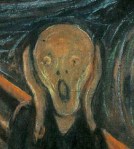
Somewhere out there is the person or persons who invented Chuck e Cheese. I am convinced that whoever deserves the credit either does not have children, or if they do, does not take their children to Chuck e Cheese under any circumstances. If you’ve never been, it’s one of those places whose true cacophony must be experienced first-hand. The FDA should conduct clinical trials of blood pressure medicines there. The formula is simple; machines that make noise plus kids that make noise equals happy kids. Some parents are immune to the noise. I’m not some parents–never have been, don’t see it happening any time soon. I could feel the pressure build, the parents around me were coping the best they could. One father whose eyes looked like those in Edvard Munch’s painting “The Scream” was popping Xanax like they were jellybeans.

I collected a group of parents and we sequestered ourselves behind the skeet-ball. “We’ve got to come up with something to ensure we never have to do this again,” I whispered, trying to rally my charges.

“I can’t do this anymore,” replied a frail-looking man who had developed a nervous tick.

I paused and pondered as an idea flittered past my id. Then I started a smile which soon covered my face.

“What?” asked Tick man.

“Yes, tell us,” implored The Scream.

It was a coloring outside the lines idea if there ever was one. “WebEx,” I barked as the idea began to take shape. “We do virtual birthday parties on WebEx. We each login our children from the comfort of our home. No screaming kids, no cold pizza, no spilled soda. It’s perfect. While they’re doing that, we can be in another room watching football.”

The idea had legs right up until the point where my wife overheard it. “You old Grinch. Get back over here with your son.” I caved, but I’m holding the idea in reserve.

Thinking outside the box. In creating the vision for re-engineering your work flows, why start there? That’s where everyone starts. Remember, if everyone’s thinking outside the box, all that means is that the box has moved and everyone is back in it. Why not create a vision that includes something like re-engineering all non-clinical patient-facing activities? A stretch goal is not trying to reduce billing calling by fifty percent. That’s what world class providers are trying to do. Other stretch goals might be asking questions like;

1. What would have to happen to the practice to be able eliminate eighty percent of all patient complaints?
2. What would it take to move half of all patient contacts to the web?
3. What would happen to first patient satisfaction if you set a goal to use social media to explain how to resolve claims problems?

So, where are we? We need a project champion, who has executive sponsorship, and who is willing to create a vision that has some legs.

Oh, I forgot to mention that after we left Chuck e Cheese we had all the seven year-olds over to our house for a sleep over.  I should have stayed at Chuck e Cheese; it was quieter.
sainttop5

Who was that woman who put in our first EHR system?

vacuum_cleaner

The first home I bought was in Denver.  Built in 1898, it lacked so many amenities that it seemed better suited as a log cabin.  There was not a single closet, perhaps because that was a time when Americans were more focused on hunting than gathering.  Compared to today’s McMansions, it was doll-house sized.

It needed work—things like electricity, water—did I mention closets?  I stripped seven costs of paint from the stairs.  Hand-built a fireplace mantel and a deck.  I arrived home to find my dog had eaten through the lathe and plaster wall of the space which served as my foyer/family room/ living room-cum-hallway.  I discovered the plaster and lathe hid a fabulous brick wall.

My choice was to patch the small hole, or remove the rest of the plaster.  Within an hour I had purchased man-tools; two mauls, chisels, and a sledge hammer.  I worked through dinner and through the night.  The only scary moment came as the steel chisel I was using connected to the wiring of two sconces which were embedded in the plaster.  On cold nights I can still feel the tingling in my left shoulder.

As the first rays of dawn carved their way through the frosted beveled glass of the front door, I wondered why I never before had noticed that the glass was frosted.  I wiped two fingers along the frost.  A fine coating of white powder came off the glass leaving two parallel tracks resembling a cross-country ski trail.  I surveyed the room only to see that the air made it look like I was standing inside of a cloud.  The fine white powder was everywhere—my Salvation Army sofa and semi-matching machine-loomed Oriental rug from the Far East (of Nebraska), a two-ton Sony television, and a component stereo system that had consumed most of much earnings.

Bachelor living can be entertaining.  One of my climbing buddies moved in with me.  The idea was I’d keep the rent low, and he’d help me by maintaining the house.  He didn’t help.  I made a list of duties; he didn’t help.  I left the vacuum in the middle of the floor, for two weeks; he didn’t help.  I made him move out, and advertised for a female roommate—an idea I now wish I’d marketed.  A girl from church came over to see the place.  I turned my back on her, only to find when I returned that she was on her hands and knees cleaning the bathroom.  I was in love.  It was like having a big sister and mother.  She even asked if it was okay if since she was doing her laundry if she did mine at the same time.  Life was oh so good.

Sometimes when one approach isn’t working it’s real easy to try something else.  And sometimes the something else gives you a solution in the form of a water-walker.  Healthcare IT and EHR aren’t ever going to be one of those sometimes.  There will be no water-walkers, no easy do-overs.  There won’t be anyone walking your hallways talking about their first wildly unsuccessful EHR implementation.  Nobody gets to wear an EHR 2.0 team hat.  Those who fail will become the detritus of holiday party conversations.  Who will be the topic of future holiday parties?  I’m just guessing, but I’m betting it will be those who failed to develop a viable Healthcare IT plan, whoever selected the EHR without developing an RFP, the persons who decided Patient Relationship Management (PRM) was a waste of money.  The good news is that with all of those people leaving your organization, it costs less to have the party.

I’d better go.  Somebody left the vacuum in the middle of the floor so I need to get cracking before my wife advertises for a female roommate.

saint

Can we build an Enhanced Healthcare Operations Map; e-HOM

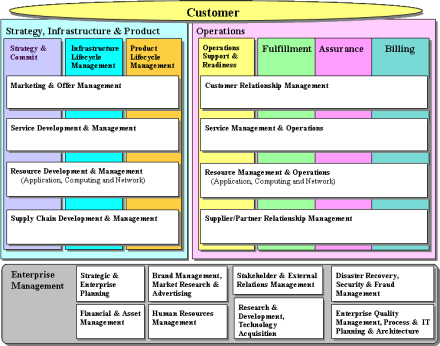
Can we build an Enhanced Healthcare Operations Map–e-HOM to create a standards for processes within the healthcare industry?

Without such a map, knowing which processes are involved with which systems and knowing where to apply change management is like shooting in the dark. I’ve asked and searched, and there does not appear to be anything like e-HOM.

The telecommunications industry has such a model, e-TOM, a global standard.

ETOM (1)

I think that with the gray matter we have in this group, we could make a good stab at building our own healthcare operations map. Please take a look at the diagram and let me know your thoughts as to how we can edit that diagram to create our own. What word would you change, what would you add, what relationships would you add or delete? For example, we would change “customer” to patient. Where would you add “EHR”, registration, etc?

I’ll take point on pulling it together.  Please email me your ideas paulroemer@healthcareitstrategy.com

Thanks.

pastedGraphic.tiff.converted

Why is change management so important?

If  EHR is about anything it’s about change.  So much of what exists today has to do with creating and moving documents.  Did you know?

  • Of all documents handled each day in the average office,
    90% are merely shuffled
  • Currently, 90% of corporate memory exists on paper
  • There are over four trillion documents in the U.S. alone,
    growing at a rate of 22% per year
  • Professionals spend 5-15% of their time reading information,
    but they spend up to 50% looking for it
  • Corporate paper-based documents are growing at the rate of
    200% per year
  • 19 copies are made from each paper document
  • 22% of all documents are lost
  • 7.5% of paper documents are lost completely
  • 3% of the remainder get misfiled
  • $20.00 is spent on labor to file a document
  • $120.00 is spent on labor searching for the misfiled paper documents
  • $250.00 is spent on labor to search for lost files

From Price Waterhouse

black saint 2

Reform: confessions of a drive-by mind

My wife said she had to call DC.  “All of it?” I asked.  Failed to even crack a smile—she must have left her funny bone in her briefcase.  I described her mom’s dog as a tennis ball with lips which seemed to be bred to be terrified of everything.  That had me zero for two, and losing ground quickly.

Today’s social networking technology allows one to take umbrage with everything from reform to how your neighbor shovels the snow from their sidewalk.  It’s an especially neat set of tools for those of us who have borderline control issues.  Which I do not, I told the unfunny woman next to me.  “You want to tell people how to tie their shoes because you think you do it better than them,” she remarked.  “Which is probably why flying bothers you so much; your nagging belief that the pilot isn’t qualified.”

Where was I before I interrupted myself?  Now, before anyone starts name-calling, I shall admit that I can be a bit of a heterodox.  Sometimes instead of talking I write, it’s like taking my thoughts for a walk in the park with an occasional pause at a fire hydrant.

I am beset by several unanswered questions about reform.  What do you think?  Is healthcare reform an attempt to make America a risk-free society, to rid people of what might be in order to exercise control where none exists?  Is it possible Jerry Springer was asked to provide ad hominem comment over the healthcare reform legislation, or that the plot line was a rerun of something written by David Mamet?  Does the tedium of reading the bill’s thousand-plus pages make stamp collecting seem like a full contact sport?

It’s too bad the Administration had the misfortune of drafting the reform legislation without having the luxury of hiding behind the Iraq maelstrom as we did during the Cheney presidency.  We may find some solace in that even with it now looking like some form of reform—version 5.0—will pass this year, our system will still be better than the UK’s, which is essential since they do much better with Shakespeare than us—I think it has something to do with their dedication to the diction of the British English.  “O, yet defend me, friends; I am but hurt.” (Claudius in Hamlet.  Is this where Python got the idea for, “I’m not dead yet?”)

We would be more likely to turn Hamlet into a navel gazing rap musical, than try to do it justice by reciting the original English.  Perhaps that is why we enjoy PBS as it gives our snobbery a chance to imagine the world as a series of Masterpiece Theater renditions.

If the reform effort still smacks of vestiges of nineties healthcare kitsch, it may be because nostalgia is still what it used to be and never was.  Either way, it looks like we will have something more concrete at which we can pit our opinions.  It will cost in the neighborhood of nine hundred million dollars, and yet we still aren’t able to distill the main talking points on two or three PowerPoint slides.

saint

What should you budget for change management and work flows?

fruitflyhumor

They came in waves from just over the horizon, each wave approaching from different elevations, and different points on the compass. They were legion; too many to count, too many for which to be able to set a winning defense. We marshaled our forces, knowing we were helpless. As I sat there awaiting the final assault I was reminded of some of the great World War II black and white movies; Midway, Twelve O’clock High, Tora, Tora, Tora. Wave after wave of Japanese and German fighters attacking the apparently helpless US forces.


Our defense perimeter established, we waited and watched. The first wave circled twice above the cellophane covered bowl. Tiny holes were cut into the cellophane allowing the fumes from the apple cider vinegar to waft upwards. The lead fruit-fly banked left and made his assault on the target. He bounced off the cellophane, as did most of the initial flight. One by one, they recovered and made their way through the pin-prick holes. The second and third waves approached the half-covered Tupperware that held the pineapple slices. After several minutes passed we slapped the lid onto the container, trapping scores of them.

“It’s those Concord grapes,” my wife asserted, implicating the helpless grapes.

“Don’t blame the fruit,” I replied. “They’re just fruit.”  Here’s the segue, try to stay with me.

If you’ve ever flown into Chicago’s O’Hare airport you may have witnessed scores of planes stacked in the air space awaiting permission to land.  I recently made reservations for a trip to Chicago. I used Southwest’s web site to make my flight to Midway—they don’t fly into O’Hare but the illustration still works. I’m the type of person who is more suited to using a well-functioning online service to complete my business. Even so, it would not be unusual for me to be having an animated one-way conversation with my computer. I started talking to the website after having to enter the same data time after time. Don’t get me wrong; I got a great deal on the airfare—three tickets for less than I paid for one last time. The site’s design allowed me to book a hotel. I entered data to reserve three rooms to coincide with the dates of my flights. A nanosecond later, I had a confirmation code for one non-refundable, no cancellation allowed room for the night before my plane even went to Chicago. By now I was speaking to my computer in tongues.

Like with the fruit, don’t blame the computer. The software did as it was programmed.  A lot of healthcare providers are going to be amazed by what they do and don’t see from their EHR system.  The system will do exactly what it programmed to do.  That’s great news if your organization’s work flows are an exact match for those built into the code.  We both know they aren’t.  That when it becomes necessary to build work arounds.  Unfortunately, you’re building them to match your work flows to their code.  For those new to the process, you are now designing your organization to move even further away from how it presently runs.  The further away you move, the more you will require change management.  Unless you budgeted correctly months earlier, you have probably already run out of funds for work arounds and change management.  If that’s the case, your EHR system is approaching its do-over point.   For each dollar of IT spend, it probably makes sense to budget at least two dollars for these tasks.  I guess you can budget those dollars for EHR 2.0, but it may be someone else whose running the implementation.

black saint 2