Healthcare: When You’re In A Hole, Quit Digging


To those of us who have children, you may have put them to bed by reading one of my favorite childhood books, Mike Mulligan And His Steam Shovel. It’s a simple read. Mike and his steam shovel compete against other more advanced shovels to dig a foundation for a new building.

“ We’re going to need a bigger shovel,” yelled the CIO to his workers who were gazing into the hole wondering how to help the patient. The foreman tossed his shovel to the patient.

“How is the shovel going to help me?” The patient asked. “Do you really think that if I dig a deeper hole I will get out?”

“I’d love to help you, but I have a meeting with EPIC.” The CIO walks away.

The unfortunate patient stares at the shovel and unwraps his Snickers bar. He wonders how long he’ll be there until help arrives.

The chief patient experience officer happens to walk by, and she spots the patient. “How can I help you?” She asks.

“Get me out of the hole,” he hollers. She tosses him her cell phone and tells him to call the call center.

The health system’s innovation officer tells him that they now offer valet parking and Starbuck’s coffee and he tosses the patient two coupons. “When you get out of the hole, use these coupons. We’ll pay for your parking and a cup of plain coffee—no cappuccino.”

The patient eats his last candy bar, wishing he had a cup of coffee. Using the chief patient experience officer’s cell phone, he calls me and tells me of his plight.

I jump into the hole.

“Why did you jump into the hole?” The patient asks me.

I tell him, “I’ve been here before, and I know the way out.”

We get out of the hole and drive to the hospital. I hand the parking attendant the chief innovation officer’s free parking coupon. We return the CIO’s shovel and the chief patient experience officer’s cell phone.

He uses the Starbucks’s coupon to get a cup of coffee. Because he’s had such a bad experience, he figures he’ll get the largest coffee, a Venti. (In Italian, the word venti means twenty; at Starbucks, it means at twenty-four-ounce cup of coffee.)

We tell the admission clerk that the patient has a 10 a.m. appointment. The clerk tells us to go to the waiting room and take seats with dozens of other patients.

I thumb through a thirty-eight-year-old copy of Life Magazine while he watches CNN.

“I feel like I’m back in the hole,” he tells me.

I look at him and say, “I’ve been here before, and unfortunately this time, I don’t know the way out.”

2017’s De Novo Healthcare Strategy: Shift Happens

Everyone is interested in changing healthcare, but at some point, one must ask the question, just how serious is their interest.

Because of what happened on November 8, hopefully everyone who wrote their strategy about how to approach population health and accountable care had the foresight to write their strategy on a Etch-A-Sketch. The military has a saying about battle plans; once the first shot is fired, all plans go our the window. 
Did I just hear a shot across the bow of the USS Healthcare?

Healthcare organizations that were giddy with the anticipation of filling their coffers with the passage of Obama Care can now be heard weeping and gnashing their collective teeth.

The best way to handle the fertilizer that is about to hit their air circulation system should do two things; grab your Etch-A-Sketch with both hands and shake it vigorously and, write a new strategy. Shift Happens.

The time has come to throw out everything you thought you knew about what to do in the next five years and give careful consideration to what you should do now.

Friday I met with a senior executive of one of the most venerated health systems in the country. Part of our discussion focused on how healthcare needed to change in order to manage care and to drive wellness.

His idea, which I liked much better than mine, was that healthcare needed to take its current model and multiply it by negative one. What if, he suggested, instead of people paying to see the doctor, the doctor paid us when we needed to see him or her? On the flip side, on the days we did not need to see the doctor—because we are healthy—we pay the doctor.

Although it would be difficult to make the numbers work, if the healthcare’s goal is to make people healthy, intellectually the model makes sense.

What Is The Missing Healthcare Cloud?

“If you’re in a horror movie you make poor decisions. It’s what you do.” A group of kids is running from a murderer in the middle of the woods when they stumble upon an old cabin. “Let’s hide in the attic. No, in the basement.” One woman starts breaking down and is in tears “Why can’t we just get in the running car?!” She is dismissed as crazy “Are you crazy?! Let’s hide behind the chainsaws.” They agree “Yea, smart.” They run behind the chainsaws but don’t notice the man standing behind them. The man gives them a look as if he can’t believe how stupid these kids are. They finally notice the murderer and run off “Head for the cemetery!”

Poor decisions. Head for the cemetery. Whether you are in the provider, payer, or pharma communities, we’ve all been in one of those meetings where someone suggests why can’t we get in the running car. And we dismiss her and run towards the chain saws.

Suppose the running car suggestion is, “We need to create daily habituation with our patients and consumers.” Stated more simply, we need to get them to interact with us daily, not just once every two to three years. If a patient or consumer only contacted us once a year, creating daily habituation means getting people to increase their rate of contact by 36,500%!!!

So, how do we achieve daily habituation, and what would it look like?

There is a great deal of activity in healthcare around cloud computing. Almost every health organization is doing something with a cloud, but only with their own cloud. But few if any health systems share their cloud any more than they share their cafeteria. Not only do they not share it with other providers, they don’t share it with payers, they don’t share it with pharmacies, and they do not share it with their patients and consumers.

For example, Philadelphia has several very good health systems. Imagine looking out from the top of one of the city’s highest buildings—what would you see? You would see a cloud hovering above the Hospital of the University of Pennsylvania (HUP). Across the street another cloud would be floating above CHOP. One above Thomas Jefferson; one above Einstein, Hahnemann, Cancer Treatment Centers, and the Philadelphia VA.

A few dozen individual clouds. Partly cloudy.

You continue looking, and you see that the sun is shining on all of the people entering and leaving the various health systems. That is because the clouds only cover the health systems. The clouds do not cover the patients or the visitors or the family members, and they do not cover them once they leave the buildings.

If you are asking yourself, so what, the answer to so what is the missing link for achieving daily habituation. As a matter of fact, that answer is the missing link for achieving any kind of habituation. People, your patients and your consumers, are missing the two things they need the most to drive any kind of habituation:

  • They have no easy way to communicate anything about their health with you—we both know that your call center is not a communication tool; calling your organization is the last act of a desperate person
  • Your organization has not given them a compelling reason to communicate with you more than they do

What healthcare needs are Healthcare Relationship Management to interconnect:

  • Patients and providers
  • Consumers—prospective patients—and providers
  • Consumers and payers
  • Consumers and pharmacies
  • Providers to payers to pharmacies to consumers

Healthcare needs a Healthcare Relationship Management Cloud, a HRMC. An interactive (think 2-way) interconnected way of communicating about whatever one party wants the other party to know.

And what do patients and consumers want you to know about them? Nobody knows. And the reason nobody knows is that nobody ever asked them. Heck, if we are being honest, most providers do not even track why people call.

Last week I met with a senior executive of a very large payer. During our meeting, I drew a large, oblong shape to represent his customers. Way over on one end if the shape I portioned off a small bit of the shape to represent the fraction of his customers that interacted with them on a regular basis. Our discussion focused not on the tiny portion of people that communicated with his firm, but rather on the much larger group of members that never communicated with them. He said they call that group of members the tail. While the term probably was not intended to reference the idea of the dog wagging the tail, it could apply.

Providers also have a portion of the population they serve that represents the tail—patients and consumers who do not interact with them. So do pharmacies. Not interacting, and not needing to interact are two different things. Not interacting is a result of:

  • No compelling reason to interact
  • No easy way to interact

Now suppose consumers had an easy way to interact with your organization on a regular basis. And suppose they had a compelling reason to interact with your organization on a regular basis. Why would that be a good thing for both parties? These are a few things that spring to mind:

  • Healthier people
  • Improved care coordination
  • Reduced admissions and readmissions
  • Population health management
  • Patient acquisition and retention

And that is why I wrote about the HRMC. While there are benefits from everyone having their own clouds, there are many more benefits to everyone being interconnected through a single cloud. Something like the NwHIN on steroids. Of course, that is overly ambitious, but there is no reason for a provider not to build one for its patients and consumers.

Here’s How Can Watching TV Improve Your Health

downloadWhile working during the last few weeks I’ve semi-listened to wall-to-wall coverage of the election— fair and balanced white noise; or not.
Realizing that my head was ready to explode, I took a respite from the talking heads and changed to the National Geographic channel. And my mind melted. During the hour, the channel ran a piece about evolution. Admittedly, I am not a savant on the subject, but what caught my attention was the narrator’s explanation about the time millions of years ago when fish first walked from the sea.

I turned my eyes from the television and began to study the fish in my aquarium. I looked at them closely. Really closely. I stuck a magnifying glass into the tank trying to get a close up, but the fish were swimming in all directions and all of my attempts to look at their hindquarters proved fruitless. Did my fish not get the email about being able to walk?

I placed a tiny set of stairs in the tank to encourage them.  Did my fish not get the email about being able to walk?

And I started to think. Bad things happen when I let my mind wander. I pictured a pebble-strewn beach. Gentle waves pushing ever onward to the shore, the pebbles making little clicking sounds as they scraped against each other in the surf.

And then I saw thousands fish of fish pop their little fish heads up from under the water and look around. They began walking from the surf, unsure of where they were headed. Their mass exodus from the water made me think of the allied landing at Normandy.

One of the fish was wearing a wet stronger together t-shirt.  Many were wearing tiny pairs of Nikes to protect their little fish feet. About a minute into the onslaught, the leader of the fish bent from his waist and he reached down to his Nike’s. His left shoe had become untied.

He tried to tie his shoes with his little fish hands. But he did not have little fish opposable thumbs and his Nikes remained untied.

Maybe the National Geographic theory was all wet.

So, where did we leave off? At the end of the fish story, a television commercial was marketing a new disease. The spokesperson was Hollywood celebrity whose fame had faded, so now he was selling diseases. The premise of the commercial, like dozens of others that have popped up over the last few years, goes something like this.

“Do your fingers ever twitch at inopportune times, like when you are at dinner, and you are reaching for your glass of wine? You try to stop the twitching, and in doing so you knock over the glass. Your glass knocks over the lit candle. The candle catches the tablecloth on fire.

You dash away from the flames, forgetting the engagement ring you had purchased and left on your table, and you rush to the nearest exit. The next thing you know the entire restaurant is engulfed in flames, and your one chance to be engaged has been lost forever.

Has that ever happened to you? If your life has suddenly gone downhill, you may have TFS—Twitchy Finger Syndrome. There now is a cure for TFS. It’s called Twitchacin. Ask your physician about this wonder drug. Within six weeks your finger will stop twitching and you will be engaged and your life will be wonderful.”

Does it seem like big pharma has been creating new diseases out of whole cloth? Diseases you did not know you had? Some of these new diseases sound a little silly. The companies that make the drugs know you can’t tell your physician that you have twitchy finger syndrome of the left hand. Because if you said that, your doctor will simply tell you to use your right hand.

But, if you tell your physician that you have TFS and need a prescription for Twitchacin, he or she may check their PDR and write a script. Your fingers will stop twitching and your life will be wonderful.

And now that your fingers don’t twitch, if you should happen upon a fish whose shoes are untied, you will be able to bend over and tie his Nikes.

So the next time you see a commercial pitching a disease you didn’t know existed, think twice before you hit the mute button.

Healthcare Innovation: I Want To Buy A Vowel

The valet took my car.  The Walmart greeter, turned his head sideways kike a swimmer and welcomed me. I asked him if the hospital was running any sales today on procedures or illnesses.  That always confuses them.  Then  I sashayed over to the coffee emporium.  

After taking out a small loan to pay the barista, I sat in the most ornate hospital lobby I had ever seen.  There was a large atrium in the middle of the lobby extending to the twelfth floor.  I squinted to see if there were frescos painted on the ceiling.  A man wearing a black three-piece suit was playing music-to make-you-forget-you-were-sick on a grand piano–I’m not kidding.  The only missing embellishments were free pony rides and a killer whale leaping in a water park.

It was like being at the Ritz.  Healthcare consumerism personified; valet parking, a greeter, a great lounge, and gourmet coffee.  Your innovation dollars at work.

Consumerism is not a cultural revolution underway involving a sudden new enthusiasm for taking care of customers.  In fact it lacks both the revolution and the enthusiasm.

The biggest problem in innovating consumerism is that institutions are looking for easy solutions, and they have developed plans and approved budgets to ensure they get easy solutions–check the box and move on to the next big problem whose leaders are seeking an easy solution.  No one likes to work harder than he or she needs to.

Many healthcare executives are betting that if they wait long enough, consumerism will simply fix itself.  Waiting is  essentially long slow periods of nothing much interspersed with ocassional bursts of something.  Bursts of something never fixed anything.

The first something they will do is call a meeting. They’ll give the meeting a fancy name, and email everyone a detailed agenda.  Someone will bring a PowerPoint presentation and distribute printed copies of the deck.  And after everyone grabs a cup of coffee or a lotus flower tea, they’ll vote on whether to fund a consumerism initiative. They’ll make speeches for and against.  The behavioral psychology subcommittee will analyze who voted for what. By which time it won’t matter anymore.

“Do you have everything you need to improve consumerism?”  The CIO asked his committee; out-of-date people doing out-of-date things.  Apparently he was concerned the committee had exceeded its brief by thinking on its own.  The CIO ignored the fact that his question was way too existential and his powers of motivation had been diminished since waterboarding was out of fashion at the moment.  Fortunately for him, ignorance about how to solve the consumerism problem was not yet considered a capital crime.

Taking a short cut to solve consumerism is right up there as one of the worst ideas of all time.  Consumerism just hasn’t risen to its proper level of importance to earn the attention it requires. It’s almost as though payers and providers decided to hand the problem over to a couple of skinny-pants-wearing interns, with IQs in the shallow end of the gene pool, and told them to write a white paper on consumerism and publish it through an organic bookstore. 

Solving consumerism deserves your best effort.  Unless you don’t mind being negligent.  Negligent about accountable care, population health, and Star ratings.  Negligent about access and engagement, and negligent about your approach to patient acquisition and retention.  Otherwise, you can continue to check the box, build a new atrium for your hospital, and change the color scheme of your website.

None of your patients are turning cartwheels about how effective your consumerism strategy is. Au contrare.  Patients who’ve had bad customer experiences are likely to fold up their tents and go somewhere else.  

But, what would happen if your consumerism strategy took into account that the value of each new patient was $200,000 and the value of each retained patient was $100,000?

Customer experience is not a Zen thing.  Bad customer experience is like chaos theory. A butterfly flaps its wings in Omaha, and two hundred patients in New York can’t schedule their appointments.  On the other hand, good customer experience should have everything the customer needs, and nothing he or she doesn’t.  Need an example?  The link to your gift shop on the homepage of your website.

Thanks for playing.

Customer Experience, Elephants & Winki-Leaks

Three chairs were spaced evenly about my client’s round conference table.

A smallish elephant entered the room and sat in the third chair. The elephant wore a tightly fitted t-shirt printed with the phrase, “Stronger Together.”

“Why is he in my room?” My client asked me, nonplussed. The elephant looked at me and gave me a wink—he and I had already been in several meetings together. By he, I assumed she was asking about the elephant since I already knew I was a he. (The pay me for my broad powers of deductive reasoning.)

“You should know,” I told her, and I returned the elephant’s wink. “He’s your elephant. Besides, your other two elephants are busy meeting with your colleagues.” I removed a bag of roasted peanuts from my backpack. The elephant reached across the table with his trunk and grabbed the bag.

“What’s with his t-shirt?”

“He wore it to annoy me.” I showed her my baseball cap with the words, “Make Healthcare Great Again” embroidered on the front.

“Why are you feeding him?”

“If I don’t feed him he will talk during the entire meeting.”

“He talks?” The elephant cleared his throat and winked at her. “And what’s with the winking?”

“He winks because his eye leaks. The veterinarian says he suffers from winki-leaks. All elephants talk, but very few people listen to what they have to say. You and I have been working together for four months and this is the first time you’ve even mentioned the elephant.”

“Do you mean he’s been here before?”

“As I said, he is your elephant, not mine. He was here before you and I met the first time.”

“Can’t you make him leave?” She asked me.

“Now that you have acknowledged that he exists I can.”

Dear readers, the next time you are in a meeting and you see an empty chair ask yourself this question, “Is the chair really empty, or are you just not seeing your elephant?”

(And if you do see the elephant, tell him to take off that stupid t-shirt.)

Why Is Healthcare Like Watching Black & White TV?

images

I am amazed at the speed at which most of the world changes.

When I was young, drinking-water was free, and our rotary phone was attached to the kitchen wall.

We used to get two newspapers a day; the Baltimore Morning Sun and the Baltimore Evening Sun. As a result, we knew everything that had happened in the world before ABC, CBS, and NBC televised the evening news at 7 p.m.

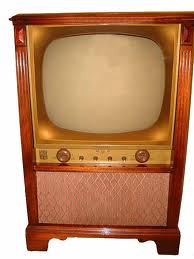
Our television set was a piece of furniture the size of a dishwasher. To watch the television we had to adjust the rabbit ears to try to get the picture to stabilize. During storms, sometimes we had to attach a piece of aluminum foil to the antenna to stop the picture from fading. If we wanted to watch one of the other two channels, someone had to walk to the television and turn the selector knob. To be fair, rumor had it that there was also a UHF channel. That channel came with its own non-functioning antenna, but I never met anyone who was able to get the picture clear enough to watch.

Even so, we also watched the news, and when Walter Cronkite went from black and white to color, I knew technology had just about peaked. And then came portable television—television on wheels. Instead of something the size and weight of a chifforobe, televisions were so miniaturized that they could fit on a wheeled cart and could be moved from room to room. Naturally, we did not have to worry about connecting it to the cable outlet because there was no cable.

Next to the portable television, on the end table, was a spiral-bound, paper AAA map with the directions to get me from Baltimore to Vanderbilt in Nashville—stone age GPS.

As an aside, it occurred to me that the practice of healthcare and the practice of law have a lot of similarities—however, people don’t call having a thousand doctors on the bottom of the ocean a good step. The greatest commonality is that nobody wants to engage either a doctor or a lawyer until it’s already too late. I guess though that telling a lawyer that you were thinking of robbing a bank would garner about the same reaction as telling a doctor that you were thinking of taking up smoking.

So, back to the fact that many years ago what we thought of innovation as consisting of tap water, a morning and evening newspaper, color television, and a TV on wheels.

Almost everything has changed since then because of the rate of change of technology.

Almost everything.

I went to the hospital to get an MRI on my knee.  The clerk inserted a three-part carbon firm into her IBM Selectric typewriter and typed my admissions data.  I was instructed to go to the waiting room. A woman dressed like June Cleaver rolled a black and white television into the room and turned on the Get Smart. She told me there was bottled water in the avocado-colored refrigerator and that if I wanted to make a call, the phone was on the wall next to it.

The song from the Archies, “My Heart Went Bang-Shang-A-Lang” was playing on my transistor radio. I reached down and retied my Converse Jack Purcell sneakers. And folded neatly next to me, on the end table, was a copy of this morning’s newspaper and a spiral-bound map from AAA.

The business model of healthcare never left the 70’s.

The 23 Reasons Healthcare Marketing Needs A Makeover


Since nobody wants to sit through having to read twenty-three of anything, I’m going to try to make this each for each of us.

These are a few of Roemer’s Healthcare Axioms:

  • Axiom 1: Nobody knows what it costs to acquire a patient
  • Axiom 2: Nobody knows what it costs to retain a patient
  • Axiom 3: Nobody knows what it costs to prevent leakage—heck, nobody even knows if someone leaked; before treatment, after treatment. Leakage is one of life’s great mysteries
  • Axiom 4: Patients and members, both new and existing, will tell you that healthcare marketing has zero impact on who they choose as their provider and payer
  • Axiom 5: Providers and payers will continue to play a zero-sum game, spending money on marketing campaigns that do not resonate with anyone outside of marketing

So, here’s how I got to the number ’23.’ (You can come up with your own number using this same approach.)

I started thumbing through this month’s issue of Philadelphia Magazine, and I was gobsmacked by the number of full-page healthcare ads, so much so that I felt the need to count them. By the time I reached page sixty-six I had counted twenty-three ads.

Four providers and two payers paid for those twenty-three ads. Doing the math—four plus two, divided into twenty-three—indicates that each organization marketed to the magazine’s readers about four times in the first sixty-six pages.

I took some time to reach each ad, and to ask myself if there was anything in any of those ads that would compel me to take action. There wasn’t.

It is worth noting that all of the ads had the same look and feel. It was almost as though all of the marketing departments, independent of their firm, operated from the same marketing omnibus—it means compilation—of acceptable healthcare marketing strategies.

The only difference among the ads was the name of the institution doing the advertising. The ads each pictured one or two animated and healthy people having the time of their lives. The people were frolicking, picnicking, biking and jogging. They were carefree.

I suppose the ideas behind the ads were that even if you had cancer, that if you brought your cancer to one of these organizations, you could be frolicking by the time you finished reading the magazine. The ads do not show someone with any hair connected to an IV dispensing cisplatin. Perhaps the thinking is that ads about frolicking are preferable to ads about cisplatin.

The same kinds of ads are on billboards and on television. They are in your mailboxes and mine. If every healthcare organization is pitching the same message, is the effect on consumers the same as if they had pitched no message? I think it is. I think consumers think the same thing.

I am willing to bet my neighbor’s BMW that not a single reader of the October issue of Philadelphia Magazine will be influenced one iota about who to choose as their provider or payer based on a magazine ad, a billboard, or a television commercial.

If you want to get my attention, tell me that you designed a tool that will help me manage my care and wellness. Don’t give me frolicking. Give me care and then I will care.

Healthcare’s Favorite Meaningless Numbers For Managing Its Business

I was a mathematician for six months.  That long enough for me to discover that real mathematicians were a lot smarter than me.  I had no more chance of being successful  than a Detroit auto worker who did not speak Spansih.

One of the things I remember is that it’s pretty easy to convince yourself that you can get the numbers to tell you whatever you wanted them to say. I learned how to prove that one plus one did not equal two, a fact that led me not to trust numbers.

That fact was especially true with statistics.

Last night we attended the ice hockey game at the Rochester Institute of Technology.  The scoreboard overhead displayed to sets of numbers; the score, and the number of shots on goal–the SOG.  The game ended in a 1–1 tie.  I told my son that hockey would be more fun if they doubled the size of the net and used two pucks simultaneously.  Americans don’t like ties.

The SOG showed that RIT had thirty-six shots on goal.  U-Conn had twenty-one SOGs.  As you can see, the SOG is a meaningless stat; lipstick on a pig.  It is meaningless because the only stat that matters is the score.  RIT was not awarded an extra goal simply because they had missed fifteen more shots than their opponent.  But the total lack of value of the stat does not stop them from tabulating it.

As I’ve written previously, the business of healthcare–how it’s managed–is mired in a 0.2 business model.  While all other industries have taken flight with business models that employ design-thinking, interactive, cognitive, and mobile-first technologies, healthcare–providers and payers–continue to debate the color of the carpeting to install in their call centers.  And they manage their business based on meaningless data they collect to measure access and engagement.

Healthcare could fill a book with its meaningless stats.  It’s even likely that many healthcare organizations paid someone a lot of money to create a dashboard so that their management could get up-to-the-minute updates on those stats.  “Joe-Bob, come over here and take a look at these numbers!  I’m showing that we have a .2% improvement on stat 7 from the same quarter last year.”

“What does that mean in terms of patient engagement?”  Asked Joe-Bob.

“I don’t’ know.  But I do know that better is always a good thing.  Isn’t it?”

Below are but a few of the most meaningless statistics that are collected and reviewed by executives whose jobs are to improve patient and member access and engagement.  Access and engagement, if they are measured at all, are measured using data collected online and from call centers.

  • Number of people who access their website each month
  • Average minutes spent viewing each web page–this statistic should tell the webmaster that they have hundreds of pages that nobody ever views
  • Total number of Facebook ‘likes’
  • Average wait-time per caller (Some callers have enough time on their hands to buy green bananas.)
  • Average number of callers in the queue
  • Average talk-time
  • Average handle-time

There would be no negative impact on their businesses if providers and payers stopped tracking those numbers tomorrow.

If you want to measure the success of access and engagement, track these statistics:

  • Number of people who accomplish a single task by visiting your website.  Note: tracking the number of people who went to your site to learn at what hour the gift shop opened is meaningless.  Equally meaningless is those who viewed ‘Find a Doctor.’
  • Number of people who scheduled an appointment online
  • Number of visitors who used online chat
  • Number of visitors inputting information in the ‘Contact us” box who received a real-time reply
  • Number of one-time visitors (leakage)
  • Number of callers who called because they could not accomplish what they needed on your website
  • Number of callers who wanted to speak with someone helpful  on weekends and after 6 p.m.
  • Number of callers who called your scheduling center for a reason other than scheduling an appointment (this number is usually around 80%
  • Number of abandoned calls (leakage)
  • Average number of calls per person to resolve a single issue
  • Number of frustrated callers who do not call back (leakage)

If you track theses numbers and understand their impact, you should be depressed.

If you want to know what to do to improve access and engagement, develop innovation teams to figure out how to manage each of those statistics.  The targets for some of those numbers should be one hundred percent, and the targets for the others should be zero.  I will leave it to you to determine which are which.

If that option is not attractive to you, you could sign up for a match.com account and write your profile; “Fond of unicorns and long walks on the beach.”

Is This Why Payers Can’t Spell Consumerism?

People think healthcare’s least understood concept is the relationship between payers and members (customers and patients). I believe the opposite to be true. People clearly understand the relationship, and it is that understanding that has such a negative impact on almost everything related to a person’s health.

The member/payer relationship not only discourages access, engagement, population health, accountable care, and wellness, it seems to do so in a particularly purposeful way. In fact, to members, it seems like payers are either guilty of designing it to be that way, or they are guilty of neglecting the member/payer relationship.

To give us a starting point for exploring this topic, I searched Google for the following: “t-shirt” and “I love Humana.”

I could have searched on any number of payers and received similar results. My search returned zero hits. (You get the same number of hits if you search for the phrase, “French military victories”.) If Google were more advanced, I think the number of hits for my search would have been negative. I also searched the phrase, “Why do people hate their insurance company?” That search returned 1,750,000 hits, and my laptop started laughing at me.

The relationship between members and their payers is a topic that is only mentioned behind closed doors. I wish I could state that both parties are culpable, but that is not the case.

Everyone who has ever called his or her payer to dispute a claim thinks the term ‘payer’ is an oxymoron. Their payment strategy for dispute resolution seems to be based on the premise that if they can get you to call them seven times, they know you will not bother to call and eighth time.

Wreck your car; your insurance company gives you a new one. Have a heart attack while driving, one company gives you a new car, the other company, your payer, tells you what is not covered—page seventy-two, section eleven, sub-paragraph six.

To be fair, payers do offer a number of other free benefits to offset the fact that they may deny some portion of or your entire claim. Someone in your HR department probably skimmed through those free benefits on January 2 when they were explaining your new and improved and more expensive health insurance. Very few of you or anyone else could probably list, or as ever made use of those benefits.

Stating that your firm wants its members to have a good experience, and delivering that good experience, is vastly different. Most payers only interact with twenty percent of their members on a regular basis. They either pay the members’ claims, or they do not pay their members’ claims. The one thing they do not know about those claims is whether the services their members claimed made them better.

I learned today that I have a torn meniscus and a stress fracture of my tibia. My orthopedist wants me to be on crutches for a month. Just for fun, I Googled the cost to repair the tear and to fix the stress fracture. The estimated cost to repair the tear is $5,000 and the cost to repair the stress fracture is around $16,000. Knees are expensive.

Crutches cost $40. I called my payer—let’s call them Hartford-Anthem-TIAA-Esurance (HATE), to find out if it will pay for repairing my meniscus tear and my stress fracture. The person with whom I spoke said HATE covers those procedures.

That was the good news.

Then I asked if HATE would cover the cost of crutches. Crutches, I was told, are not covered. Up until that moment I had considered buying an “I Love HATE t-shirt.” I asked to speak with a supervisor. No supervisors were available to speak with me—were they out buying their own crutches?  I asked.

An hour later I received an email from HATE. In their email was my Case Number, #38756. I replied to HATE’s email and told them that their Case Number was #00001. I received a new email from HATE telling me that my Case Number was #93852. I replied and told them that their new Case Number was #00002. I don’t know how long HATE’s patient engagement with me will continue, but I am prepared to play their game for as long as it takes.

HATE will pay about $20,000 for the two surgeries, but they will not pay $40 for crutches.

Payers spend tens of millions of dollars on data and they spend equal amounts on advertising. Their data, were they to look at it, would tell them that the outcomes from two surgeries and from using crutches are identical. Their data may tell them that someone with of my age and weight, who exercises six days a week, may have a higher probability of having a stress fracture and torn meniscus than, say someone who wears skinny jeans and who drinks lattes. The one thing their millions of dollars of data will not tell them is that you or I will injure our knee.

Payers spend almost nothing on my wellness or yours. They do not know how to lower their costs, engage members, improve member experience, and promote their wellness.