What’s the deal with reform?

In the sixties, the initial funding for Medicare or Medicaid was sixty-five million dollars.  For purposes of this discussion, it does not matter which one.  It’s now more than a trillion.  Most floods start as a trickle.  Stay with me and see if this makes sense.

One cold night, as an Arab (this is not profiling, I pasted it from the web) sat in his tent, a camel gently thrust his nose under the flap and looked in. “Master,” he said, “let me put my nose in your tent. It’s cold and stormy out here.” “By all means,” said the Arab, “and welcome” as he turned over and went to sleep.

A little later the Arab awoke to find that the camel had not only put his nose in the tent but his head and neck also. The camel, who had been turning his head from side to side, said, “I will take but little more room if I place my forelegs within the tent. It is difficult standing out here.” “Yes, you may put your forelegs within,” said the Arab, moving a little to make room, for the tent was small.

Finally, the camel said, “May I not stand wholly inside? I keep the tent open by standing as I do.” “Yes, yes,” said the Arab. “Come wholly inside. Perhaps it will be better for both of us.” So the camel crowded in. The Arab with difficulty in the crowded quarters again went to sleep. When he woke up the next time, he was outside in the cold and the camel had the tent to himself.

Here’s my take on where we are.  I know you didn’t ask, I simply sensed you wanted to know.  Reform will pass.  What kind of reform?  Who knows?  Very few of us. Who cares?  A large number of those voting on it, those whose winter condos lay inside the 495 corridor don’t care.

Will healthcare reform legislation be the 3 AM call of our generation?  Many raised this same question in 1993.  Would it be different had the republicans brought healthcare to the table?  We will never know.  It does not matter if the camel’s nose enters from the left side or the right side of the tent.  Others debate which end of the camel is in the tent.  It matters not.  Once the Chicago Cubs went to night games, we were forced to change how we look at the world.

There are many things in healthcare reform.  I think that the most important one is the government.  It’s like a bad stain, once it’s in, it’s difficult to remove.  You may choose to differ, but I think the crux of the discussion is not what the details are in the reform legislation, but that it exists.

I agree fully that reform is needed.  Unfortunately, once we let the government drive, we never again get the keys.  In for a penny, in for a pound—if you convert from the Euro, it still makes sense.

Call me a cock-eyed nihilist

I offered the following comment to Kent Bottles post,

My New Year’s Resolution: To See the World Clearly (Not as I Fear or Wish It to Be).

http://icsihealthcareblog.wordpress.com/2010/01/04/kent-bottles-my-new-year’s-resolution-to-see-the-world-clearly-not-as-i-fear-or-wish-it-to-be/#comment-131

As this is the first Monday of the New Year, I had not planned on thinking, at least not to the extent necessary to offer comment on your blog.  I distilled it to three points—perhaps not the three about which you wrote, but three that tweaked my interest—happiness, counterfeit, and healthcare clarity.

Suppose one argues that happiness lives in the short-term.  It is something that one spends more time chasing than enjoying, something immeasurable, and once attained has the half-life of a fruit fly.  I do not think it is worthy of the chase if for no other reason that it cannot be caught.  As such, I choose to operate in the realm of contentment.  Unlike happiness, I think one can choose contentment.

There are those who would have us believe that contentment, with regard to healthcare, comes about through clarity, and that clarity comes from contentment—the chicken and the roaders.  Those are the ones who argue that reform, any reform, is good.  Where does the idea of counterfeit come into play?  I think it is the same argument, the one which states that any reform, even something counterfeit, is good.  The healthcare reform disciples argue that reform in itself is good; be it without objective meaning,purpose, or intrinsic value.  Therein lays the clarity, even if the clarity is counterfeit.

Call me a cock-eyed nihilist, the abnegator.  I am not content.  My lack of contentment comes not from what is or isn’t in the reform bill.  It stems from the fact that reform, poorly implemented, yields an industry strapped to change, an industry that may require greater reform just to get back to where it was.

Healthcare IT reform, HIT, will have to play a key role in measuring to what degree reform yields benefit.  Without a feasible plan, HIT’s role will be negative.  There are those who feel such a plan exists.  Many of those are the same people who believe the sun rises and sets with each announcement put forth by the ONC.

I think the plan, one with no standards, one that will not yield a national roll out of EHR, is fatally flawed.  I think that is known, and rather than correcting the flaws, the ONC has taken a “monkey off the back” approach by placing the onus on third parties, and offering costly counterfeit solutions like Meaningful Use, Certification, Health Information Exchanges, and Regional Exchange Centers.  If the plan had merit, providers would be leapfrogging one another to implement EHR, rather than forcing the government to pay them to do it.

How measuring Brittan can improve your EHR success

So, last night I am watching NOVA.  The episode discussed fractal geometry and aired the same time as the Viking Bears game.  Admittedly, not a typical Y chromosome choice, but interesting none-the-less.

A fractal is a fragmented geometric shape that can be split into parts, each of which is a reduced-size copy of the whole.  Simple enough.  Common examples of fractals include the branching of trees, lightning, the branching of blood vessels, and snowflakes.  In the seventies the mathematician Benoît Mandelbrot discovered that fractals could be described mathematically.

It turns out that a shoreline is another example of a fractal.  For example, let’s say you wanted to determine the length of the coast of Brittan by measuring it instead of just using Google.  The coastline paradox says the measured length of the coastline depends on the scale of measurement.  The smaller the scale of measurement, the longer the measurement becomes.  Thus, you would get a longer measurement if you measured the coastline with a ruler than with a yardstick.  This paradox can be extrapolated to show that the measured length increases without limit as the unit of measures tends towards zero.  In the first picture, using a 200 km ruler, the coastline measures 2,400 km.

In this photo, using a 50 km ruler, the coastline measures 3,200 km.

I’m not sure why this idea needed to be discovered, it seems a little obvious—more information yields more informed results.

A few years ago I was hired by a firm to report to their board on their vendor selection process.  The firm was about to issue a two-page RFP to two vendors.  I convinced the firm to redo the process.  They ultimately issued an RFP of more than a thousand requirements and selected a vendor who was not on their original list.

Again it seems obvious, but being obvious doesn’t always result in smart behavior.  If you’re getting ready to spend seven to nine figures on and EHR, wouldn’t you like some degree of confidence that you selected the best one for your hospital?

Does ego get in the way of making change an imperative?

My friends who have nicknamed me Dr. Knowledge or the Voice of Reason have seen me on those rare moments when the synapses were firing on all cylinders. There are others who have seen me in my less than knowledgeable moments.

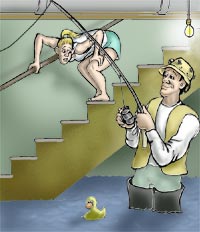
For instance. There was the time I took my three young children to the movies. Upon returning home we heard the calming sound of water flowing; only it wasn’t calming since our home was not built with a stream running through it. After looking in the basement and seeing water streaming through the ceiling, I called our builder’s hot-line. I was furious at them and so told the handyman as he looked at the exposed rafters.

Undaunted, and convinced that the pipes were fine, he proceeded to the first floor to source the leak. I saw water coming through the wall and ceiling of the conservatory and gave him another piece of my mind—something my mother had always cautioned against so as to ensure I still had some left in case I needed it. We headed upstairs, through a bedroom, into my son’s bathroom. By this time we were wading. The sink faucet was in the on position, the drain was in the closed position, and I was in no position to blame the builder.

I learned that my son had been doing a ‘speriment with the soap. He told me it was my fault he didn’t turn off the faucet before we left because I told him, “come down stairs right now.” He no longer does ‘speriments in the sink and most of the waviness in the wallboard has subsided.

I hate being wrong, especially in front of an audience. Once I have an opinion about something, the planet has to shift on its axis before I’m likely to reconsider. I’ve found that to be true with building strategy to support a business that is undergoing radical change, especially when people are asked to consider not doing something, or are asked to consider doing something differently. There’s way too much, “That’s the way we’ve always done it,” and, “That’s the way corporate told us to do it.” What in your strategy would benefit if someone considered doing something differently?

Should you hire a swim coach?

Swimming with guppies

Got the new bike, got the new bike shoes, got the uni (uniform-not unitard).  I’ve written about my desire to compete in a triathlon.  Actually, I miswrote.  My desire is not to compete, it’s more accurately a desire not to make a fool of myself during the swim, more specifically not to drown.

The swimming is one of those events where having the coolest outfit doesn’t help, as there are no coolest swimming outfits (men do not let men wear Speedos).  There aren’t enough North Face labels for me to wear to make me look like I know what I’m doing in a pool.

What to do?  Here’s my thinking.  I made a new friend, and as a bonus, she happens to be pretty sharp on the pharma side of healthcare.  She swims—fast.  She swims—a lot.  Did I mention she swims?  Longtime readers know I like to color outside the lines.  Maybe I could hire her to take my place during that part of the race.  Then we get back to the issue of the uni.  One way or another that becomes an issue for one of us.

She offered to teach me.  Lesson one was today.  Lesson two will begin right after the EMTs finish their CPR on me.  Rule one, no matter how cool you think you are, you can’t breathe under water.  That took a few laps to master.  More breathing, stroke, legs.  Lots to learn.

“Let’s get a pool boy to help you not drag your legs,” she suggested.

I have difficulty passing up the opportunity to comment.  She could see I had the broccoli in the headlights look in my eyes.  “You hold it between your legs and it helps you float.”

I scanned the pool.  There we the two of us…and the lifeguard.  “It looks like he’s busy,” I offered somewhat sheepishly.  “Besides, if that’s what it takes, I think we’re both better off if I drag my legs.” (A little un-PC pool humor, but why not, I was already wet and being out swum.

So, what does this have to do with why we’re here?  Here’s the take away.  Sometimes, no matter how smart, no matter how big your ego, you need help.  Sometimes it makes a huge difference to have someone on your side who’s been there, done that, got the T-shirt.

Not with me yet?  A guy (man or woman guy—send me an email and let me know when we can let go of this PC thing and just write) is walking down the road, not watching where he’s going, and he/we/she/it falls into a deep hole.

An engineer walks by.  “Help me,” shouts Hole Person.

The engineer thinks for a moment, writes some ideas on a piece of paper and tosses them into the hole.

Several hours later, a finance guy walks by.  “Help me out (literally)” yells Hole Person.  The CFO tosses down a cheque (I use the Canadian spelling to distinguish it from someone from the Eastern Bloc as it would make no sense to toss another person into the hole.)

Days later, Hole Boy (not the same as Pool Boy in case anyone is still reading) is at the end of his rope.  The work plan failed. The Check bounced.

A consultant passed, saw the man, and hopped into the hole.

“Why did you do that?  Now we’re both stuck.”

The consultant smiled in a Grinch-like fashion—please see prior blog for the segue.  “I’ve been down here before, and I know the way out.”

Kind’ a like a swim coach.

EHR projects have more zeros than you can count.  What if you could hire someone who knew the way out?

I may know someone who can help.

How the Grinch stole healthcare

(n.b. Pelosi, Reid, and the term Payor may be changed to the names of your favorite vilans without materially altering the story.)

Every Congressman
Down in Congress-ville
Liked Health reform a lot…

But the Payors,
Who lived just North of Congress-ville,
Did NOT!

The Payors hated Health Reform! The Congressional reform season!
And as everyone’s heard there is more than one reason.
Was it the fear of losing their monopoly right.
Worried, perhaps, that Congress might indict.
But I think that the most likely reason of all
May have been that the uninsured took them all to the wall.

Staring down from their man-caves with indemnifier frowns
At the warm lighted windows below in the town.
For they knew every Congressman down in Congress-ville beneath,
Canted an ear to hear them gnashing their teeth.

“If this passes, they’ll kill our careers!”
“Healthcare reform! It’s practically here!”
Then they growled, the ideologues nervously drumming,
“We MUST find a way to keep Reform from coming!”
For, tomorrow, they knew…

…Stumbling home from the tavern at a quarter past two                                                                                                                 What each Congressman, intern, and page might just do

And then all the milieu. Oh the milieu, the milieu
The thing the Payor hated more than mom’s Mulligan stew.

Then all the Congressmen, the left and the right, would sit down and meet.
And they’d meet! And they’d meet!
And they’d MEET! MEET! MEET! MEET!
Implement full provision; cover pre-existing…how sweet
Which was something the Payors couldn’t stand in the least!

And THEN
They’d do something Payors liked least of all!
Every Congressman down in Congress-ville, the tall and the small,
Would stand close together, their Healthcare bells ringing.
With Blackberrys-in-hand, the Congress would start pinging!

They’d ping! And they’d ping!
AND they’d PING! PING! PING! PING!
And the more the Obligators thought of the Congressman-Health-Ping
The more they each thought, “I must stop reform-ing!
“Why for all of these years we’ve put up with it now!
We MUST stop health Reform from coming!
…But HOW?”

Then they got an idea!
An awful idea!
THE Indemnifiers
GOT A WONDERFULLY, AWFUL IDEA!

“I know what to do!” The CEO Payor laughed in his throat.
And he made a quick Congressional hat and a coat.
And he chuckled, and clucked, “What a great Payor raucous!
“With this coat and this hat, I’ll look just like Saint Bacchus!”

“All I need is a pass…”
The Payor looked around.
Since Congressional passes are scarce, there was none to be found.
Did that stop the old Payor…?
No! The Payor simply said,
“If I can’t find a pass, I’ll make one instead!”
So he called his aide Max. Then he took some red paper
And he dummied up the pass and he started this caper.

THEN
He loaded some bags
And some old empty sacks
On a Benz 550
And he rode with old Max.

Then the Payor called, “Dude!”
And the Benz started down
To the offices where the Congressmen
Lay a-snooze in their town.

All their windows were dark. Quiet snow filled the air.
All the Congressmen were dreaming sweet dreams of healthcare
When the Payor came to the first office in the square.
“This is stop number one,” The old Warrantist – a winner
And he slipped passed the guard, like sneaking to a State Dinner.

Then he slid down the hallway, Harry Reid was in sight.
Reid was chumming Pelosi, he planned quite a night.
He got nervous only once, for a moment or two.
Then he realized that the leadership hadn’t a clue
Then he found the Congressional stimuli all hung in a row.
“These Stimuli,” he grinned, “are the first things to go!”

The Payor slithered and slunk, with a smile somewhat mordant,
Around the old Cloakroom, and looking discordant!
There were copies of the bill stuffed in jackets and on chairs,  He even found a copy tucked under the stairs
And he stuffed them in bags. Then the Payor, very neatly,
Started humming a tune from Blue Cross rather Cheeky!

Then he slunk to the Senate Chamber, the one facing East
He took the Senators’-copies! … didn’t mind in the least!
He cleaned out that Chamber and almost slipped on the floor.
Saw an Internet router, and thought of Al Gore

Then he stuffed all the copies in the trunk of his Benz.
And he thought to himself, “Why don’t I have friends?”                                                                                                                    “There’s always TW,” he said with no jest                                                                                                                                                    But TW’s being chased by reporters, those pests.

The Payor spotted the Grinch having trouble with his sacks
And he lent him a hand—he offered him Max                                                                                                                                           Max was quite pleased, for he knew this December,
That the Grinch would become the Payor’s board member.

The Grinch was all smiles–he’d made quite a killing
Offering to help pillage if the Payor was willing.
He stared at the Payor and asked, “New glasses?”
The Payor simply smiled, saying “These people are such (You did that to yourself, not me.)

And, you know, that old Payor was so smart and so conniving
When he next saw Pelosi he found himself smiling!
“Why, my dear little Nanc’,” the Bacchus look-alike stiffened,
“Botox in this light makes you look like a Griffin.
“I’m taking these home,” he said pointing to the copies.
“There’s a comma on one page that looks way too sloppy.”

And his fib fooled the Griffin. Then he patted her head
And he gave her a wink, and he sent her to bed
And as Speaker Pelosi shuffled off to her army,
HE said to himself, “What a waste of Armani!”

Then the last thing he needed
Was to mess up HITECH.
Then he went to HHS, the DOD and the VA,
Stuffed mint jelly in their servers so that they would not play

And the one EHR
That still worked in the DC
Was the one bought from CostCo and tucked under the tree.


Then
He did some more damage
To HIEs, and the N-HIN

Leaving PHRs
Far too trashed
For a doctor who did knee-shins!

It was quarter past dawn…
None in Congress were his friends
All the Congressmen, still a-snooze
When he packed up his Benz,
Packed it up with their copies of reform in those bags! Stacked to the leather ceiling,
Manila envelopes with name tags!

Three miles away were the banks of the river,
He was poised with the bags all set to deliver!
“Pooh-pooh to the Congressmen!” he was Payor-ish-ly humming.
“They’re finding out now that no Reform is coming!
“They’re just waking up! I know just what they’ll do!
“Their mouths will hang open a minute or two
“The all the Congressman down in Congress-ville will all cry BOO-HOO!”

“That’s a noise,” grinned the Payor,
“That I simply must hear!”
So he paused and the Payor put a hand to his ear.
And he did hear a sound rising over the snow.
It started in low. Then it started to grow…

But the sound wasn’t sad!
Why, this sound sounded merry!
It couldn’t be so!
But it WAS merry! VERY!

He stared down at Congress-ville!
The Payor popped his eyes!
Then he shook!
What he saw was a shocking surprise!

Every Congressman down in Congress-ville, the tall and the small,
Was singing! Without any health reform at all!
The Congress didn’t care, a few were disgraces,
All they wanted, it seemed, was TV with their faces

And the Payor, with his Payor-feet knee deep in the muck,
Stood puzzling and puzzling: “Man, there goes my bucks.
It could be about healthcare! It could be global warming!
“It could be Al Qaeda, Afghanistan and desert storming”
And he puzzled three hours, `till his puzzler was sore.
Then the Payor thought of something he hadn’t before!
“Maybe Congress,” he thought, “simply needs a free ride.
“Maybe Congress…just needs to look like they tried.

And what happened then…?
Well…in Congress-ville they say
That the Payor’s small wallet
Grew three sizes that day!
And the minute his wallet didn’t feel quite so tight,
He whizzed in his Benz passing through a red light
And he brought back the copies of the bill for reform!
And he…

…HE HIMSELF…!
The Payor calmed the whole storm!

‘Twas the night before reform when all in the House…

‘Twas the night before reform when all in the House

Were Tweeting and blogging and squawking like grouse

Their bill filled with zeroes and commas and flair

In hopes that the Senate would soon be there

The voters were restless, and in need of good care,

And they whined and they pleaded and they yelled ‘don’t you dare’

“Don’t sidestep this issue, don’t do it for votes”

“Don’t kowtow to payors or we’ll be at your throats.”

With Pelosi and her Botox and while Reid took his nap

Didn’t care if the people put up with their (you rhyme it, I’m pretending to be neutral)

The docs sat on the sidelines, bemoaning their fate,

While payors dressed like succubi caroled “ain’t this great?”

On the lawn of the White House there arose such disdain

As the public fought reform from ‘Frisco to Maine.

MSNBC, neigh now Comcast, buttressed their base,

And Fox, aka Rupert, said it was all a disgrace.

The words on the pages of the newly printed bill,

Hid nuance, erudition, obfuscation, and skill,

Do not read the details, adjectives and signs,

Do not worry how it impacts your bottom line.

We are here to pretend we did that of import,

To Hell with Medicare, Medicaid and the sort

It’s voters we want, It’s our doxology, our mantra,

And this year silly people, this year WE are Santa

On Boxer, on Biden on Fienstein they came,

And we chortled, berated, and chided by name.

“What about seniors, and sick people” we cried?

“What about uninsured, don’t you care if they died”

“This is about people you meet on the street.

People who must choose between their meds and to eat

It’s about Lipitor, Xanax, Prozac and Viagra,

It’s about doing what’s right, do what’s right or we’ll bag ‘ya”

And then in a twinkling I heard in my head,

The gnawing and chiding of Congress, who said,

We cavorted and sucked up, the best we knew how,

We spent bucks, made payoffs, and said the time is now.

Festooned all in new regs from NHS to VA

There were those who suggested, this is not going to play,

HITECH and ARRA are not making it fun,

RHIOs and RECs will soon come undone,

We’re paying the hospitals to do EHR

We know it seems silly, like we lowered the bar

If that doesn’t work we will tax them instead,

Make them spend gobs of money, make their budgets bleed red.

Spend it, refund it, and print new money now,

Buying Canada would be cheaper and easier but wow

They want to sign something, sign it soon, sign it fast,

But don’t assume that they’ve read it from first page to last,

We could’a been more like France, like the Swiss or the British

Make us more European, make our rich people skittish,

The tall socialist exclaimed as the dems shifted right,

Will Obamacare fail, have I lost all my might?

Why is EHR too much for normal brains?

So, I’m watching the Alabama Auburn game and it suddenly strikes me, there are probably a lot of people trying to understand what it is a consultant does that we can’t do for ourselves.

For those who have a life, those who missed the game, Alabama entered the game undefeated and had a good chance to play for the national title.  Auburn opens the game with the best scripted opening plays I’ve ever witnessed—touchdown, onside kick, trick plays, touchdown.  14-0.

Their first however many offensive plays were brilliant.  They were planned perfectly.  The next time they had the ball it was apparent that they had not planned the however many and first play.  The plan failed to go beyond what they’d already accomplished.

How does that apply to what you do, what I do, and why I think I can help you?  It is best described by comparing your brain to a consultant’s brain.  Your work brain functions exactly as it should.  It’s comprised of little boxes of integrated work activities, one for admissions and registration, one for diagnosis, another for care.  There’s probably another box for whatever it is that the newsletter stated IT was doing three months ago and how that impacts what you do.  That’s your job.

Your boxes interface in some form or fashion with the boxes of the person next to you in the hospital’s basement cafeteria who is paying for her chicken, broccoli, and rice dish that reminds you of what you ate at crazy Uncle Bob’s wedding reception.  That interface is the glue that makes the hospital work.  It’s also the synapse, the connective tissue—I know it’s a weak metaphor, but it’s a holiday weekend—give me some slack—that tries to keep healthcare functioning in an 0.2 business model.

There are names for the connective tissue, you know it and I know it.  It’s called politics.  It’s derived from antiquated notions like, “this is how we’ve always done it”, “that’s radiology’s problem”, “nobody asked me”,

At some point over the next week or two the inevitable happens; the need arises for you to add some tidbit of information.  Do you add it to an existing box, put it in an empty box, or ignore it?  This is where you must separate the wheat from the albumen—just checking to see how closely you’re following.

Your personal warehouse of boxes looks like the final scene in Raiders of the Lost Ark—acre after acre of dusty, full boxes, no Dewy-decimal filing system, and no empty box.  There are two rules at the hospital; one, bits of information must go somewhere, and two, nobody can change rule one.

The difference, and it’s a big one, is that consultants have an empty box.  It’s our Al Gore lockbox.  We were born that way.  It’s like having a cleft chin.  We also have no connective tissue to your organization.  No groupthink.  No Stepford Wives. No Invasion of the Body Snatchers to turn us into mindless pods moments.  Consultants may be the only people who don’t care.  Let me rephrase that.  We don’t care about the politics.  We don’t care that the reason the hospital has four IT departments is because the hospital’s leadership was afraid to tell the siloed docs that they couldn’t buy or build whatever they wanted.

Sometimes it comes down to your WWOD (what would Oprah do) moment.  Not, what do they want me to do, not what would they do, not what is the least disruptive, not what goes best with what the other hospital did.

At some point it comes down to, what is the right thing to do; what should we do.

Big, hairy healthcare IT projects come out of the shoot looking like Auburn did against Alabama.  The first however many moves are scripted perfectly.  Heck, you can download them off Google.  Worse yet, you can get your EHR vendor to print them for you.

The wheat from the albumen moment comes when you have to come up with an answer to the question, “What do we do next?”

That’s why consultants have an open box.  You know what we are doing when our brain takes us to the open box?  Thinking.  No company politics to sidetrack us.  Everybody knows the expected answers, but often the expected answer is not the best answer.  Almost everybody knows what comes after A, B, C, and D.

Sometimes…E is not the right answer or the best answer.

At some point you’re no longer twenty

There is a first time for everything.  Yesterday was the first time it occurred to me that there is a difference between being twenty and not being twenty.  A few days ago one of the women at the gym was bemoaning the fact that being forty wasn’t at all like being thirty–puhleeaasse.

There are those who would have you believe that there is no single muscle that is connected to every other muscle, a muscle which if pulled will make every other muscle hurt.  I beg to differ.  I think I found it—I call it a my groinal—it’s connected to my adverse and inverse bent-egotudinals, the small transflexors located behind the mind’s eye.  I found the muscle while running back a kickoff during a Thanksgiving morning game of flag football.

Call it homage to the Kennedys.  Sort of made me feel like one of them—I think it was Ethyl.  Old guys versus new guys—I know it’s a poor word choice but you know what I mean which after all is why we’re both here.  Did I mention that everything aches, so much so that I tried dipping myself in Tylenol?

There are two types of people who play football, those who like to hit people and those who don’t like being hit.  I am clearly a member of the latter camp.  I used to be able to avoid being hit by being faster than the other guy.  This day I avoided getting hit by running away from the other guy.

The weird part is that my mind still pictures my body doing things just like the college kids on the field, and it feels the same, it just isn’t.  Two kids just ran past me at the speed of light, and my only reaction was feeling like I wanted to ground the two of them.  Half the guys are moving at half the speed of the other guys.  At the end of each play, we find our side doubled over, our hands on our knees, our eyes scanning the sidelines for oxygen and wondering why the ground appears to be swaying.

As the game progresses, instead of running a deep curl pattern, I find myself saying things like, “I’ll take two steps across the line of scrimmage, hit me if I’m open.”  Thirty minutes later I’m trying to cut a deal with their safety, telling him, “I’m not in this play, I didn’t even go to the huddle.”  After that I’m telling the quarterback, “If you throw it to me, I’m not going to catch it, no matter what.”

All the parts are the same ones I’ve always had, but they aren’t functioning the way they should.  It’s a lot like assembling a gas grill and having a few pieces remaining—I speak from experience.  Unfortunately, implementing complex healthcare information technology systems can often result in things not functioning the way they should, even if you have all the pieces.  It helps to have a plan, have a better one than you thought you needed, have one written by people who plan nasty HIT systems, then have someone manage the plan, someone who can walk into the room and say, “This is what we are going to do on Tuesday, because this is what you should do on Tuesday on big hairy projects.”.

Then, if you still happen to lose your EHR bearings, remember it grows best on the north-facing wall of the hospital.

“We need to talk about your TSP reports”


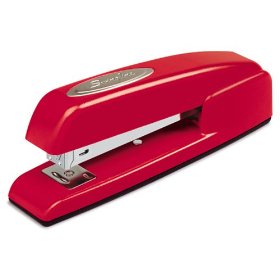
If you recognize the stapler, you know the movie.  “Office Space”—Possibly the best movie ever made. Ever worked for a boss like Lumbergh? Here’s a smart bit of dialog for your Friday.

Peter Gibbons: I work in a small cubicle. I uh, I don’t like my job, and, uh, I don’t think I’m gonna go anymore.

Joanna: You’re just not gonna go?

Peter Gibbons: Yeah.

Joanna: Won’t you get fired?

Peter Gibbons: I don’t know, but I really don’t like it, and, uh, I’m not gonna go.

Joanna: So you’re gonna quit?

Peter Gibbons: Nuh-uh. Not really. Uh… I’m just gonna stop going.

Joanna: When did you decide all that?

Peter Gibbons: About an hour ago.

Joanna: Oh, really? About an hour ago… so you’re gonna get another job?

Peter Gibbons: I don’t think I’d like another job.

Joanna: Well, what are you going to do about money and bills and…

Peter Gibbons: You know, I’ve never really liked paying bills. I don’t think I’m gonna do that, either.

One more tidbit:

Peter Gibbons: Well, I generally come in at least fifteen minutes late, ah, I use the side door – that way

Lumbergh can’t see me, heh heh – and, uh, after that I just sorta space out for about an hour.

Bob Porter: Da-uh? Space out?

Peter Gibbons: Yeah, I just stare at my desk; but it looks like I’m working. I do that for probably another hour after lunch, too. I’d say in a given week I probably only do about fifteen minutes of real, actual, work.

I like to think of Peter as my alter-ego.

When I’m playing me in a parallel universe, I’m reading about a surfer dude cum freelance physicist, Garrett Lisi. Even the title of his theory, “An exceptionally simple theory of everything,” seems oxymoronic. He surfs Hawaii and does physics things—physicates—in Tahoe. (I just invented that word; it’s the verb form of doing physics, physicates.)

Ignoring that I can’t surf, and know very little physics, I like to think that Garrett and I have a lot in common. I already know Peter Gibbons and I do. So, where does this take us?

It may be apparent that I look at healthcare IT and reform from a different perspective than most; I’m the guy who doesn’t mind yelling ‘fire’ in a crowded theater. The guy who will never be invited to speak at the AMA convention unless they need a heretic to burn for the evening entertainment. I can live with that.

Like Garrett, I too see an exceptionally simple theory in everything, especially when it comes to improving the business of healthcare. It’s not rocket surgery, but then, it was never meant to be–before someone writes, I know it should be scientists.  It’s process, change management, leadership and foresight.

Sometimes I like to look at the problem from a different dementia—Word didn’t have a problem with my usage of that word.  I look at healthcare and ask myself three questions:

1. How did they ever get so siloed?

2. How did they ever get so so big without a cohesive IT strategy?

3. Is it possible to reverse both of those AND improve the business.

I am convinced the answer is yes.