Pass the salt

Okay campers, we’re going to jump right in to this one. There was a point not too long ago when the US was involved in the SALT talks, the Strategic Arms Limitation Treaty. For those too young to remember, the US and the Soviets—that’s what we used to call the Russians. Actually, they were called Russians before they got married and changed their name to Soviets which is neither here nor there.

This came about because the two countries were MAD at each other. Not in the usual sense, but in the sense of mutually assured destruction—of the world—several times over. Anyway, it finally occurred to both sides that perhaps we only needed enough weapons to blow up the world a few times instead of hundreds of times. What was the result? We’re still here. We’re here because the people who built the weapons agreed to greatly reduce their number of weapons. They learned how to function differently. Instead of saying we can’t do that, they took the approach of saying, “If we wanted to do that, how would we do it?” Getting rid of nuclear weapons—no small feat.

Segue. I realize this is a bit of a stretch just to make a point, but since we’ve come this far we might as well make it. What would you do if you came to work one day and received an email which read that your organization had decided against ever implementing an EHR?

To me that is a perfectly reasonable idea. Of course, I’m someone who wonders how the color purple feels. But why not stop all of this foolishness around EHR?  Agree, or is killing EHR a foolish idea?

I think it’s much less foolish than implementing an EHR and having no reasonable expectation that it will work.  The odds are that your EHR has a better chance of failing than it has of succeeding.

I have no problem with EHR.  I do, however, have a problem with businesses constantly making the same mistakes, making EHR a multi-million dollar repository for their mistakes, and then complain about the fact that the EHR isn’t doing a good job.

What do you think?

What may be driving the Meaningful Use announcement

I often write not because I have something that needs to be said, but to try to explain something to myself.  If I get to a point where I think I understand an issue, I’ll make it public to see if the comments reflect my understanding, or to see if I need to have another go at my own thought process.  Which leads me to this—

Let’s back up the horses for a minute and return from whence we came.  EHR.  The idea was simple.  Two groups; patients and doctors.  Create a way to transport securely the medical records of any patient (P) to any doctor (D).

For the time being, let’s keep this at the level that can be understood by a third grader.  What two things do I need to satisfy this P:D relationship?  Data standards and a method of transport.

Do we have them?  We do not.  That being the case, what fury hath the ONC wrought?  (1 Roemer 9:17)  if you don’t have what you need, and you don’t have either the authority or a plan to get what you need, you must facilitate (fund) the creation of workarounds to fill the void.

At some point, the conversation must have quickly shifted from, “We need standards and transport”, to, “Since we don’t have standards and a means of transport, we must come up with other ways to try to make this work.”  Now, I don’t believe this is literally what happened, but I think one could see how it might have evolved.

Other ways.  What other ways?  The ONC loves me; it loves me not.  HITECH.  ARRA.  Take the monkey off our back and put it on the backs of the providers.  Pay doctors to implement EHR.  Smote them if they don’t.  Write checks.  Big checks.  Lots of big checks.  Instead of coming up with a single transport plan and one set of standards, provide guidelines.  Make pronouncements.  Fund RHIOs and make them responsible for creating hundreds of unique transport plans and ask the RHIOs what progress they are making towards a single set of standards.  Get the monkey off your back.

Create artificial goalposts that get the HIT world all a twitter every time the ONC makes a proclamation.  What goalposts?  Meaningful Use and Certification.  Just so there is no misinterpretation of what I think the issue is permit me to spell it out—Meaningful Use and Certification exist because there are no standards and there is no means of transport.  Conversely, had the ONC developed standards and transport, there would be no discussion of Meaningful Use and no Certification.  Standards would have forced vendors to self-certify.

The other activity could be viewed as a feint.  Not one developed out of malice, rather one that came about from the void that resulted from the lack of a viable plan.  Meaningful Use and Certification are expensive workarounds for a failed or nonexistent national EHR rollout plan.  As are RHIOs and RECs, the six million dollars, and the forty billion dollars.

The HIT world grinds to a halt at the very mention of an announcement from the ONC.  Their missives are available in PDF or stone tablets.  Imagine someone robs a bank, and as they exit the bank, they jaywalk on their way to their getaway car.  The police missed the robbery, and focus all their efforts on the secondary issue, the jaywalking.

The chain of events has caused the focus to move away from the primary issues of no standards and no plan, and towards a plethora of secondary issues, issues for which hundreds of people are responsible and no single person has authority.

I think that by the end of 2013 pronouncements on Meaningful Use and Certification won’t be able to buy time on MTV.

If any of this is close to being correct, what are the implications for a hospital looking to select and implement an EHR?  Find the EHR that is best for your hospital.  Not the one most likely to earn ARRA money.  Not the one which will pass today’s Meaningful Use test.  Define your requirements.  What requirements?  The ones you believe will most closely align with how the healthcare industry will look in 2015 and beyond.  Meaningful Use will change.  Reform will change.  Funds will change.  Reform will change again.  Will your EHR be able to change?

The ONC’s recent Meaningful Use proclamation required 556 pages.  If you occupy the C-suite of your hospital, I hope you don’t let those pages define your selection of an EHR.  Some would argue that with so many pages that there must be a pony in there somewhere.  From what I read, I’m in no hurry to rush out and buy a saddle.

How measuring Brittan can improve your EHR success

So, last night I am watching NOVA.  The episode discussed fractal geometry and aired the same time as the Viking Bears game.  Admittedly, not a typical Y chromosome choice, but interesting none-the-less.

A fractal is a fragmented geometric shape that can be split into parts, each of which is a reduced-size copy of the whole.  Simple enough.  Common examples of fractals include the branching of trees, lightning, the branching of blood vessels, and snowflakes.  In the seventies the mathematician Benoît Mandelbrot discovered that fractals could be described mathematically.

It turns out that a shoreline is another example of a fractal.  For example, let’s say you wanted to determine the length of the coast of Brittan by measuring it instead of just using Google.  The coastline paradox says the measured length of the coastline depends on the scale of measurement.  The smaller the scale of measurement, the longer the measurement becomes.  Thus, you would get a longer measurement if you measured the coastline with a ruler than with a yardstick.  This paradox can be extrapolated to show that the measured length increases without limit as the unit of measures tends towards zero.  In the first picture, using a 200 km ruler, the coastline measures 2,400 km.

In this photo, using a 50 km ruler, the coastline measures 3,200 km.

I’m not sure why this idea needed to be discovered, it seems a little obvious—more information yields more informed results.

A few years ago I was hired by a firm to report to their board on their vendor selection process.  The firm was about to issue a two-page RFP to two vendors.  I convinced the firm to redo the process.  They ultimately issued an RFP of more than a thousand requirements and selected a vendor who was not on their original list.

Again it seems obvious, but being obvious doesn’t always result in smart behavior.  If you’re getting ready to spend seven to nine figures on and EHR, wouldn’t you like some degree of confidence that you selected the best one for your hospital?

Does ego get in the way of making change an imperative?

My friends who have nicknamed me Dr. Knowledge or the Voice of Reason have seen me on those rare moments when the synapses were firing on all cylinders. There are others who have seen me in my less than knowledgeable moments.

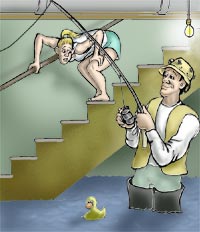
For instance. There was the time I took my three young children to the movies. Upon returning home we heard the calming sound of water flowing; only it wasn’t calming since our home was not built with a stream running through it. After looking in the basement and seeing water streaming through the ceiling, I called our builder’s hot-line. I was furious at them and so told the handyman as he looked at the exposed rafters.

Undaunted, and convinced that the pipes were fine, he proceeded to the first floor to source the leak. I saw water coming through the wall and ceiling of the conservatory and gave him another piece of my mind—something my mother had always cautioned against so as to ensure I still had some left in case I needed it. We headed upstairs, through a bedroom, into my son’s bathroom. By this time we were wading. The sink faucet was in the on position, the drain was in the closed position, and I was in no position to blame the builder.

I learned that my son had been doing a ‘speriment with the soap. He told me it was my fault he didn’t turn off the faucet before we left because I told him, “come down stairs right now.” He no longer does ‘speriments in the sink and most of the waviness in the wallboard has subsided.

I hate being wrong, especially in front of an audience. Once I have an opinion about something, the planet has to shift on its axis before I’m likely to reconsider. I’ve found that to be true with building strategy to support a business that is undergoing radical change, especially when people are asked to consider not doing something, or are asked to consider doing something differently. There’s way too much, “That’s the way we’ve always done it,” and, “That’s the way corporate told us to do it.” What in your strategy would benefit if someone considered doing something differently?

Have you lost the social media turf war to your patients?

Remember as kids trying to see how many bumble bees you could catch in a jar before you panicked and they all got lose? You couldn’t get the top all the way on and all of a sudden dozens of bees exited the jar as you raced across the field of clover. That’s how patients are. You try and catch as many as you can, but once they get out it’s over. So, here we go again. Social networking. We’ll get there in a moment.

For those old enough to remember the seventies, what are you able to recall about high school? If you’re like me, much of it’s selective. The web seems to be changing some of that. Classmates.com. Facebook. Ever notice how there are no rules? Anyone can get to anyone else. Unhindered. Uninvited.

There are those who never grew up, and there are those who never grew older–there’s a difference. Sometimes it’s a good thing. Like for instance trading emails with the girl in the red velvet dress, the one with whom you first slow danced in the ninth grade.

Then there’s the other side to the social networking coin. A darker side. Unless you happened to be among the minutia of students who gambolled care freely down the crowded halls during those four years believing that the school year book should only contain your picture, graduating high school gave you your out, gave you permission to euphemistically bury the bourgeoisie who needed burying. People who, when you were eighteen wouldn’t put you out if you were on fire, the very people who probably set you ablaze, now knock digitally on your facebook door asking to befriend you. Did I miss something here? The part where my fabebook-buddy-wannabe says, “Now that we’re grownup, forget I was a jerk in high school, ignore the fact that I was dumber than a bowl of mice”—sounds like I may have missed one or two of my twelve-step meetings. Recovery is progressing well—really.

Just because a hospital is paranoid doesn’t mean their customers don’t hate them. Poltergeists. The undead. The kind of customers you’d hope you’d never hear from. And yet, those are the very ones who bother to write about their experience. They Twitter, and blog, and YouTube your organization. Don’t take my word for it.  Run a search and see what you find.  More is being said about you than you are saying about yourself.  That means you are losing the social media turf war, you don’t control the high ground or the conversation.

Patients come back and haunt deliberately. Their haunts are reflected in lower satidfaction, fewer repeat visits, and higher churn. Isn’t technology great?

The impact of Moses on EHR

Does anyone remember how many of each type of animal God told Moses to put on the ark? Are you sure? For those who missed it, Noah built the Ark, Charlton Heston built the stone tablets.

One word can make the difference between right and wrong, especially if the question is big enough. Who is asking the questions that are shaping your firm’s EHR strategy? Do you know the name of the person? What question are they asking? Is it the right one?

Why additional money may not be needed to solve your EHR problems

Have you ever done any sort of group problem solving exercise like Outward Bound to help you to think as a team? Suppose there was an exercise for healthcare and IT executives, whose goal was to get the executives to think about how to best deploy can EHR system. To do this they are given a problem and access to ‘technology.’

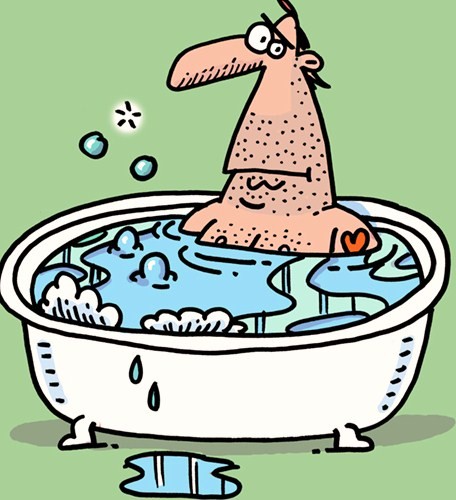
Here is the scenario and the rules as they are presented to the group. They are given ten dollars. The executives are presented with a bathtub filled with water, and told that the winning team will figure out the best use of money and time to empty the bathtub. Also available to them is a bucket which costs ten dollars and has a hole in it, a four-dollar cup, and a collection of wooden spoons which are free.

Any idea what the right combination is? Is there a best answer? Bucket? Cup and spoons? How would you solve the problem? Sometimes the best answer is so obvious it’s silly. Kind of like call centers? What’s the best use of the available tools? Faced with the option of buying more technology to solve the problem, when was the last time you saw someone refuse the funds?

Figured it out?

Pull the plug from the drain.

In many cases, we already have everything we need to solve the problem, we just need to know how to use it.

Just like Dorothy in the ‘Wizard of Oz.’  She had the ruby slippers the entire time, she just didn’t know how to use them. I think most EHR strategies can be improved without spending requiring millions more in technology.

That’s my story and I’m sticking to it.

Why is EHR too much for normal brains?

So, I’m watching the Alabama Auburn game and it suddenly strikes me, there are probably a lot of people trying to understand what it is a consultant does that we can’t do for ourselves.

For those who have a life, those who missed the game, Alabama entered the game undefeated and had a good chance to play for the national title.  Auburn opens the game with the best scripted opening plays I’ve ever witnessed—touchdown, onside kick, trick plays, touchdown.  14-0.

Their first however many offensive plays were brilliant.  They were planned perfectly.  The next time they had the ball it was apparent that they had not planned the however many and first play.  The plan failed to go beyond what they’d already accomplished.

How does that apply to what you do, what I do, and why I think I can help you?  It is best described by comparing your brain to a consultant’s brain.  Your work brain functions exactly as it should.  It’s comprised of little boxes of integrated work activities, one for admissions and registration, one for diagnosis, another for care.  There’s probably another box for whatever it is that the newsletter stated IT was doing three months ago and how that impacts what you do.  That’s your job.

Your boxes interface in some form or fashion with the boxes of the person next to you in the hospital’s basement cafeteria who is paying for her chicken, broccoli, and rice dish that reminds you of what you ate at crazy Uncle Bob’s wedding reception.  That interface is the glue that makes the hospital work.  It’s also the synapse, the connective tissue—I know it’s a weak metaphor, but it’s a holiday weekend—give me some slack—that tries to keep healthcare functioning in an 0.2 business model.

There are names for the connective tissue, you know it and I know it.  It’s called politics.  It’s derived from antiquated notions like, “this is how we’ve always done it”, “that’s radiology’s problem”, “nobody asked me”,

At some point over the next week or two the inevitable happens; the need arises for you to add some tidbit of information.  Do you add it to an existing box, put it in an empty box, or ignore it?  This is where you must separate the wheat from the albumen—just checking to see how closely you’re following.

Your personal warehouse of boxes looks like the final scene in Raiders of the Lost Ark—acre after acre of dusty, full boxes, no Dewy-decimal filing system, and no empty box.  There are two rules at the hospital; one, bits of information must go somewhere, and two, nobody can change rule one.

The difference, and it’s a big one, is that consultants have an empty box.  It’s our Al Gore lockbox.  We were born that way.  It’s like having a cleft chin.  We also have no connective tissue to your organization.  No groupthink.  No Stepford Wives. No Invasion of the Body Snatchers to turn us into mindless pods moments.  Consultants may be the only people who don’t care.  Let me rephrase that.  We don’t care about the politics.  We don’t care that the reason the hospital has four IT departments is because the hospital’s leadership was afraid to tell the siloed docs that they couldn’t buy or build whatever they wanted.

Sometimes it comes down to your WWOD (what would Oprah do) moment.  Not, what do they want me to do, not what would they do, not what is the least disruptive, not what goes best with what the other hospital did.

At some point it comes down to, what is the right thing to do; what should we do.

Big, hairy healthcare IT projects come out of the shoot looking like Auburn did against Alabama.  The first however many moves are scripted perfectly.  Heck, you can download them off Google.  Worse yet, you can get your EHR vendor to print them for you.

The wheat from the albumen moment comes when you have to come up with an answer to the question, “What do we do next?”

That’s why consultants have an open box.  You know what we are doing when our brain takes us to the open box?  Thinking.  No company politics to sidetrack us.  Everybody knows the expected answers, but often the expected answer is not the best answer.  Almost everybody knows what comes after A, B, C, and D.

Sometimes…E is not the right answer or the best answer.

At some point you’re no longer twenty

There is a first time for everything.  Yesterday was the first time it occurred to me that there is a difference between being twenty and not being twenty.  A few days ago one of the women at the gym was bemoaning the fact that being forty wasn’t at all like being thirty–puhleeaasse.

There are those who would have you believe that there is no single muscle that is connected to every other muscle, a muscle which if pulled will make every other muscle hurt.  I beg to differ.  I think I found it—I call it a my groinal—it’s connected to my adverse and inverse bent-egotudinals, the small transflexors located behind the mind’s eye.  I found the muscle while running back a kickoff during a Thanksgiving morning game of flag football.

Call it homage to the Kennedys.  Sort of made me feel like one of them—I think it was Ethyl.  Old guys versus new guys—I know it’s a poor word choice but you know what I mean which after all is why we’re both here.  Did I mention that everything aches, so much so that I tried dipping myself in Tylenol?

There are two types of people who play football, those who like to hit people and those who don’t like being hit.  I am clearly a member of the latter camp.  I used to be able to avoid being hit by being faster than the other guy.  This day I avoided getting hit by running away from the other guy.

The weird part is that my mind still pictures my body doing things just like the college kids on the field, and it feels the same, it just isn’t.  Two kids just ran past me at the speed of light, and my only reaction was feeling like I wanted to ground the two of them.  Half the guys are moving at half the speed of the other guys.  At the end of each play, we find our side doubled over, our hands on our knees, our eyes scanning the sidelines for oxygen and wondering why the ground appears to be swaying.

As the game progresses, instead of running a deep curl pattern, I find myself saying things like, “I’ll take two steps across the line of scrimmage, hit me if I’m open.”  Thirty minutes later I’m trying to cut a deal with their safety, telling him, “I’m not in this play, I didn’t even go to the huddle.”  After that I’m telling the quarterback, “If you throw it to me, I’m not going to catch it, no matter what.”

All the parts are the same ones I’ve always had, but they aren’t functioning the way they should.  It’s a lot like assembling a gas grill and having a few pieces remaining—I speak from experience.  Unfortunately, implementing complex healthcare information technology systems can often result in things not functioning the way they should, even if you have all the pieces.  It helps to have a plan, have a better one than you thought you needed, have one written by people who plan nasty HIT systems, then have someone manage the plan, someone who can walk into the room and say, “This is what we are going to do on Tuesday, because this is what you should do on Tuesday on big hairy projects.”.

Then, if you still happen to lose your EHR bearings, remember it grows best on the north-facing wall of the hospital.

Patients Relationship Management-why not think like one?

I met last week with a number of 1st Year MBA students who have a consulting club to help them figure out if they are suited for this noblest of all professions–supposedly the second oldest profession. “How can you tell if you’ll be any good at it?” They asked.

As far as I can tell, there are two basic requirements. One, you have to be a bit out of kilter, a tad of ADHD doesn’t hurt either. You have to hate repetition.   Second, it helps if you have a belief that there is almost nothing you couldn’t figure out how to improve. While thinking it doesn’t make it true, the attitude is a critical success factor.

For example, I just returned from the post office.  Noon on the Wednesday before the holiday–lunch time rush hour.  I’m standing in a long line underneath a banner with a message emphasizing quality.

There are two clerks, postmen, postpersons, postladies–I’m not sure which one is most appropriate, but as we both know, I’m not going to lose any sleep over it either. The line is out the door. Clerk ‘A’ tells clerk ‘B’, “I’m going on break.” At which point I turned to the person next to me and uttered, “And I’m going to UPS.”   It’s not that difficult to improve.  Not letting half of your customer-facing employees go on break during your busiest time would be a good way to start to improve things.

It’s not rocket surgery. Patient Experience Management, Patient Equity Management. Whatever you call it, big inroads can be made.  Quit thinking like an executive and start thinking like a patient and you’ll have plenty of ideas.